
The same design can belong to three different price worlds at once. A Yongle blue-and-white meiping sold in Hong Kong for HK$138 million; a Qianlong reviving that tradition made RMB 23 million in Beijing; a Republican-era copy of an imperial enamel vase made under RMB 500,000 in Shanghai. This is the price ladder of archaistic porcelain, and every rung of it is collectable — if you know which rung you are standing on.
What counts as archaistic porcelain?
An archaistic piece takes an earlier reign’s product as its model and pursues fidelity: the form true, the paste, glaze and pigments close, the decoration and mark convincing in both manner and spirit. As Tang Ying, the great superintendent of the Qing imperial kilns, put it: when reviving the old, follow its elegance without losing its appearance and soul. Jingdezhen’s true revival production began under the Yongle emperor, driven by the Ming court’s reverence for antiquity — a history we set out fully in our guide to how old archaistic porcelain is and what it is worth.
Ming imperial wares imitating Song Longquan and the five great kilns were made on imperial order, aiming at resemblance and old spirit rather than deception, and most carried their own reign marks. Some were so exact that period records praised them as “reviving the old so well that the two are indistinguishable.” That phrase matters for everything that follows, because it separates the imperial revival from the fake — a distinction we examine in fake, copy or original.
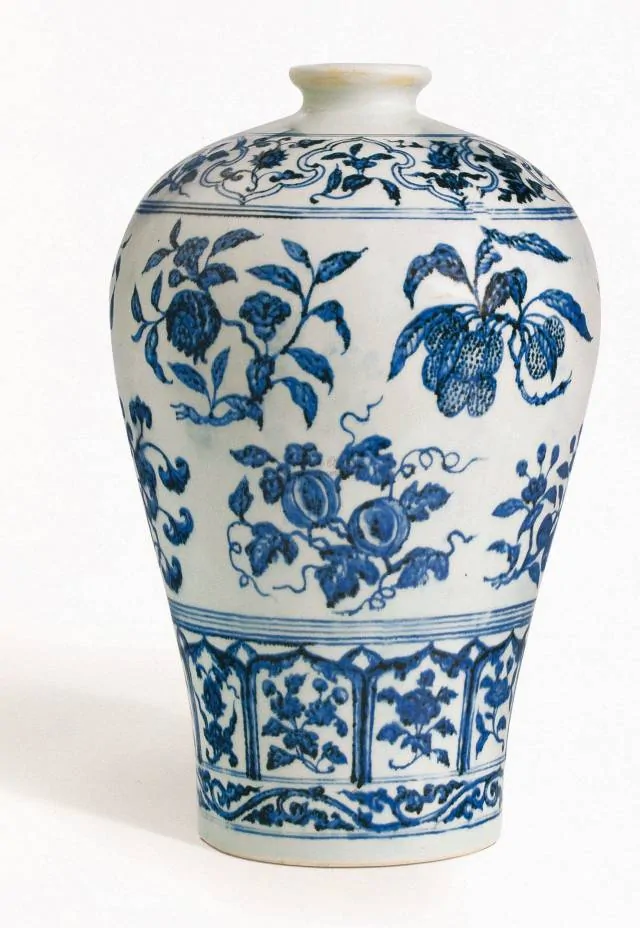
The top rung: period originals
At the top of the ladder sit the originals. A Yongle blue-and-white meiping with fruit sprays, sold at Hong Kong Sotheby’s in October 2011 for HK$138.3 million, defines the ceiling. Pieces of this quality rarely appear; when they do, institutions and top collectors compete for them, and the price has no relation to what an ordinary buyer can consider. Our overview of what auction records show starts from this reality.
Imperial revivals priced in their own right
The second rung belongs to the great imperial revivals of the Kangxi, Yongzheng and Qianlong reigns — the period we profile in the four golden ages of archaistic porcelain. These were court commissions, made with the original often standing on the workbench, and the market now prices them as masterpieces in their own right:
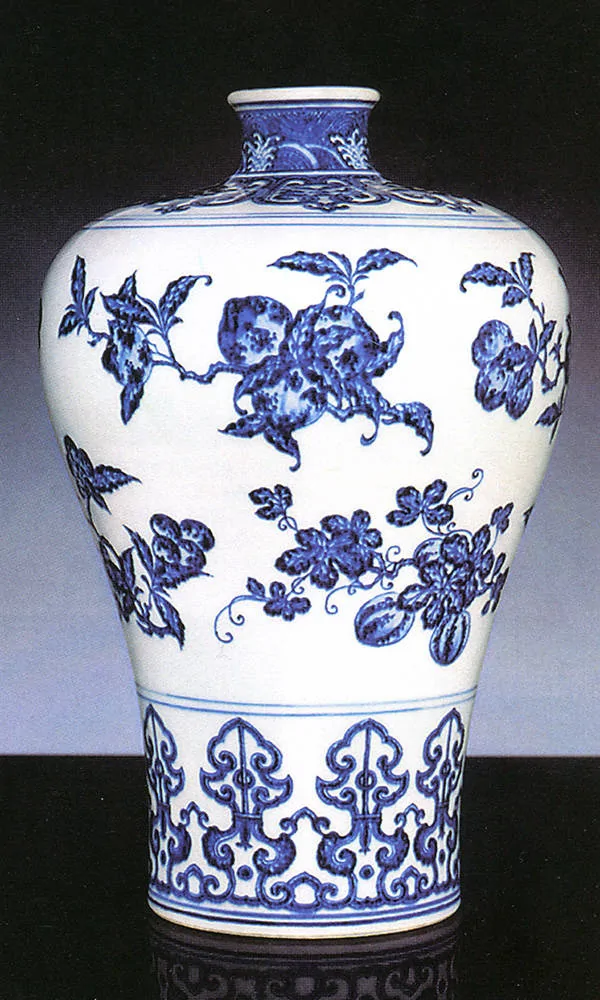
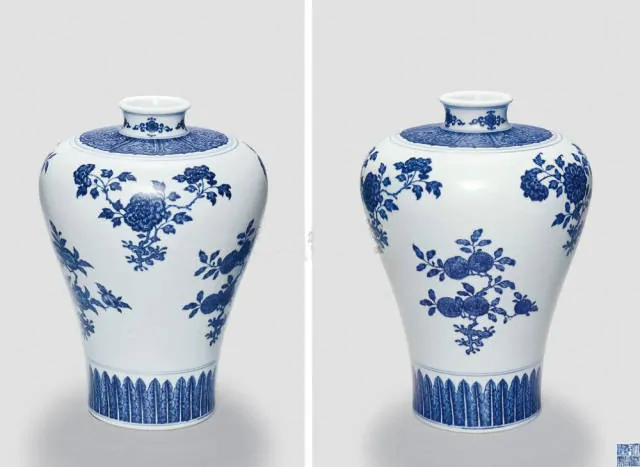
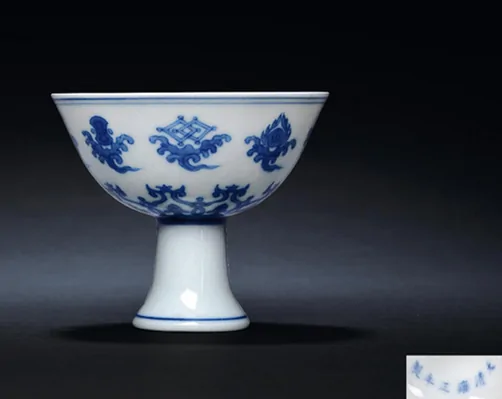
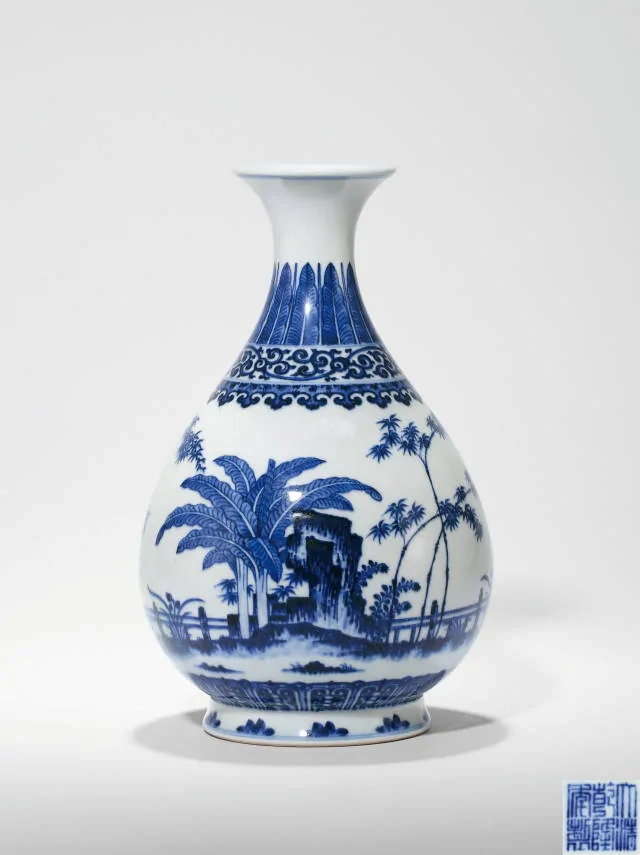
A Qianlong blue-and-white meiping of Ming design made RMB 23 million at Hanhai in 2011; a Yongzheng meiping with fruiting branches made HK$14.1 million at Christie’s in 2009; a Yongzheng stem cup with the eight Buddhist emblems after a Chenghua model made HK$1.22 million at Poly in 2014; a Qianlong bamboo-and-banana yuhuchun vase made RMB 2.3 million at Poly in 2012. The full record for the Yongzheng workshop is detailed in our survey of Yongzheng revival wares at auction, and the palace side of the story — including the expert Geng Baochang’s judgement that a revival able to fool the experts is worth as much as a national treasure — is in when archaistic porcelain matches a national treasure.
The Republican rung: honest copies finding their level
The third rung is the least discussed and the most instructive. Republican-era workshops copied Qianlong enamels in the guise of the old Guyuexuan mark, and the Palace Museum itself keeps such pieces in its collection — official proof that a declared copy can be a museum object. Their prices are far below the imperial rung, but their direction of travel is the same:
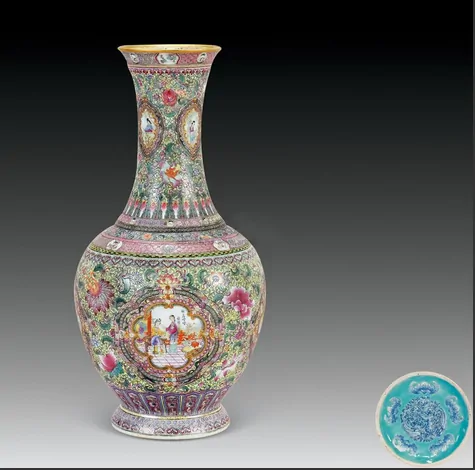
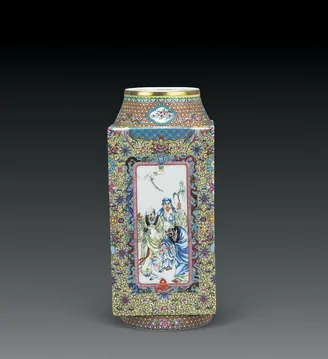
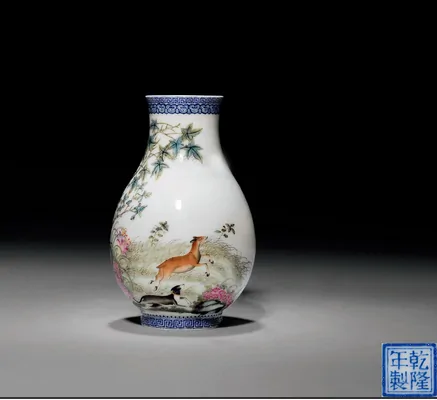
A Guyuexuan-style medallion vase made RMB 418,000 at Shanghai Jaitai in 2007; a cong-shaped vase with luohan figures made RMB 403,200 there in 2008; an enamel vase with a dog painting made RMB 172,500 at China Guardian in 2012. A century on, these pieces have outlived the stigma of being copies and entered the long tradition in which old copies become treasures. Buyers who understand the ladder treat them as the entry tier of imperial-adjacent collecting, not as failed antiques.
Reading the ladder as a collector
The ladder, in one view:
| Tier | Example sold | Price |
|---|---|---|
| Period original | Yongle fruit meiping, Hong Kong Sotheby’s, 2011 | HK$138.3 million |
| Qing imperial revival | Qianlong fruit meiping, Hanhai, 2011 | RMB 23 million |
| Republican copy | Guyuexuan-style vase, Shanghai Jaitai, 2007 | RMB 418,000 |
Two practical conclusions follow. First, know the tier before you fall in love with the object: a Qianlong revival and a Republican copy can describe the same model in the same words, a century apart. Second, know how the piece was sold. The court revivals carried reign marks openly, the Republican workshops sold through the trade, and the works that deceive are those that pretend to be what they are not — the tests are set out in the three tests every copy must pass and our buyer’s guide to archaistic porcelain worth collecting. Visual judgement alone is no longer enough against the best modern work, which is why we recommend combining it with documented provenance and, where possible, technical evidence.
Why the ladder matters
Because it shows a healthy market, not a closed one. The original defines the summit; the imperial revival preserves the craft at museum standard; the Republican copy opens the door to the next generation of collectors. Each tier is honest about what it is, and each has appreciated as the years pass. That is what a craft tradition looks like when it works.
Explore Jingdezhen craftsmanship
Browse the Jingdezhen Heritage collection for hand-made porcelain documented and sold as what it is.
Contact Jingdezhen Heritage
Questions about a piece, a glaze or an order? Email service@jingdezhenheritage.com or message us on WhatsApp. We reply within one working day.