
Archaistic porcelain u2014 Chinese porcelain made in deliberate imitation of earlier famous wares u2014 is usually discussed in terms of price. Its history answers a more interesting question: who made it, and for whom? For six centuries production ran on two parallel tracks. Imperial kilns copied the old for the throne; private kilns copied it for everyone else. Four periods saw that system at full strength, and each shaped what collectors find on the market today.
What is archaistic porcelain?
Archaistic porcelain means later wares built on the types of earlier reigns u2014 a Kangxi vase following a Xuande model, or a Republic vase quoting a Qianlong original. The habit is old. Already in the Song dynasty, imitating the antique was in fashion: workshops produced large numbers of Shang- and Zhou-style ritual bronzes, and several regional kilns made deliberate archaism part of their repertoire. Yet set against what came later, that Song vogue was a modest beginning u2014 the records themselves treat it as such.
The four golden ages of archaistic porcelain
Historians of the genre usually count four peak periods of production:
- The Ming dynasty u2014 imperial kilns reproducing Song glazes, and later reigns copying earlier ones;
- The High Qing u2014 Kangxi, Yongzheng and Qianlong, when imperial imitation reached its technical peak;
- The late Qing to Republic era u2014 a commercial boom serving a new collecting public;
- The 1980s to the present u2014 the modern revival that put Jingdezhen’s archaistic workshops back to work.
The Ming dynasty: two kinds of imitation
Ming production fell into two streams. The first, seen mostly at Xuande and Chenghua, had the Jingdezhen imperial kilns reproduce the glazes of the famous Song kilns u2014 Guan, Ge, Ru, Ding, Jun and Longquan u2014 with little interest in copying their shapes. Some of these wares carry their own reign marks; some carry none at all.
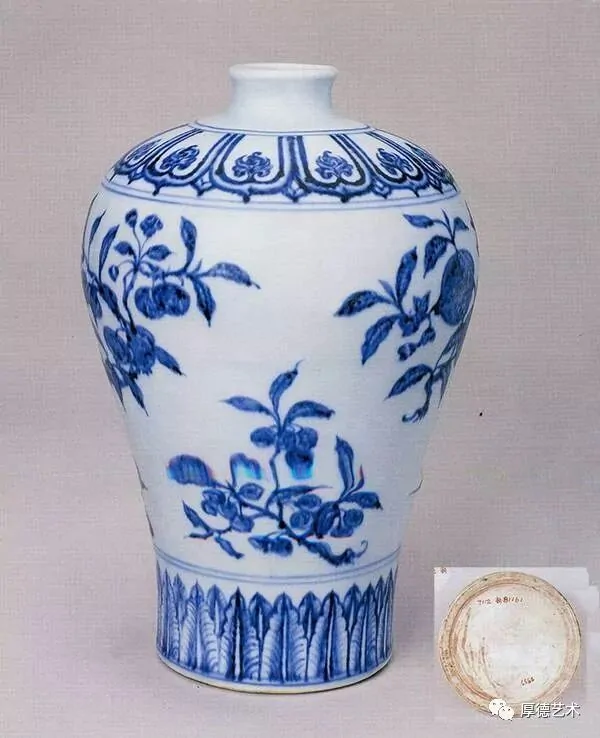
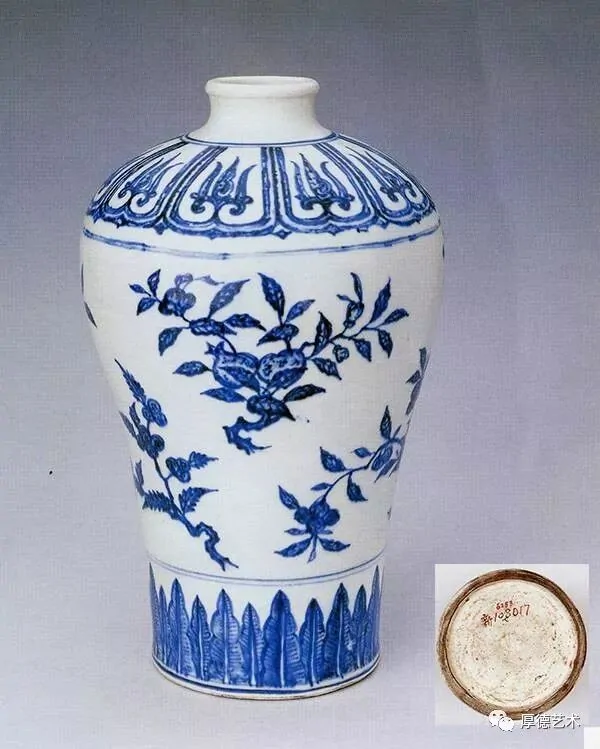
The second stream copied shapes as well: later reigns imitating the imperial wares of earlier ones, sometimes bearing the earlier mark, sometimes their own. Connoisseurs date the practice of applying an earlier reign’s mark to the Chenghua reign itself. The proof is physical u2014 excavation of the Chenghua imperial kiln site at Zhushan in Jingdezhen recovered blue-and-white bowls painted with borrowed “Daming Xuande nianzhi” marks. How such marks should be read is a study in itself, covered in our guide to earlier reign marks on Chinese porcelain.
Market forces did the rest. Through the late Ming, prices for Yongle, Xuande and Chenghua wares climbed until some matched Song porcelain itself, and a flourishing antique trade encouraged the Jiajing and Wanli workshops to turn out reproductions in considerable numbers and of considerable quality.
The High Qing court: imitation at any cost
From the Kangxi and Yongzheng reigns onward, the imperial kilns imitated the classic wares regardless of cost. Kangxi copies of Xuande and Chenghua porcelain were judged “indistinguishable from the true u2014 not a hair’s breadth out; truly a craft that rivals nature”. Yongzheng went a step further: the palace brought pieces out of its own collections and handed them to the imperial workshops as models to copy u2014 the emperor himself commissioning the imitations. Qianlong’s kilns excelled at thin-bodied wares with hidden decoration and at Song-style bluish-white glazes. The court-driven side of this programme, and what its products fetch today, is set out in our survey of Yongzheng archaistic porcelain and its auction records.
The private market: official-grade porcelain for everyone else
Imperial output served the court and its gifts alone u2014 even members of the imperial family could not buy it. Officials and nobles who wanted porcelain of that quality had to turn to private kilns, and that demand sustained a private archaistic industry. Its top grade, the guan guqi or “official-style ware”, was described in the records as made from the finest materials, so fine and lustrous that it matched the official kilns’ output and could serve in official use. Below it ranked the “pseudo-official-style” and “upper-grade” wares, all supplied to officials and wealthy households. The structure is a familiar one: a tiered market of originals, near-originals and affordable copies, four hundred years before the word “replica” entered commerce.
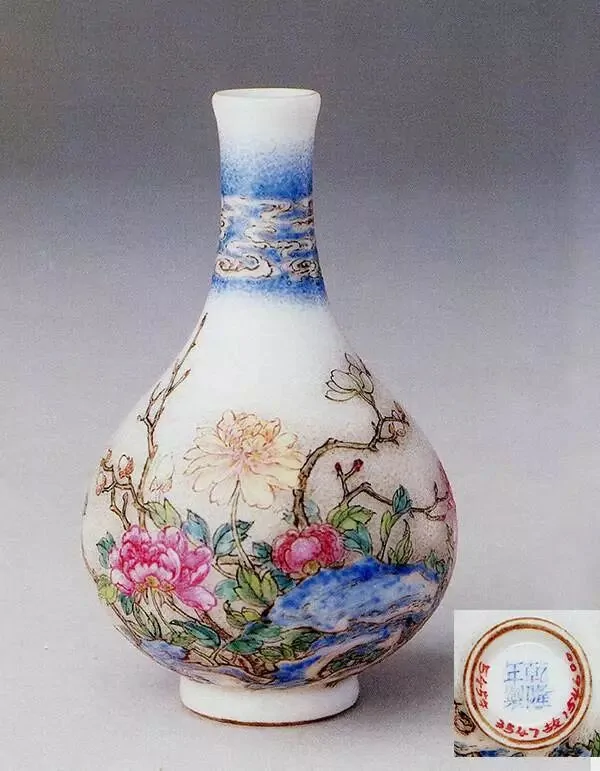
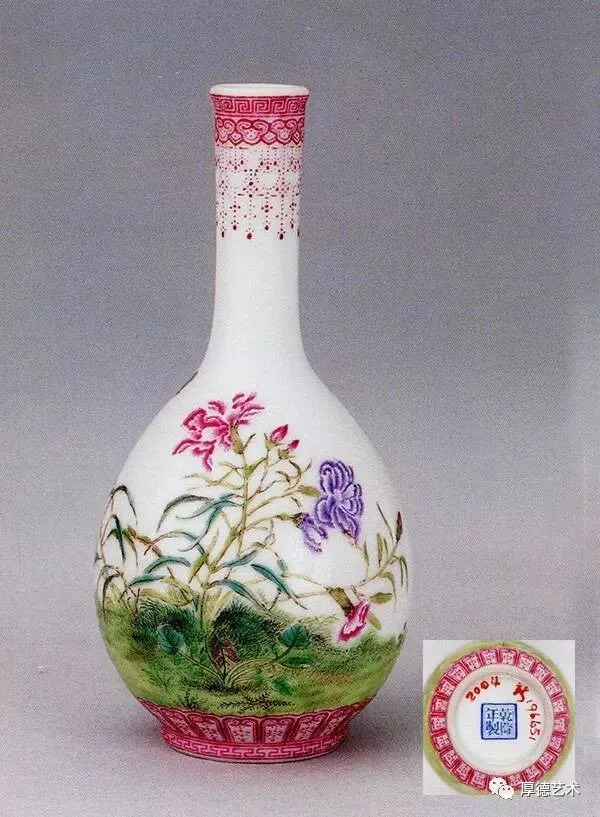
The Republic-era trade kept both streams busy. Famille rose offers the clearest pairing: the Qianlong original and the Republic copy below entered the same national collection, a century apart.
Why the four periods matter to collectors
Chinese collectors have a saying: in troubled times, gold; in prosperous times, porcelain. Genuine masterpieces are scarce, expensive and heavily faked, which is precisely why archaistic porcelain has never lost its standing in the collecting world. It offers the forms, glazes and spirit of the great periods at accessible prices u2014 and today’s new porcelain is tomorrow’s antique. Pieces bought honestly now become the heirlooms of coming decades, and as appreciation and incomes have risen, demand has risen with them.
What separates a serious piece from a souvenir is discipline in the making: the four standards behind a true archaistic reproduction u2014 fidelity of form, glaze, decoration and spirit. For what the tradition commands at auction, from four-figure Republic copies to eight-figure imperial revivals, see our guide to how old archaistic porcelain is and what it is worth.
Explore Jingdezhen craftsmanship
Jingdezhen Heritage works with workshops that continue these traditions u2014 handmade blue-and-white, famille rose and archaistic pieces fired in Jingdezhen. Browse the collections to see how historic forms and glazes live on in contemporary handmade porcelain.
Contact Jingdezhen Heritage
For enquiries about any piece, custom orders or wholesale, email us at service@jingdezhenheritage.com or message us on WhatsApp.