
High-fidelity archaistic reproduction u2014 fanggu fuzao u2014 takes the tradition of recreating historic wares a step further than ordinary imitation. Every element of the original is matched, from the clay body upwards, and the result is judged by the same standards applied to a work of art. In our earlier overview of archaistic Chinese porcelain, we explained why this tradition is distinct from forgery. Here we look at what the strictest practitioners actually require, through the eyes of a conservator who spent four decades working with the Palace Museum’s collection.
What is archaistic reproduction porcelain?
Archaistic reproduction (fanggu fuzao) means rebuilding a celebrated piece from its most basic materials. The body clay, the form, the dimensions, the glaze and the making techniques are all matched to the original as closely as possible. It differs fundamentally from a counterfeit: nothing about it pretends to be old. What is new is the object; what is old is every skill and standard it embodies.
Professor Cao Jinglou, former director of the science of conservation department at the Palace Museum, spent more than forty years studying and repairing historic ceramics, and has supervised the making of high-grade reproduction porcelain for over twenty years. In his words, the finest reproductions are not inferior to the originals that inspired them u2014 and with the help of modern technical controls, some now surpass them in refinement.
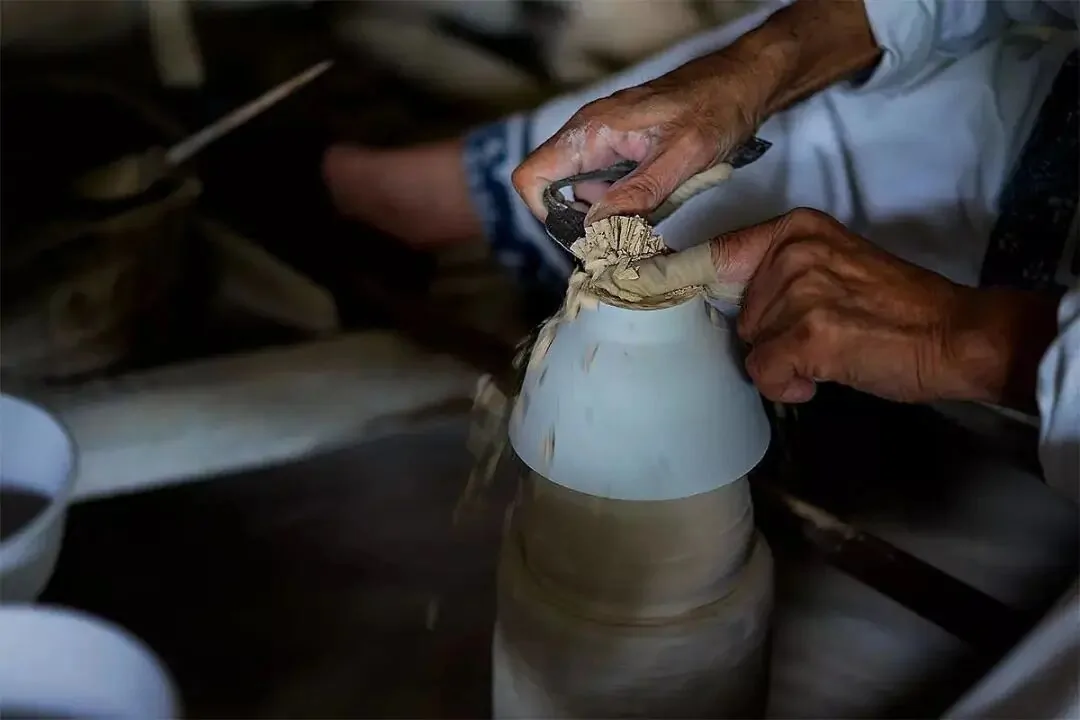
Why the making process is so unforgiving
Reproduction at this level is often compared to sitting China’s notoriously competitive university entrance examination. A piece must pass every stage of scrutiny by experts with exacting eyes; a single flawed procedure condemns it. Only the pieces that survive this elimination earn the name of a fine reproduction u2014 and the high rejection rate is precisely what separates these works from ordinary imitations and underwrites their cost.
The four standards of a true reproduction
1. Accurate form and line. The silhouette must be exact. Dimensions aim to match the original, and the exterior contours are held to strict limits. A porcelain vessel is not a machined object: its curves are rich and subtle, and the diameter of a cup’s mouth or the swell of its neck each has a correct answer that the potter must find.
2. Faithful materials. Pigments, colour and lustre must agree with the original u2014 and so must physical properties such as hardness. This is where modern laboratory control enters the workshop, measuring what earlier generations judged only by eye.
3. The painted decoration. Painting on porcelain is harder than painting on paper, and far less forgiving. A work on paper shows its effect at once; porcelain conceals it. Blue-and-white pigment goes on black, turns white under the glaze, and reveals its true face only after firing at high temperature. The work is also rarely one person’s: the painter of outlines may not be the filler of colours, and the filler of colours may not be the sprayer of glaze. Every hand adds uncertainty, which is why even celebrated paper-and-silk painters cannot simply transfer their art to a vase. Because everything is painted by hand, small differences between pieces are inevitable u2014 rather like a person’s signature, never identical twice yet unmistakably from the same hand. What must match is the style and the spirit. Our article on how Chinese porcelain is copied describes these techniques in detail.
4. Respect for traditional craft. A reproduction worthy of the name is made entirely by hand, following the old sequence. The selection of body clay alone is exacting: only material that is clean, fine and translucent qualifies. Rigour at every stage produces a high rate of rejection and, inevitably, a higher cost.
Is it worth collecting?
Professor Cao’s answer is direct: porcelain has no “genuine” and “fake”, only “new” and “old”. The value of a modern reproduction is decided by whether it is a masterpiece. Works by leading contemporary ceramic masters have sold for hundreds of thousands of yuan u2014 sums that some Qianlong-period pieces cannot reach. Artistic value, in the end, determines market value, and a true masterpiece will always be recognised.
Two further points support the case. First, a fine reproduction is the sum of high standards and high technical content, not a shortcut. Second, porcelain is fragile. Of a hundred pieces made today, how many will survive intact a decade from now? Survival rate shapes the value of all art objects, and archaistic reproductions are no exception: the passage of time does their scarcity argument for them.
Today most archaistic reproduction porcelain sells in the region of twenty to thirty thousand yuan u2014 within reach of anyone with modest means to collect. Judged against its refinement and the labour embodied in it, its future prospects remain high.
Explore Jingdezhen craftsmanship
Jingdezhen Heritage works with workshops that continue these traditions u2014 handmade blue-and-white, famille rose and archaistic pieces fired in Jingdezhen. Browse the collections to see how historic forms and glazes live on in contemporary handmade porcelain.
Contact Jingdezhen Heritage
For enquiries about any piece, custom orders or wholesale, email us at service@jingdezhenheritage.com or message us on WhatsApp.