
Quick answer
What is falangcai? Falangcai is painted enamel on porcelain — a refined overglaze-enamel tradition developed in the Qing imperial workshops around 1720, when European enamelling techniques were adapted to porcelain bodies fired at Jingdezhen. Western collectors later named the resulting rose-pink palette famille rose. Contemporary Jingdezhen works draw on this historical visual language while remaining clearly identified as modern production.
Key takeaways
- Enamel (falang) is glass powder fused with metal oxides; the substrate — metal or porcelain — determines what the technique is called.
- Falangcai is painted enamel on porcelain from the Qing court; famille rose is the Western collector’s name for its palette.
- Five techniques share one material: cloisonné, champlevé, guilloché, plique-à-jour and painted enamel.
What is falangcai? The five enamel techniques at a glance
| Technique | Where the enamel sits | How it is made | Visual effect |
|---|---|---|---|
| Cloisonné (qiasi, Jingtailan) | A metal body. | Thin wires are bent and soldered into compartments (cloisons); each is filled with enamel paste and fired. | Fine gold or copper outlines between colour fields; turquoise ground and dense floral motifs. |
| Champlevé | A metal body. | Channels are carved, engraved or cast into the body itself and filled directly with enamel. | Colour set into the surface, with no wires applied on top. |
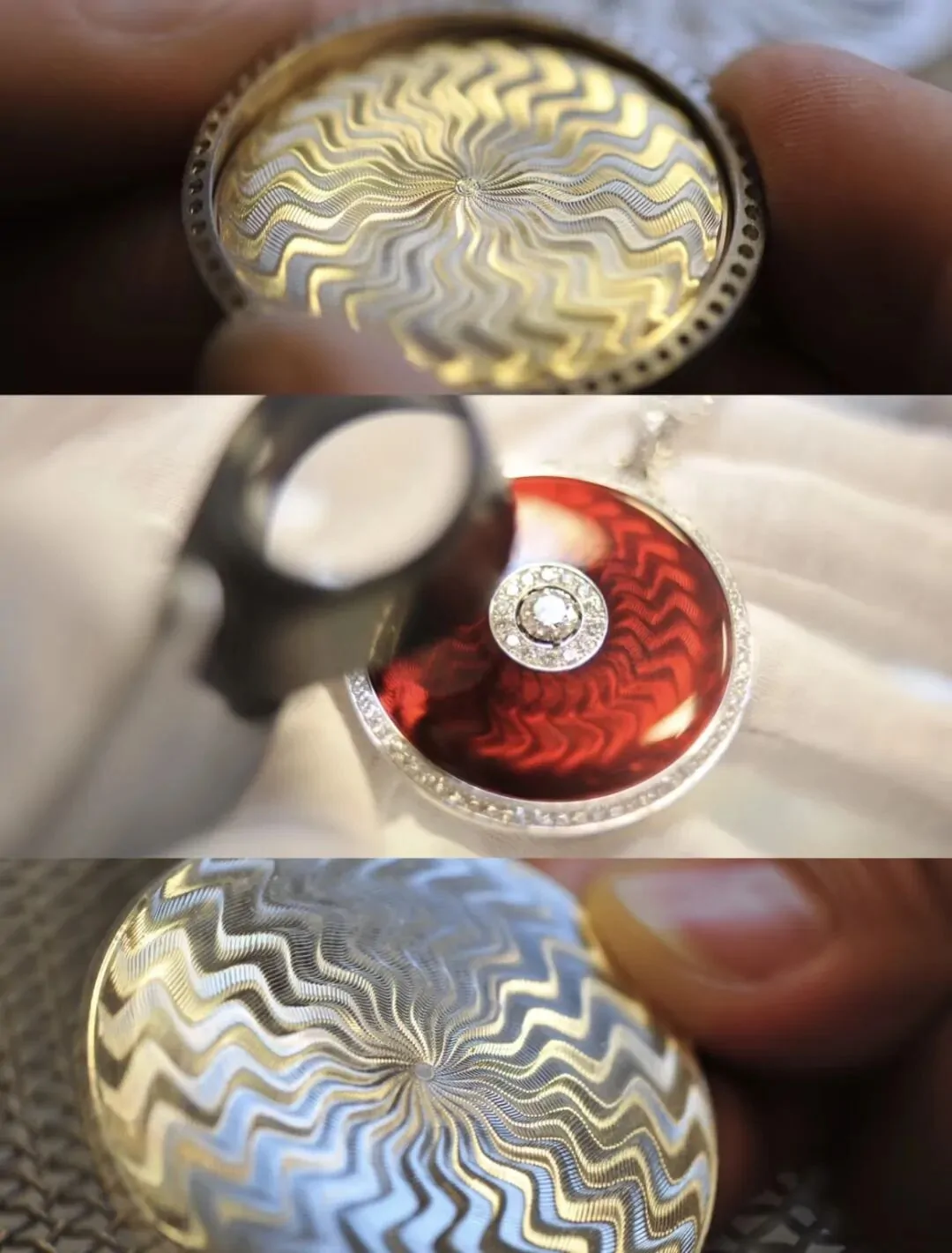
| Guilloché | An engine-turned metal body. | Precise repeating patterns are engraved on a rose-engine lathe, then covered with translucent enamel. | Shimmering geometric depth visible through the colour. |
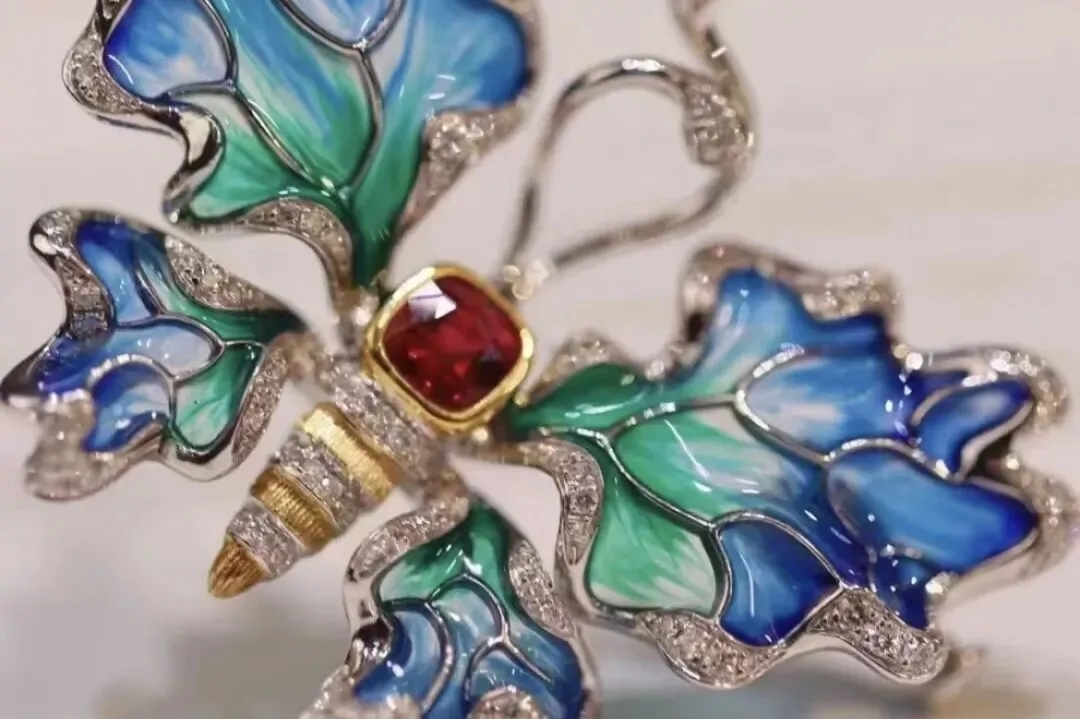
| Plique-à-jour | An open wire or filigree framework, with no backing. | Enamel is fused into open cells so light can pass through. | Stained-glass translucency when held to the light. |
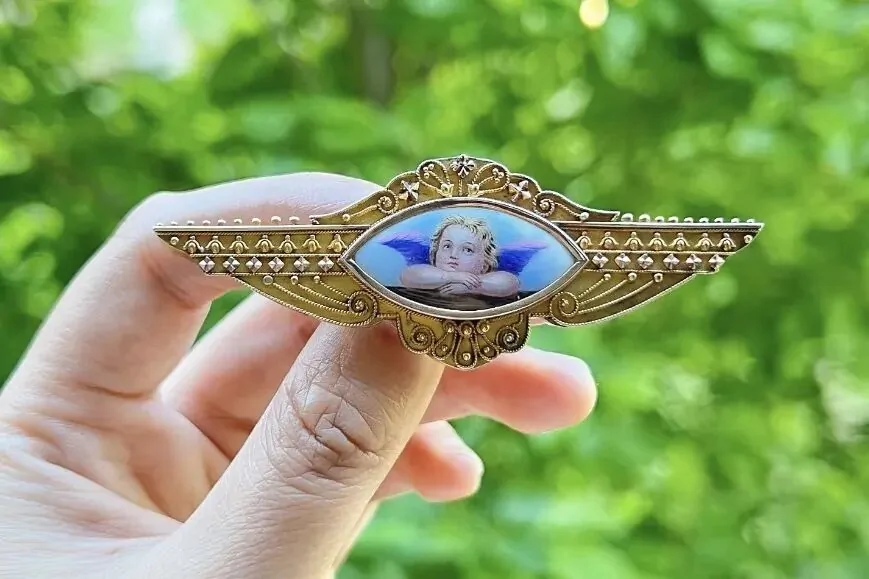
| Painted enamel (falangcai on porcelain) | A metal or fired porcelain surface. | Coloured enamel paste is brushed on in layers, each fired separately. | A painterly, shaded image in glass that will not fade. |
Falangcai vs famille rose: a terminology note
Falangcai is the Chinese court term for painted enamel applied to porcelain. Famille rose is the name Western collectors later gave to the whole palette, after the rose-pink enamel derived from colloidal gold that became its signature.
The five techniques in the table belong to one broader enamel family. Cloisonné, champlevé, guilloché and plique-à-jour are worked on metal; painted enamel can be worked on metal or on porcelain.
Contemporary Jingdezhen pieces made in this style are modern handcrafted creations — not Qing imperial originals, not antiques, and not evidence of historical age or provenance.
Enamel is one of the oldest decorative technologies in the world. In Chinese it is called falang (珐琅), a word transliterated from Byzantine Greek during the Sui and Tang dynasties. On porcelain, the technique reached its highest refinement in the imperial workshops of the Qing dynasty, where it was known as falangcai — painted enamel on porcelain — and gave rise to the tradition Western collectors call famille rose.
What is enamel?
In Chinese craft tradition, the glassy layer fused onto pottery or porcelain is called you (glaze). The same material applied to architectural tiles is called liuli (glazed tile). When it coats a metal body, it is called falang — enamel.
Enamel is made by melting glass powder together with metal oxides at temperatures above 1,000 °C. The molten glass is allowed to cool and harden, then ground into a fine powder. Different metal compounds produce different colours: cobalt for blue, copper for red, iron for brown, antimony for yellow.
When the powder is re-fired on a metal or ceramic surface, it re-melts and bonds into a smooth, glassy skin with a gem-like lustre that can last for centuries without fading.
How is enamel made? The raw material
The process begins with quartz, feldspar and clay minerals — the same families of raw materials used in porcelain itself. These are mixed with metal oxide pigments, melted at high temperature, and then cooled. The resulting glass block is ground to a fine powder, which becomes the enamel paste. When this paste is painted or packed onto a surface and fired again, it re-melts into a permanent, glassy coloured layer.
This is why enamel and porcelain are sister crafts: both depend on minerals, high temperatures and the transformation of earth into glass. The difference is the substrate — metal for enamel, clay for porcelain. Chinese enamel porcelain brings the two together, applying enamel colours onto a fired porcelain body.
The five traditional enamel techniques
Across the world, and especially in China, five main techniques have been developed for working enamel onto a surface. Each produces a different visual effect.
1. Cloisonné — wire-partition enamel
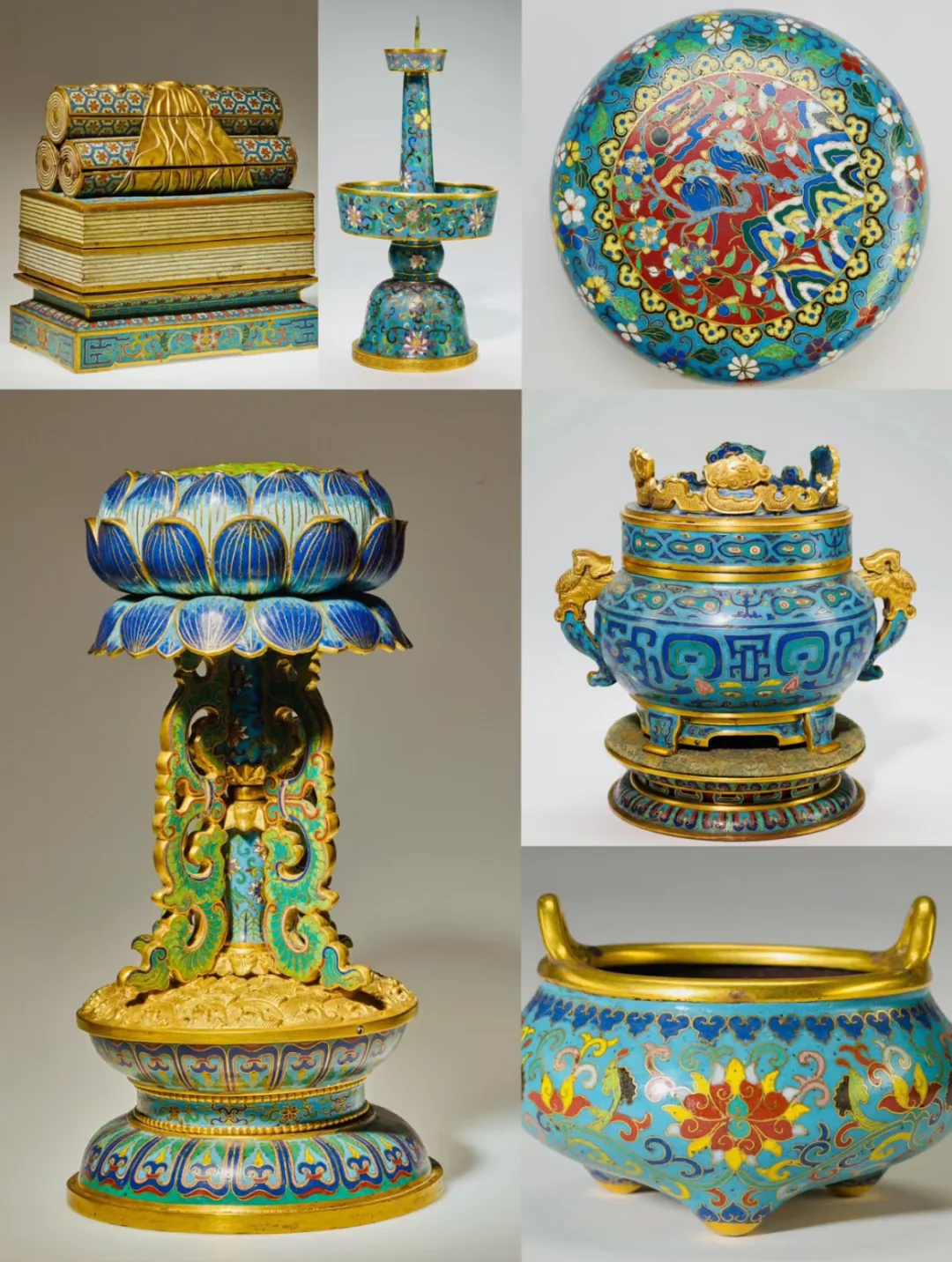
In cloisonné, thin metal wires are bent and soldered onto a metal body to form compartments — cloisons in French, qiasi in Chinese. Each compartment is filled with enamel paste of a different colour, and the piece is fired. After grinding and polishing, the wires remain as fine gold or copper outlines between the coloured areas.
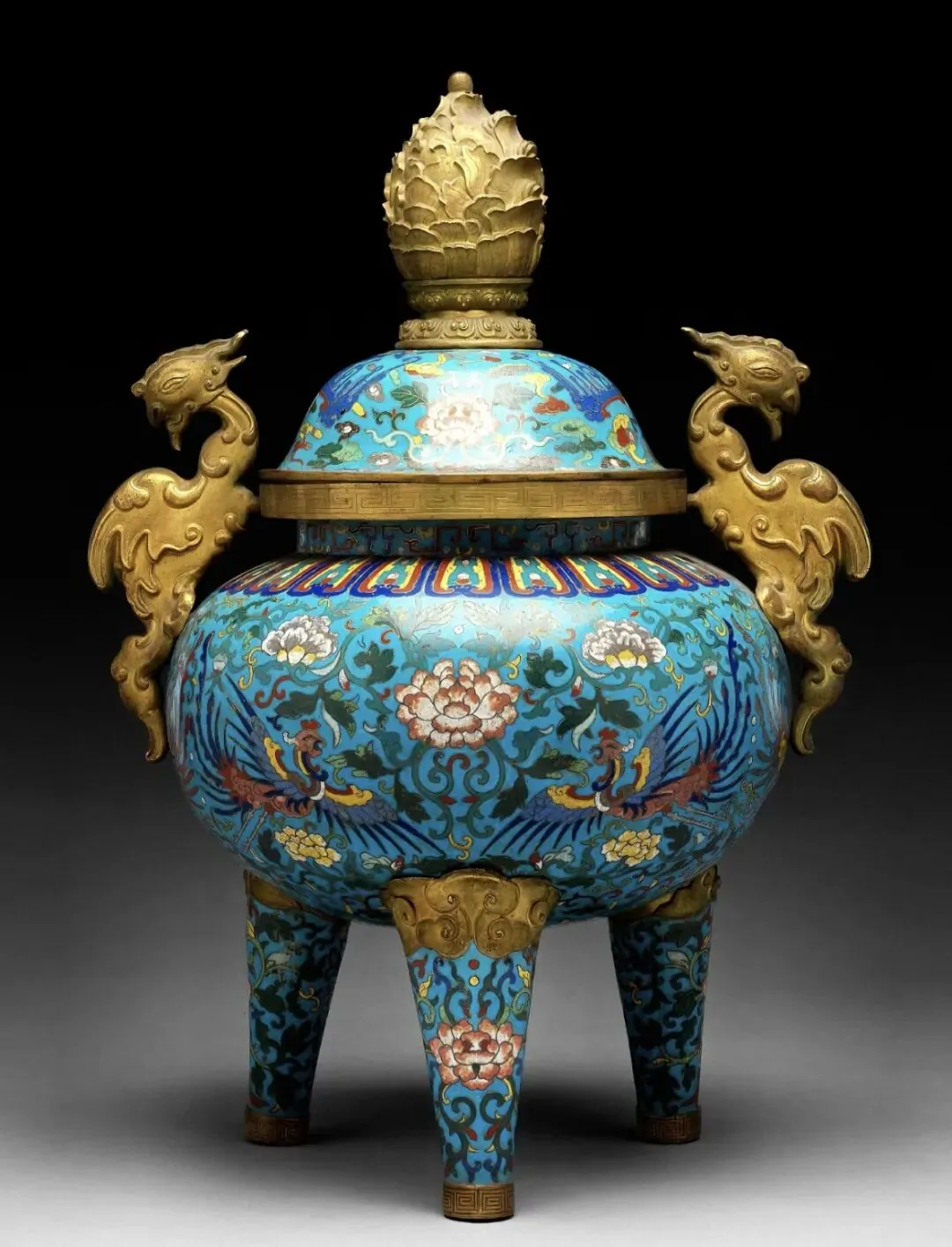
In China, cloisonné is known as Jingtailan after the Jingtai reign (1450–1457), when the technique reached maturity. The turquoise-blue ground, dense floral motifs and gilded copper bodies make it one of the most recognisable of all Chinese decorative arts.
2. Champlevé — carved-recess enamel
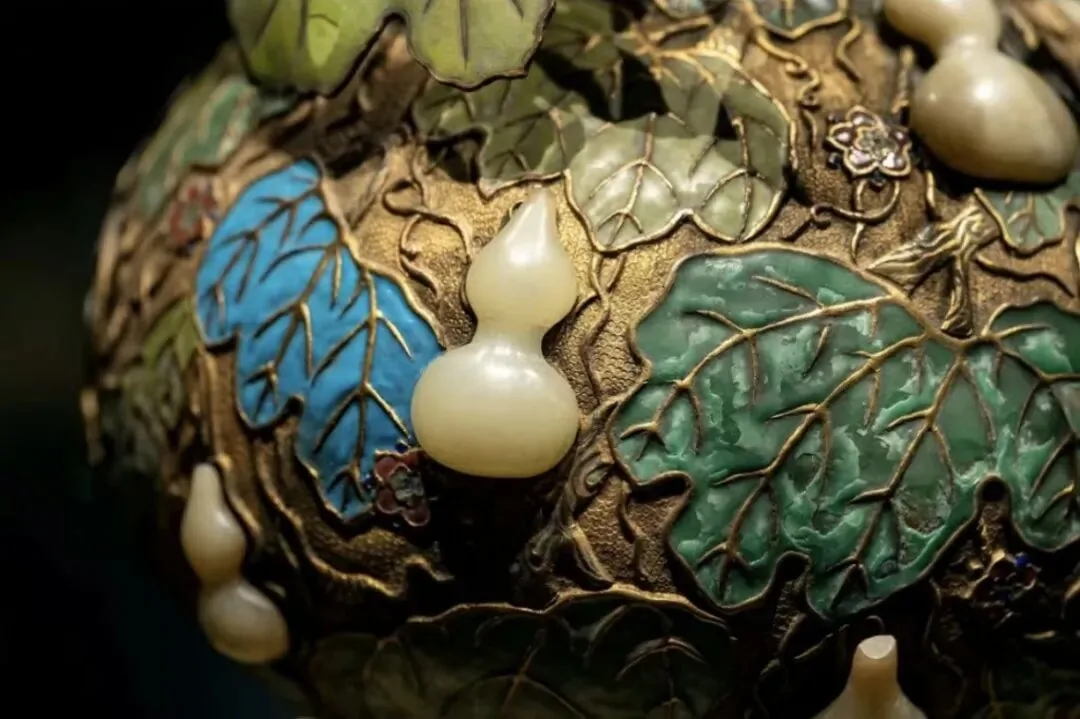
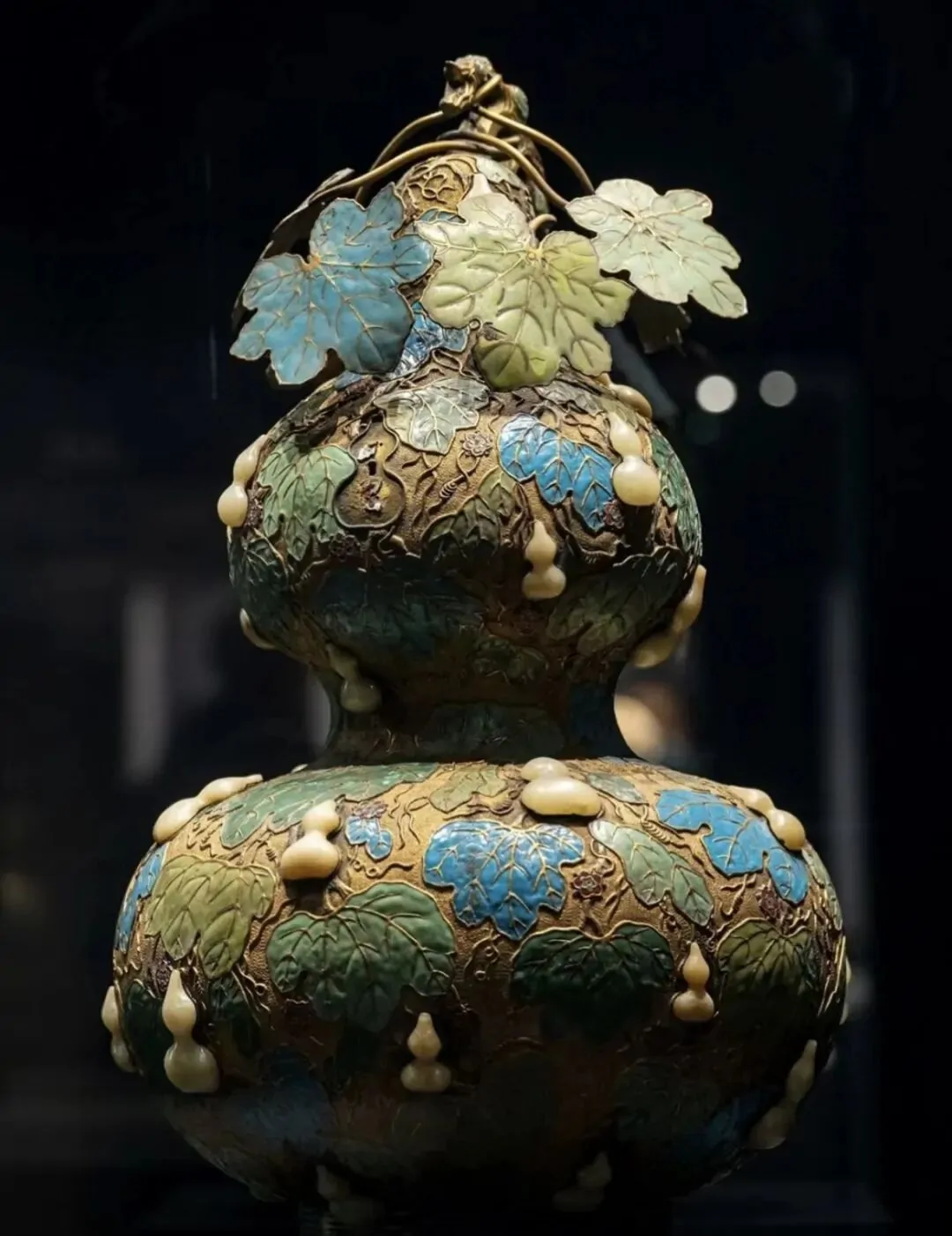
In champlevé, the surface of the metal body itself is carved, engraved or cast with recessed channels. Enamel paste is filled directly into these recesses and fired. Unlike cloisonné, the partitions are cut into the body rather than applied on top of it.
3. Guilloché — engine-turned enamel
Guilloché enamel uses a metal body that has been engraved with precise, repeating patterns on a rose-engine lathe. Translucent enamel is then applied over the engraved surface, so that the geometric pattern beneath shimmers through the coloured layer. The effect is one of depth and shimmer, like water moving over a textured floor.
4. Plique-à-jour — window enamel
Plique-à-jour is the most demanding of the enamel techniques. Instead of a solid metal backing, the enamel is fused into a framework of wire or metal filigree, with nothing behind it. When held to the light, the piece glows like stained glass — translucent, vivid and weightless.
5. Painted enamel — the technique behind famille rose
Painted enamel, the fifth technique, is the most direct: coloured enamel paste is painted onto a metal or ceramic surface with a brush, then fired. Multiple layers and firings build up an image in glass — a picture that will never fade.
From metal to porcelain: the birth of falangcai
In the late Kangxi reign, around 1720, the Qing imperial workshops began applying painted-enamel techniques to porcelain. European Jesuit enamellers working at the court brought knowledge of Western overglaze enamels, and Chinese potters adapted them to the porcelain body fired at Jingdezhen.
The result was falangcai — painted enamel on porcelain. Unlike earlier overglaze decoration, the new enamels were opaque and could be layered, shaded and blended like oil paint. A pink-white enamel derived from colloidal gold allowed soft gradations of colour that had never been possible on porcelain before. Western collectors later named the whole palette famille rose porcelain, after the rose-pink that became its signature colour.
Why famille rose changed porcelain forever
Before falangcai, porcelain decoration was largely linear. Underglaze cobalt blue and overglaze iron-red, copper-green and lead-fluxed colours produced flat, bold patterns. With the new enamel palette, artists could render three-dimensional volume, soft shadow and naturalistic detail on a curved porcelain surface.
Under the Yongzheng and Qianlong emperors, the palace workshops at Jingdezhen produced famille rose vase forms of extraordinary ambition: revolving reticulated bodies, pierced walls, gilded mounts and iron-red grounds. The nine-dragon elephant-ear vase and the hundred-horses pair are examples of how far the technique could be pushed.
How to identify quality enamel porcelain
Several signs distinguish fine falangcai and famille rose work:
- Colour depth: Opaque, richly pigmented enamels layered over a white porcelain body, not thin washes.
- Brushwork: Fine, confident lines and naturalistic shading — petals and leaves show volume, not just outline.
- Gilding: Gold applied to rims, handles and relief elements, sometimes burnished to a high lustre.
- Body quality: A pure white, fine-grained porcelain body that does not compete with the decoration.
- Design integration: The painted decoration works with the form of the vessel, not simply covering it.
Why does enamel porcelain matter today?
Enamel on porcelain is a meeting point of three craft traditions — glassmaking, metalwork and ceramics — and of two cultures, Chinese and European. The falangcai of the Qing court was one of the first art forms in which Chinese and Western techniques genuinely fused. That fusion produced some of the most sought-after porcelain in the world, and contemporary Jingdezhen studios still work in the same enamel palettes perfected three centuries ago.
Explore Jingdezhen craftsmanship
Our collection includes hand-made famille rose and falangcai-style porcelain pieces from contemporary Jingdezhen studios, each made using the traditional painted-enamel techniques described above. Browse the collection to see how these techniques look on finished pieces.
Contact Jingdezhen Heritage
Would you like to know more about enamel techniques, a specific famille rose piece, or a custom commission? Contact us with your questions.
Email Jingdezhen Heritage · Message us on WhatsApp
Sources and further reading
Verified references
- How falangcai enamel is made
- Falangcai and cloisonné compared
- What is famille rose porcelain?
- Falangcai making process, step by step
- The 72 traditional steps of Jingdezhen porcelain
Technique descriptions follow the article text above and the Chinese craft terms named there. This page is an overview; the linked articles cover individual processes and comparisons in greater depth. No claim of age, provenance or imperial manufacture is made for contemporary works.
Frequently asked questions
What is enamel?
In Chinese craft tradition, the glassy layer fused onto pottery or porcelain is called you (glaze). The same material applied to architectural tiles is called liuli (glazed tile). When it coats a metal body, it is called falang — enamel.
Why does enamel porcelain matter today?
Enamel on porcelain is a meeting point of three craft traditions — glassmaking, metalwork and ceramics — and of two cultures, Chinese and European. The falangcai of the Qing court was one of the first art forms in which Chinese and Western techniques genuinely fused. That fusion produced some of the most sought-after porcelain in the world, and contemporary Jingdezhen studios still work in the same enamel palettes perfected three centuries ago.
A question about enamel porcelain?
Ask us about a technique, a colour, a historical comparison or a contemporary hand-painted piece — enquiries are welcome and no purchase is required.
Email Jingdezhen HeritageMessage us on WhatsApp