
If gemstones are nature’s showpieces, enamel is humanity’s answer to them. Over more than three thousand years this craft u2014 fusing ground glass onto metal and porcelain at high temperature u2014 has grown from a decoration for vessels into the signature surface of fine jewellery. This guide explains what enamel is, how the technique reached China in two great waves, and walks through the making process step by step, from raw minerals to the final fired piece.
What is enamel?
Enamel is a powder of glass and mineral pigments that, once fired above roughly 500 u00b0C, melts into a viscous liquid and cools into a glassy coat with the lustre and feel of a gemstone. In southern China the craft is colloquially called shaoqing (“fired green”), in the north shaolan (“fired blue”), and in Japan the same art is known as shippo-yaki u2014 the “seven treasures”.
The finished surface is remarkably tough: hard, waterproof, resistant to heat, abrasion and corrosion. It does not age, tarnish or fade, which is why enamelled pieces made centuries ago still glow with their original colour today. Those qualities u2014 brilliant saturation, glassy depth and permanence u2014 are exactly why famille rose porcelain and enamelled jewellery remain prized by collectors.
How enamel reached China: two waves
China’s mature enamel tradition arrived along two separate routes.
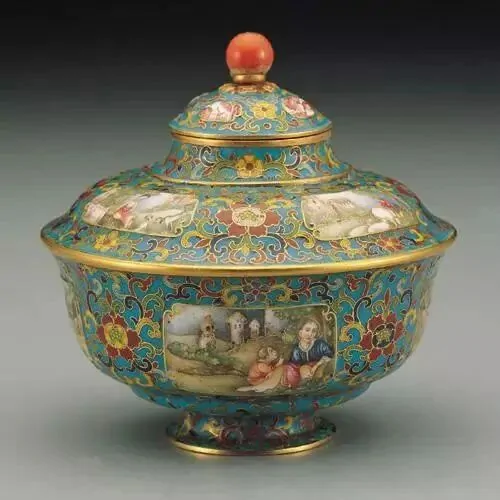
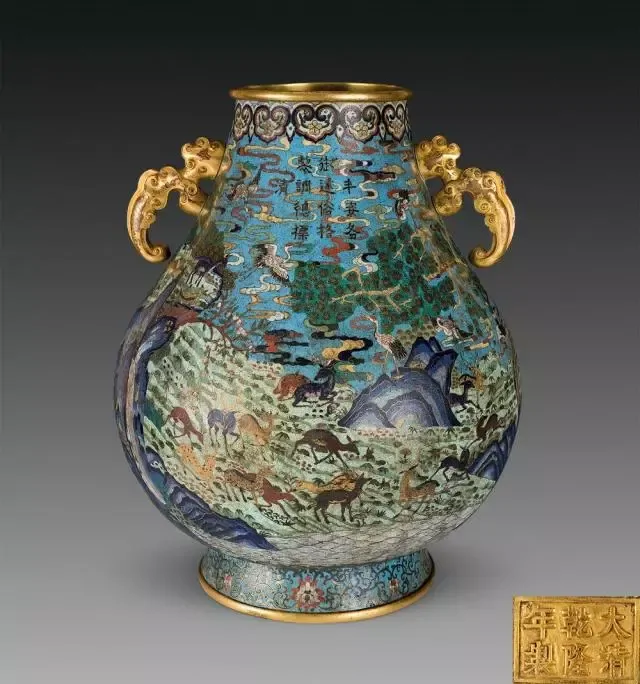
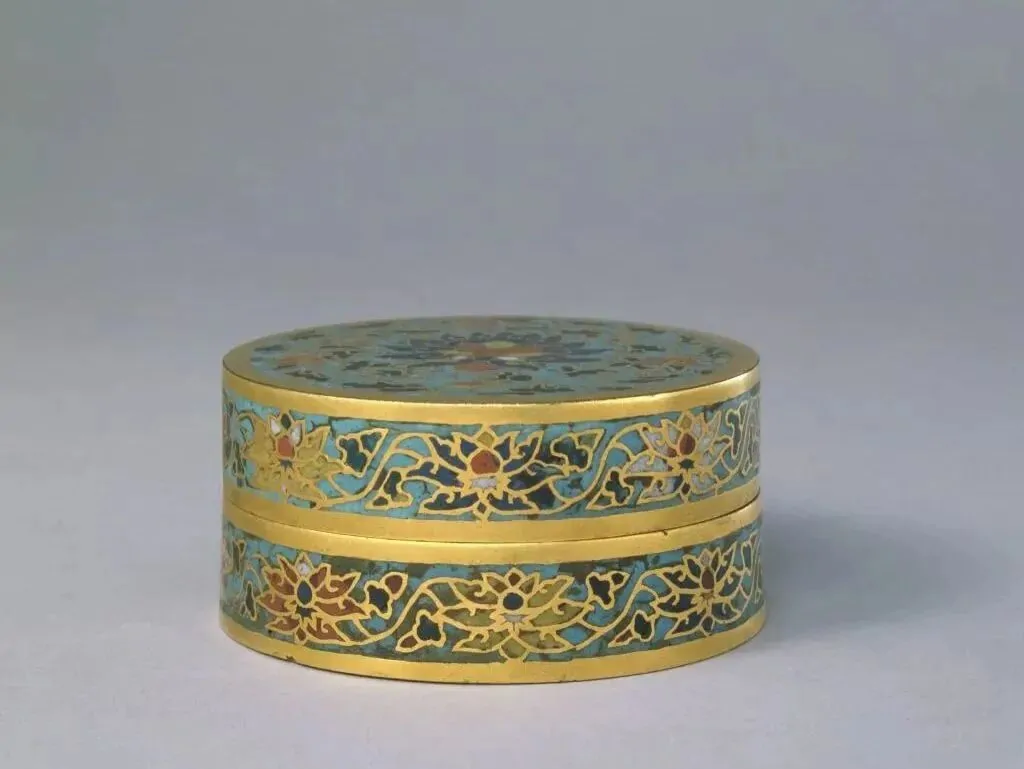
The first wave came at the turn of the fourteenth century, when Yuan-dynasty rulers brought back cloisonnu00e9 enamel u2014 then well developed in the Arab world u2014 through their campaigns and exchanges with Western Asia. The technique was fired in quantity under the Ming, reaching its height during the Jingtai reign. Because most pieces of that era were dominated by turquoise blue, the ware became known as Jingtailan, “Jingtai blue”, the name it still carries today.
The second wave arrived in the seventeenth century, when European merchants and missionaries brought painted enamel by sea. In Guangdong it was called shaoqing, “Canton enamel” or “foreign enamel”. The Kangxi, Yongzheng and Qianlong emperors all adored the novelty: workshops were established at the Imperial Workshops in Beijing and in Guangdong, skilled Cantonese enamel painters were repeatedly summoned north to serve at court, and production was reserved almost entirely for imperial use. On porcelain bodies this court tradition became falangcai, painted enamel on porcelain.
The making process, step by step
The best way to understand enamel is to watch a piece come into being. The sequence below follows a cloisonnu00e9 piece from raw mineral to fired colour.
Step 1: preparing the enamels
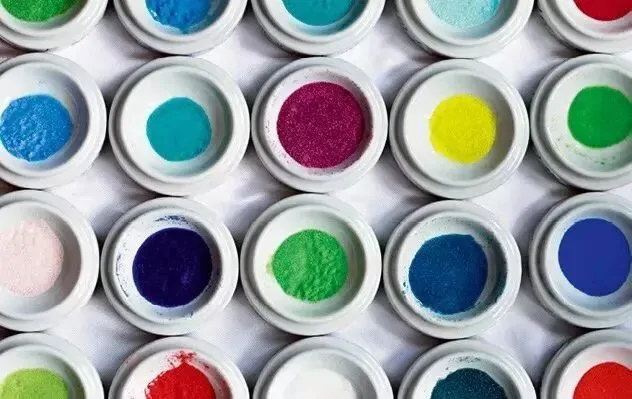
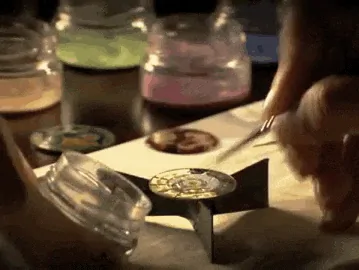
Everything begins with the raw material. Quartz sand and metal-oxide colourants are ground together in a mortar until they form a fine, even powder u2014 the “paste” the painter will later apply. The fineness of the grind decides how smoothly the colour will flow and level in the kiln.
Step 2: bending the wire
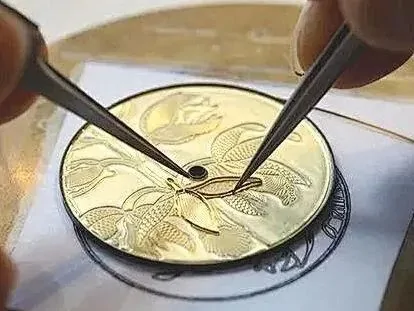
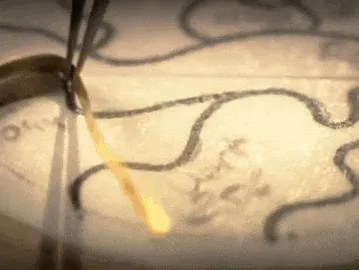
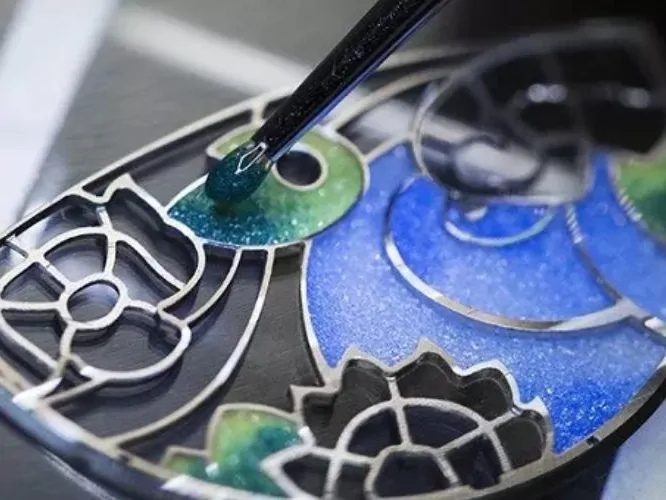
Next comes cloisonnu00e9’s defining act: the wire. Thin copper or gold wire is bent along the lines of the design and attached to the metal body, building a raised framework of cells. The finer the wire, the finer the picture u2014 a master can draw and set gold wire thinner than a quarter of a human hair.
Step 3: filling the cells
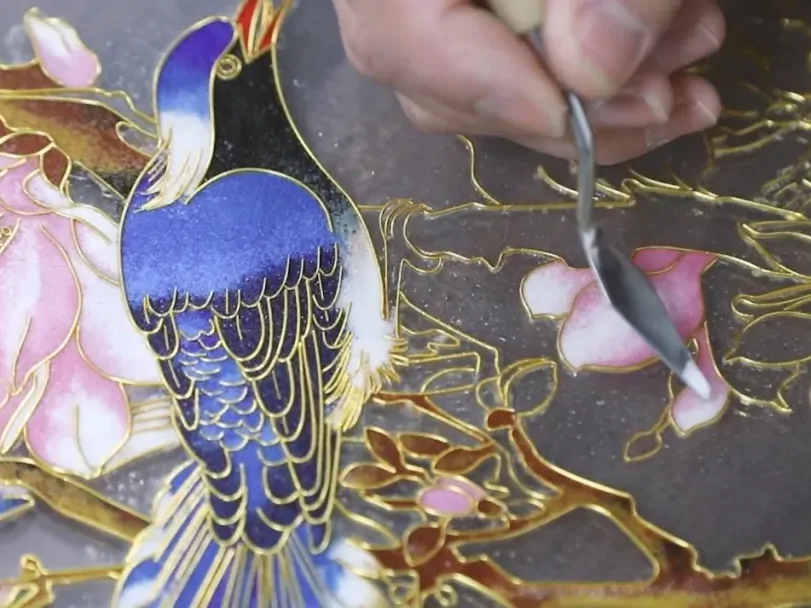
With the framework complete, each cell is packed with enamel paste of a different colour u2014 precision work often done under magnification, as the opening photograph of this article shows.
Step 4: firing
The filled piece enters the kiln at around 800 u00b0C. In the dancing heat the enamel melts and settles; the piece is cooled, refilled to correct the sinkage, and fired again u2014 often many times u2014 until each cell is full, level and glossy.
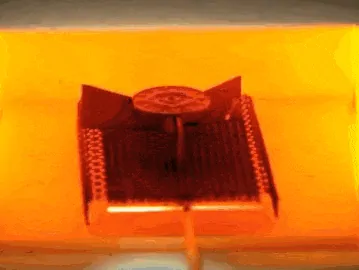

Step 5: cooling and finishing
After the final firing the piece is left to cool. As the red glow fades, the surface is ground flat and polished, and the metal is gilded u2014 and the finished enamel emerges with its gem-like brilliance.
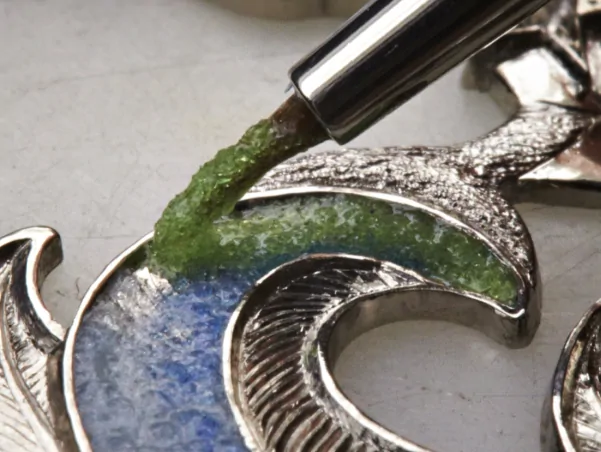
Champlevu00e9: carving the cells instead
Cloisonnu00e9 builds its cells up with wire; champlevu00e9 cuts them down into the metal. The technique u2014 born in Egypt over two thousand years before Christ u2014 has the artisan chase, carve or cast recesses into a gold or silver body, fill them with enamel, then grind, polish and gild the surface. Because the backing is precious metal, light passes through the translucent enamel and reflects back, giving the colour a singular warmth and depth. Varying the depth of the carving varies the tone, which is why champlevu00e9 surfaces look so richly modulated.
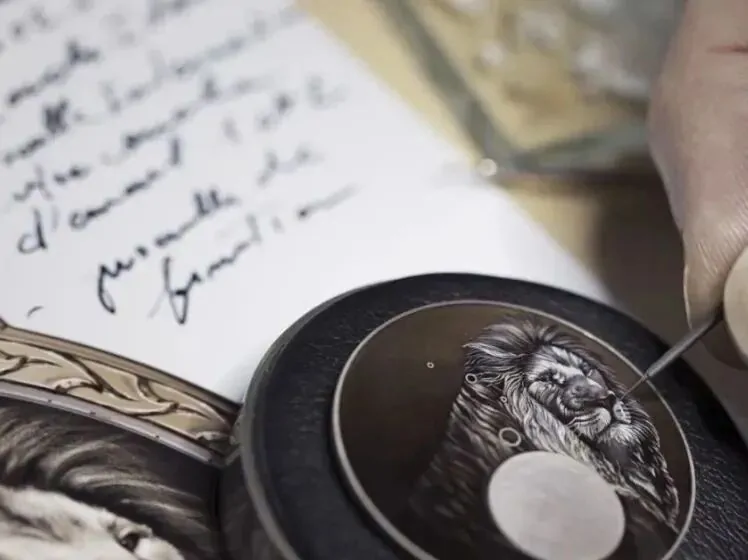
Painted enamel: painting in glass
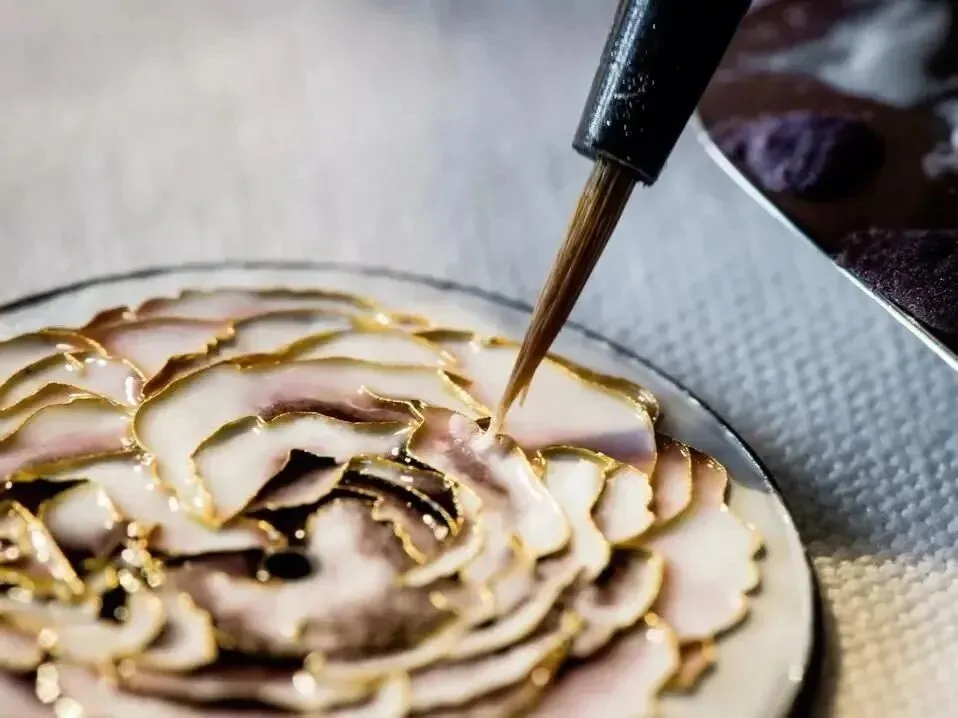
Painted enamel treats enamel as a pigment. A white ground is fired onto the body first u2014 copper, glass or porcelain u2014 and the artist paints on it with coloured enamels, returning the piece to the kiln between each layer. The process is laborious and the failure rate high, but a finished panel rivals oil painting in detail and can outlast it by a millennium without fading. Variants include cititai painted enamel on porcelain and the subtle grey-enamel tradition, and the technique remains the backbone of today’s finest enamel jewellery. On imperial porcelain it produced the works Western collectors now class as Chinese enamel porcelain.
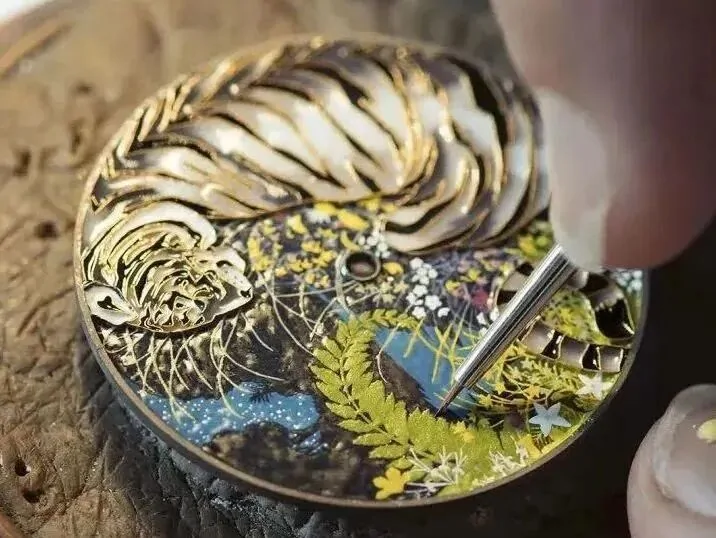
Plique-u00e0-jour: enamel without a floor
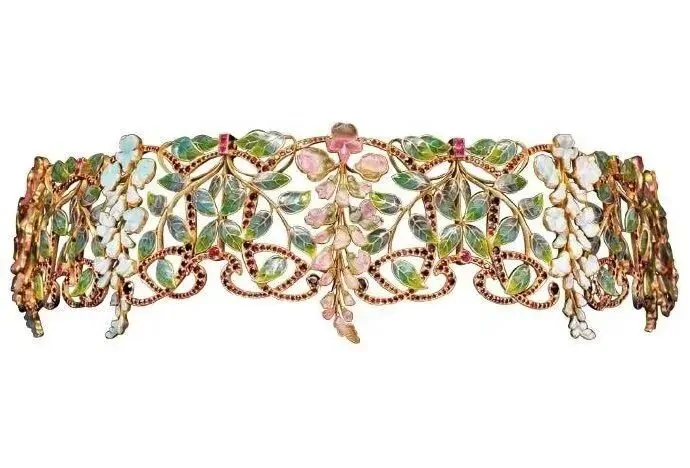
Plique-u00e0-jour, developed in Europe from cloisonnu00e9, removes the backing altogether. There are two ways to achieve it: saw or carve openwork windows in a solid body and build up enamel inside them little by little, or form wire cells in the cloisonnu00e9 manner, fire the enamel, and then dissolve the metal base away in an acid bath. The result is a wing of pure coloured glass. Controlling the gradations of tone within such a fragile framework demands exceptional patience u2014 a single piece may take weeks.
Hand craft in the age of machines
In an era of assembly lines, most objects can be mass-produced. Yet enamel resists the shortcut: every firing is a small act of risk, every colour the result of judgement built over years. In this era of fast, replicable fashion, the hand-fired surface keeps alive something machines cannot supply u2014 the patience, skill and love of a maker. That is why a fine famille rose vase, enamelled and fired by hand, still stands apart from anything printed or sprayed.
Explore Jingdezhen craftsmanship
If the making process above interests you, our collection of hand-made Jingdezhen famille rose and enamel-decorated porcelain shows these traditions practised today u2014 from rose-painted vases to gilt openwork pieces.
Contact Jingdezhen Heritage
Would you like to know more about a technique, a piece in our collection or a custom commission? Contact us with your questions.