
Falangcai u2014 literally “enamel colours” u2014 is the art of fusing ground glass onto metal or porcelain at high temperature. The finished surface has the lustre of a gemstone and, if cared for, keeps its colour for centuries. This guide explains how the craft works and walks through the four techniques every collector should know: cloisonnu00e9, champlevu00e9, painted enamel and plique-u00e0-jour.
What exactly is enamel?
In the Chinese craft vocabulary, a glassy coating fused onto pottery or porcelain is called glaze; the same material on architectural tiles is liuli; and when it covers a metal body it is called falang u2014 enamel. The craftsperson grinds mineral materials such as quartz, feldspar, china clay, lapis lazuli and malachite into a fine paste, paints or packs it onto the surface, dries it, then fires it. At high temperature the powder melts into glass and bonds permanently to the body beneath.
Because the colours come from metal oxides locked inside glass, they do not fade like pigment. Properly kept, an enamel surface keeps its gem-like brilliance for hundreds of years u2014 one reason enamelled objects from the Ming and Qing courts still look freshly made today.
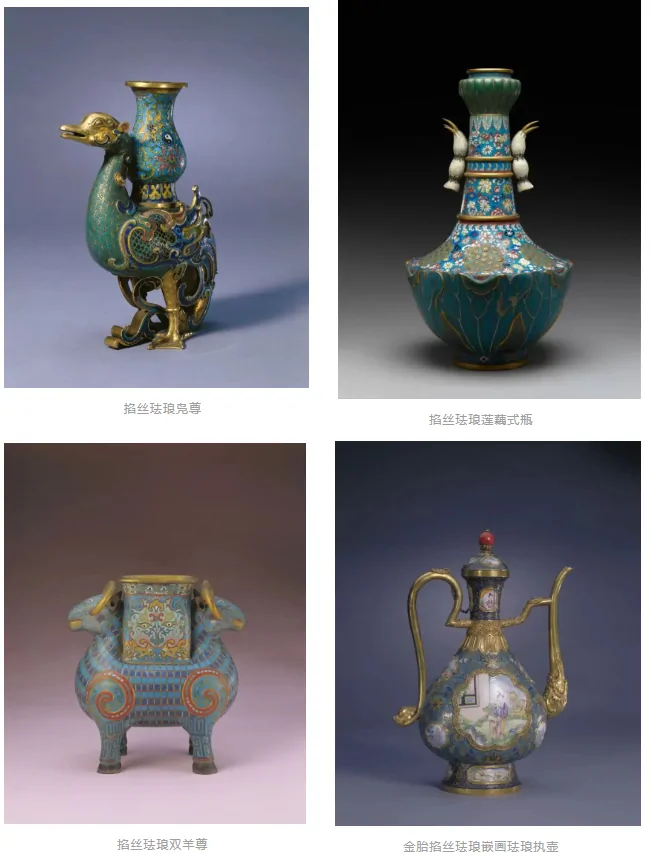
1. Cloisonnu00e9 (jingtailan): building pictures with wire
The best-known Chinese enamel technique is cloisonnu00e9, or jingtailan. The maker first bends thin gold or copper wire into the outlines of a design and fixes it to a metal body. Each cell formed by the wires is filled with a different coloured enamel, and the piece is fired, ground smooth, polished and finally gilded. The wires survive as glittering outlines around every colour, giving the surface its characteristic jewelled look.
The name jingtailan comes from the Jingtai reign of the Ming dynasty, when the craft developed spectacularly, and from the deep blue ground colour that made those wares famous. Strictly speaking it is a composite craft u2014 metalwork plus enamel u2014 and branches such as the Japanese shippo and Russian work in the same family show how far the tradition travelled.
2. Champlevu00e9: carving the cells into the metal
In champlevu00e9 the maker works the opposite way. Instead of raising wire above the surface, the design is carved, chased or cast directly into the metal body, cutting recessed cells beyond the outlines. Enamel paste is packed into these hollows and fired, then the whole surface is ground flat and polished, and often gilded.
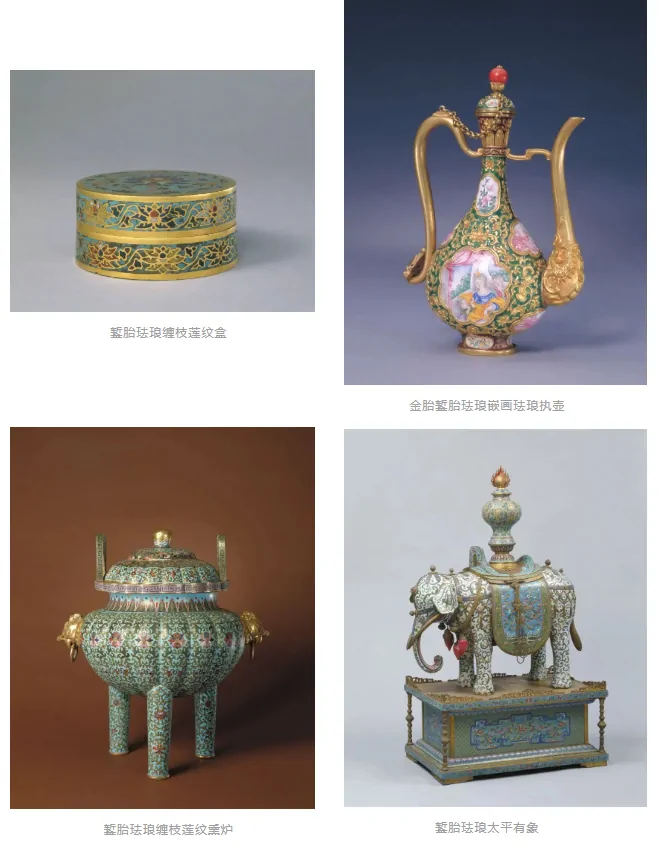
Because champlevu00e9 bodies were usually gold or silver, light passing through the thinner, semi-translucent enamels bounces back off the precious metal beneath. This gives champlevu00e9 its distinctive warm glow and depth of tone.
3. Painted enamel (falangcai): painting in glass
Painted enamel is the most painterly of the techniques. A ground layer of white enamel is first fired onto a metal or porcelain body; the artist then paints the design on top with coloured enamel pastes, returning the piece to the kiln between layers. The failure rate is high and the process slow, but the result rivals oil painting in subtlety u2014 and cannot fade.
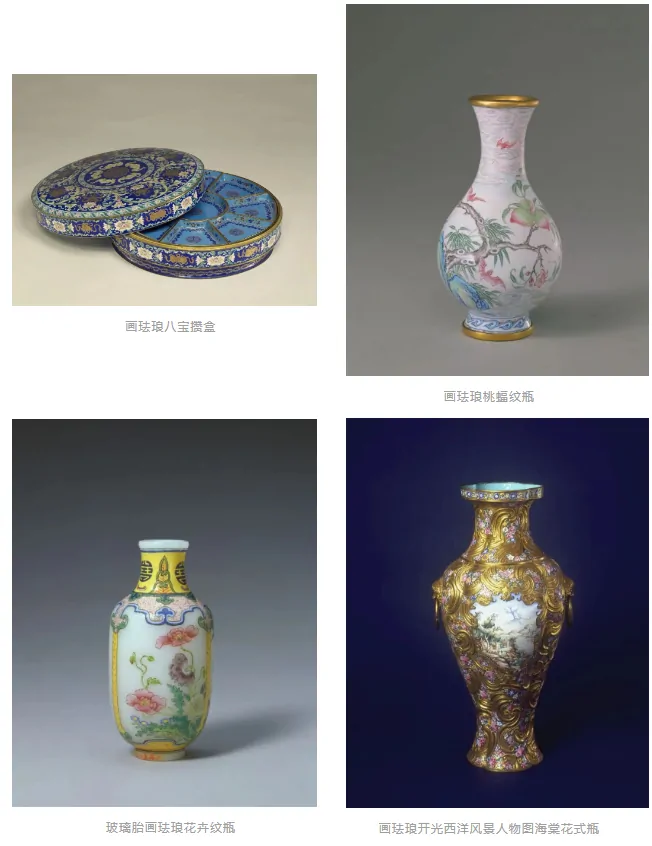
On porcelain, painted enamel became falangcai porcelain u2014 known in the palace as Guyue Xuan (“Old Moon Pavilion”) ware. First made in the Kangxi reign and derived from the study of copper-body cloisonnu00e9, these pieces were imperial treasures from the start. On European porcelain bodies the same technique produced superb wares for export, and Western collectors eventually named the rose-pink palette famille rose porcelain. In Jingdezhen the painted-enamel tradition lives on in every studio that decorates a fired body and returns it to the kiln.
4. Plique-u00e0-jour: enamel without a back
Plique-u00e0-jour u2014 “letting in daylight” u2014 is the most fragile and difficult variant. The maker either saws openwork windows into a metal frame or builds cells of wire with no backing at all, fills them with enamel and fires. Once complete, light passes straight through the glass, so the piece glows like a stained-glass window.
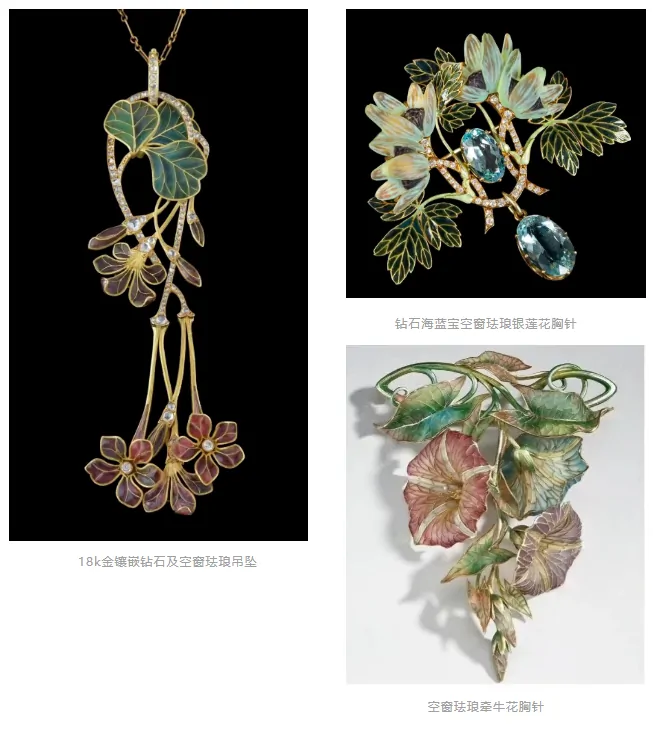
Two methods make it possible: cutting holes in a solid body and building up enamel little by little, or cloisonnu00e9-style wirework whose metal base is later dissolved away with acid. The technique flourished in the Art Nouveau movement of the early twentieth century, whose designers loved its weightless, luminous effects in jewellery.
From metal craft to porcelain: why falangcai matters
All four techniques share one idea u2014 colour carried in glass u2014 but they answer different questions of body, cost and use. Cloisonnu00e9 and champlevu00e9 belong to the metalworker, plique-u00e0-jour to the jeweller, and painted enamel to the porcelain painter. It was the last of these that transformed Chinese ceramics: when the enamel palette crossed from copper to porcelain in the 1720s, painters gained colours that could be layered and blended, and a new art was born. The classic famille rose vase forms of the Qianlong court u2014 reticulated, revolving, gilded u2014 are painted enamel at its most ambitious, while works such as the gilt Chinese enamel porcelain Buddha show how the palette spread across every category of court art.
Caring for enamel pieces
Enamel is glass bonded to metal or porcelain: hard, but brittle at the edges. Keep pieces away from sudden temperature change, avoid knocks to rims and wire edges, dust with a soft dry brush, and never soak plique-u00e0-jour. Stored sensibly, the colours will outlast their owners u2014 as a millennium of enamelled treasures proves.
Explore Jingdezhen craftsmanship
If the techniques above interest you, our collection of hand-made Jingdezhen famille rose and enamel-decorated porcelain shows these traditions practised today u2014 from rose-painted tea wares to gilt openwork pieces.
Contact Jingdezhen Heritage
Would you like to know more about a technique, a piece in our collection or a custom commission? Contact us with your questions.