
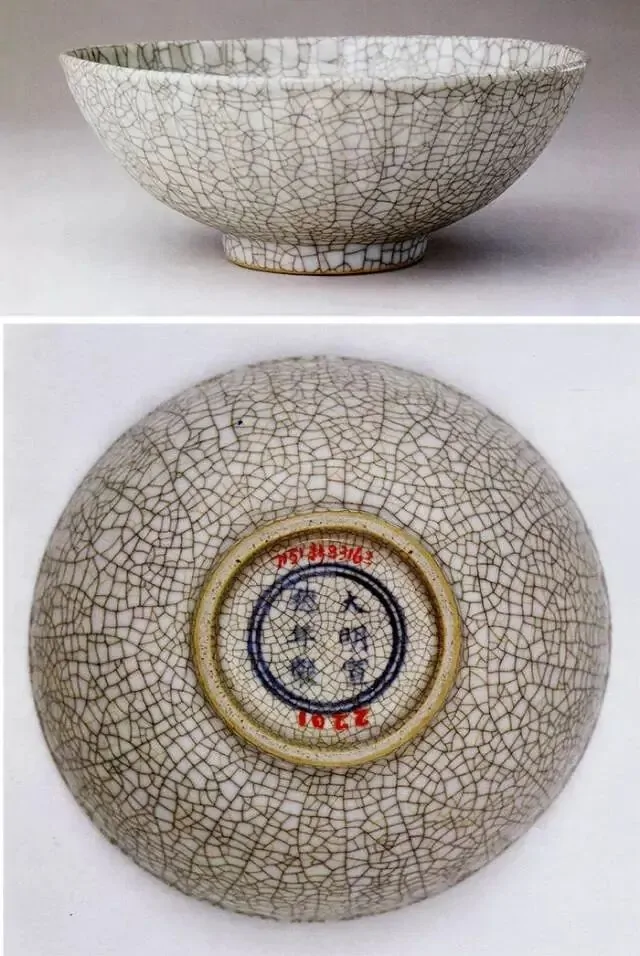
Chinese porcelain has a long history of famous kilns and celebrated wares u2014 and, from the late Yuan and early Ming onwards, a parallel tradition of imitating them. Archaistic porcelain reproduces the glazes, the forms, the painted decoration of earlier classics, or several of these together. It is one of the most distinctive craft phenomena in Chinese ceramics, practised in private workshops and imperial kilns alike, which is why so much of it survives.
A tradition with its own timeline
The practice first sprouted in the Song dynasty, took shape in the Yuan, matured in the Ming and flourished in the early Qing, before declining in the late Qing and reviving again in modern times. The motivations varied: reverence for the ancient, love of historic ceramic art, and sometimes straightforward profit. But across every period, the finest archaistic pieces are far more than simple copies u2014 they embody a higher artistic ambition, and their appeal has only grown with time. Our overview of archaistic Chinese porcelain and its value traces how this tradition differs from forgery.
Today the Tang, Song, Ming, Qing and Republic-era imitations of earlier wares have completed a remarkable journey: once dismissed as “reproductions”, they are now prized collectables whose prices keep climbing.
Form, colour and spirit
Modern archaistic porcelain pursues the unity of three qualities: form, colour and spirit. Copying the body glaze, the silhouette, the painted motifs, the brushwork and the marks is only the visible half of the work. The far harder task is capturing the “breath” and “spirit resonance” of the age being imitated u2014 making a new vessel feel continuous with the style of its model. Contemporary Jingdezhen workshops also aim to recover the peak-period techniques behind those effects, a discipline we examined in the four standards behind a true archaistic reproduction.
Within the collecting world archaistic porcelain has long been accepted, and in recent years rising appreciation among enthusiasts has only strengthened its following.
What the auction records show
Four sales trace how respected imitations command serious money at auction:
| Piece | Price (RMB) | Auction | Date |
|---|---|---|---|
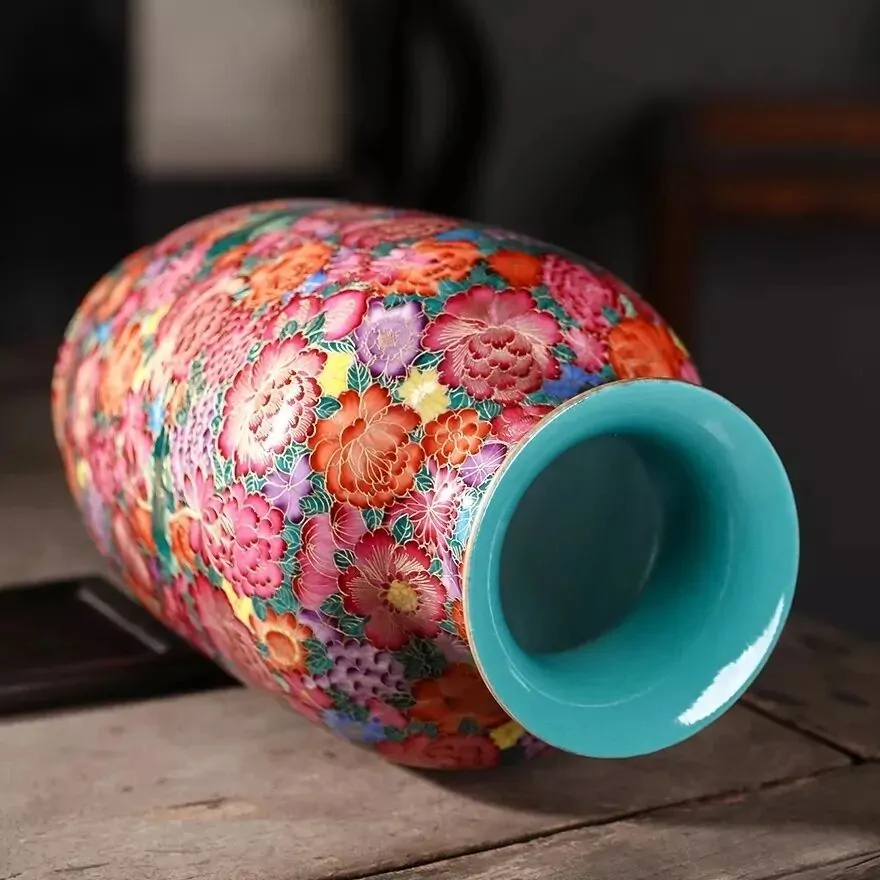
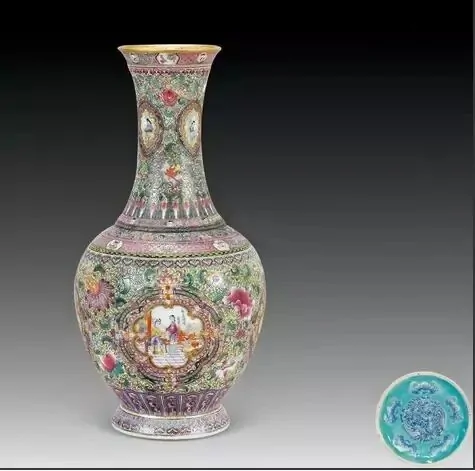
| Republic-period enamel vase in the Guyuxuan manner, openwork panels of ladies | 418,000 | Shanghai Jia Tai | 2007-08 |
| Republic-period famille-rose cong vase with luohan panels, after the Guyuxuan style | 403,200 | Shanghai Jia Tai | 2008-12 |
| Qianlong flambu00e9-glazed beast-handled zun imitating Jun ware | 4,945,000 | China Guardian | 2011-11 |
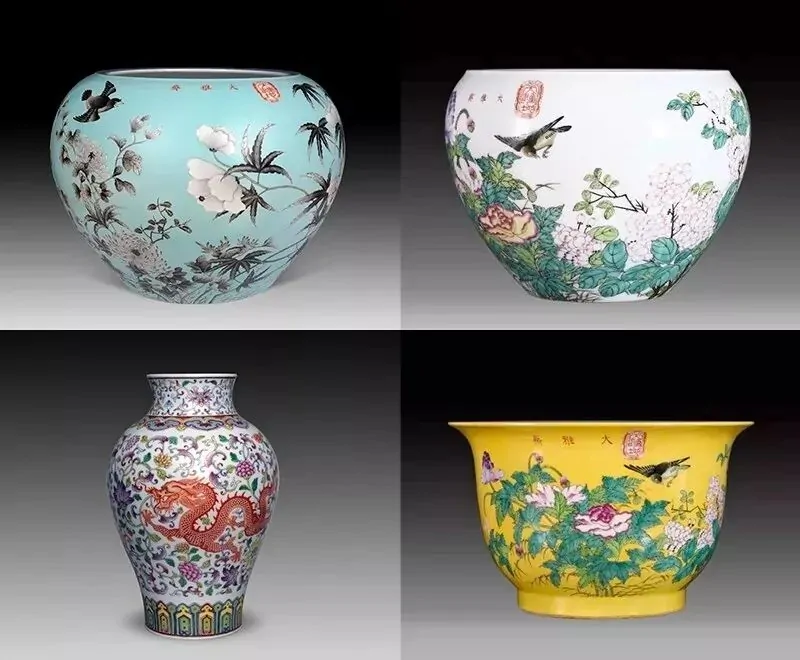
| Yongzheng yellow-ground blue-and-white ‘lotus bouquet’ dish, after early-Ming prototypes | 18,400,000 | Beijing Hanhai | 2014-10 |
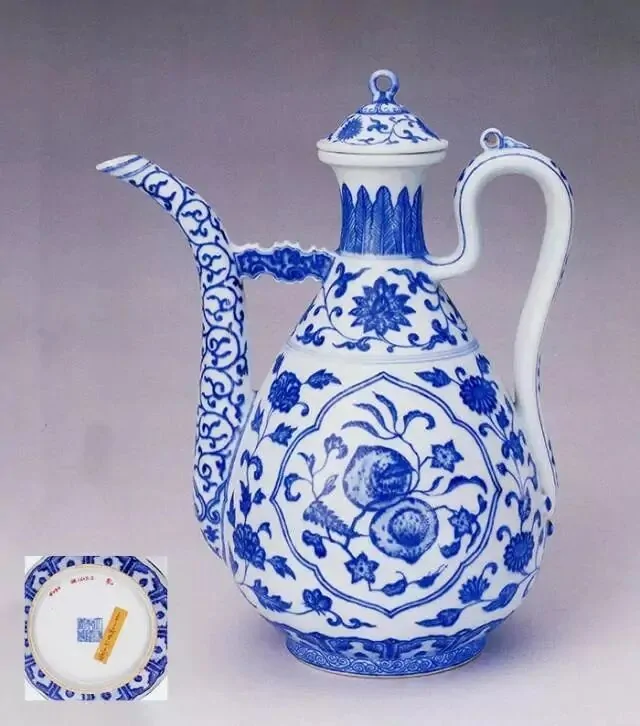
For contrast, one record from the same era belongs to an original rather than an imitation: on 5 October 2011 a Yongle blue-and-white meiping painted with fruit sprays sold at Sotheby’s Hong Kong for RMB 138,301,200. That is the ceiling for a period masterpiece u2014 and precisely the standard that Qing archaistic wares imitated with such devotion. As our report on Yongzheng archaistic porcelain at auction shows, the emperor’s imperial versions of Song classics reached 8.1 to 33.6 million yuan each.
The value ladder of honest imitation
These records sketch a clear ladder. Republic-era enamel imitations of Qing court wares start in the hundreds of thousands of yuan. Imperial eighteenth-century archaisms of Song and Ming classics reach into the millions. And the originals that inspired them stand at the very top. Each rung is honest about what it is: the value comes from the quality of the making and the fame of the tradition, never from pretending to be old. That is also why revival porcelain is not treated as fake in the collecting world.
Explore Jingdezhen craftsmanship
Jingdezhen Heritage works with workshops that continue these traditions u2014 handmade blue-and-white, famille rose and archaistic pieces fired in Jingdezhen. Browse the collections to see how historic forms and glazes live on in contemporary handmade porcelain.
Contact Jingdezhen Heritage
For enquiries about any piece, custom orders or wholesale, email us at service@jingdezhenheritage.com or message us on WhatsApp.