
Under the Yongzheng Emperor, the imperial kilns rebuilt the glories of the Song dynasty with such skill that the copies became classics themselves. Thirteen of these revivals sold at auction for between RMB 8.1 and 33.6 million u2014 records that trace one reign’s extraordinary second act for Chinese ceramics.
Why did the Yongzheng court revive the Song kilns?
The revivals were born of imperial passion, not market fashion. The High Qing era was the last great summit of imperial China, and its official kilns were its most visible expression of wealth, patronage and artistic ambition. Behind them stood the Song dynasty: the wares of the Five Great Kilns u2014 Ru, Guan, Ding, Ge and Jun u2014 had long been revered as the model of classical Chinese beauty, raising ceramics to something close to philosophy. The Yongzheng Emperor’s own devotion to antiquity set the workshop its task: recreate those masterpieces, and then go beyond them. This was part of the wider pattern described in the four golden ages of archaistic porcelain, driven by the same forces we set out in why archaistic porcelain exists.
What makes Yongzheng copies special?
Two words define them: fidelity and invention. The monochrome glazes of the Yongzheng official kiln are celebrated as a meeting point of art and technique u2014 wares that match their Song prototypes in spirit as well as surface, yet carry refinements of form and finish that belong entirely to the eighteenth century. Where a recipe or a forming method had been lost, the kilns recovered it, piece by piece. That is why a convincing revival demands more effort than an original design, as our article on why a convincing copy is harder to make than something new explains. The best of these wares were not imitations at all: they became celebrated ceramics in their own right, exactly the trajectory traced in why old copies become today’s treasures.
What have Yongzheng revivals made at auction?
Thirteen documented sales put the range at RMB 8.1 million to 33.6 million. The records below, drawn from major Chinese and international auction houses, cover revivals of the Song monochromes u2014 Guan, Ge, Ru and Longquan-type celadons u2014 alongside Ming-style blue-and-white designs. Together they show how the market prices the eighteenth century’s most disciplined act of homage.
| Lot | Sale | Price (RMB) |
|---|---|---|
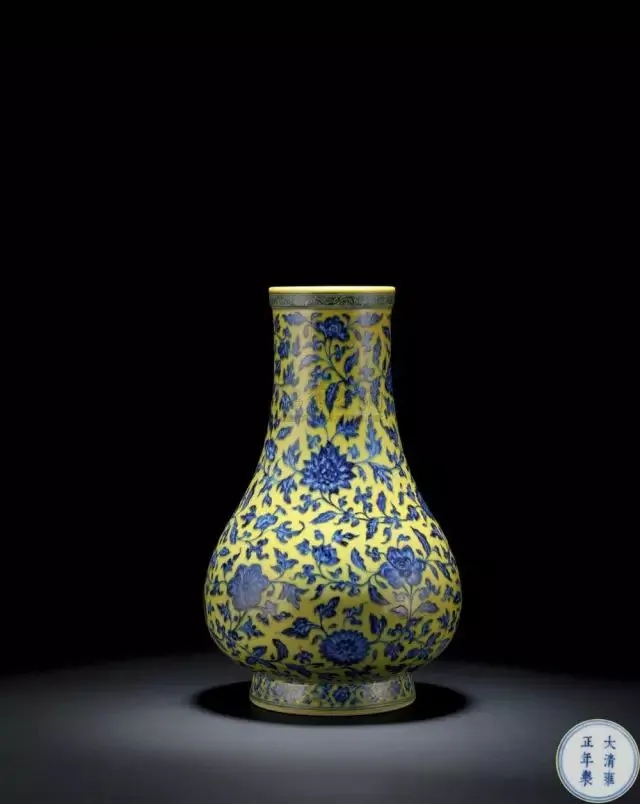
| Lemon-yellow-ground blue-and-white hu-form vase, interlocking flowers (H 34.5 cm) | Beijing Poly, 5 Dec 2010 | 33,600,000 |
| Guan-type through-tube vase (H 64 cm) | Zhongmao Shengjia, 7 Jun 2008 | 19,600,000 |
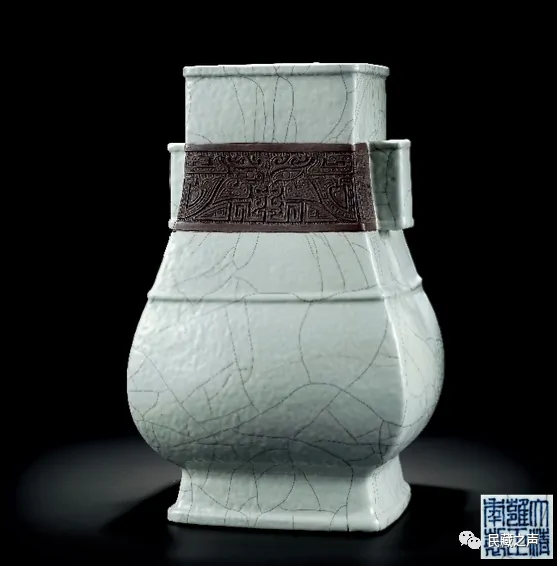
| Guan-glaze hu-form vase, iron-decorated taotie band (H 46 cm) | Beijing Huachen, 16 Nov 2016 | 18,400,000 |
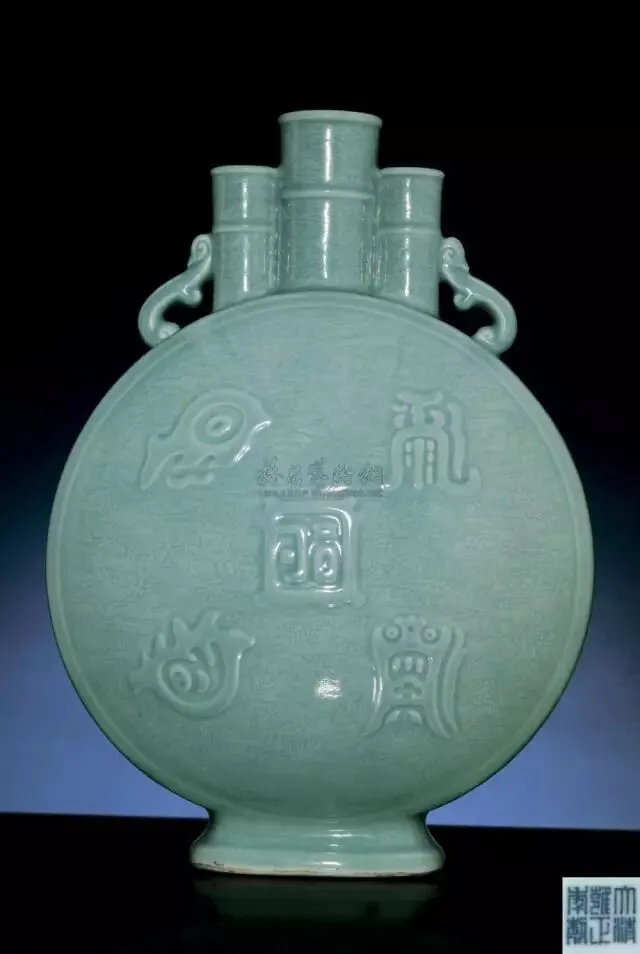
| Longquan-style celadon flask, lingzhi and Five Peaks (H 50.8 cm) | Christie’s Hong Kong, 1 Dec 2010 | 17,905,200 |
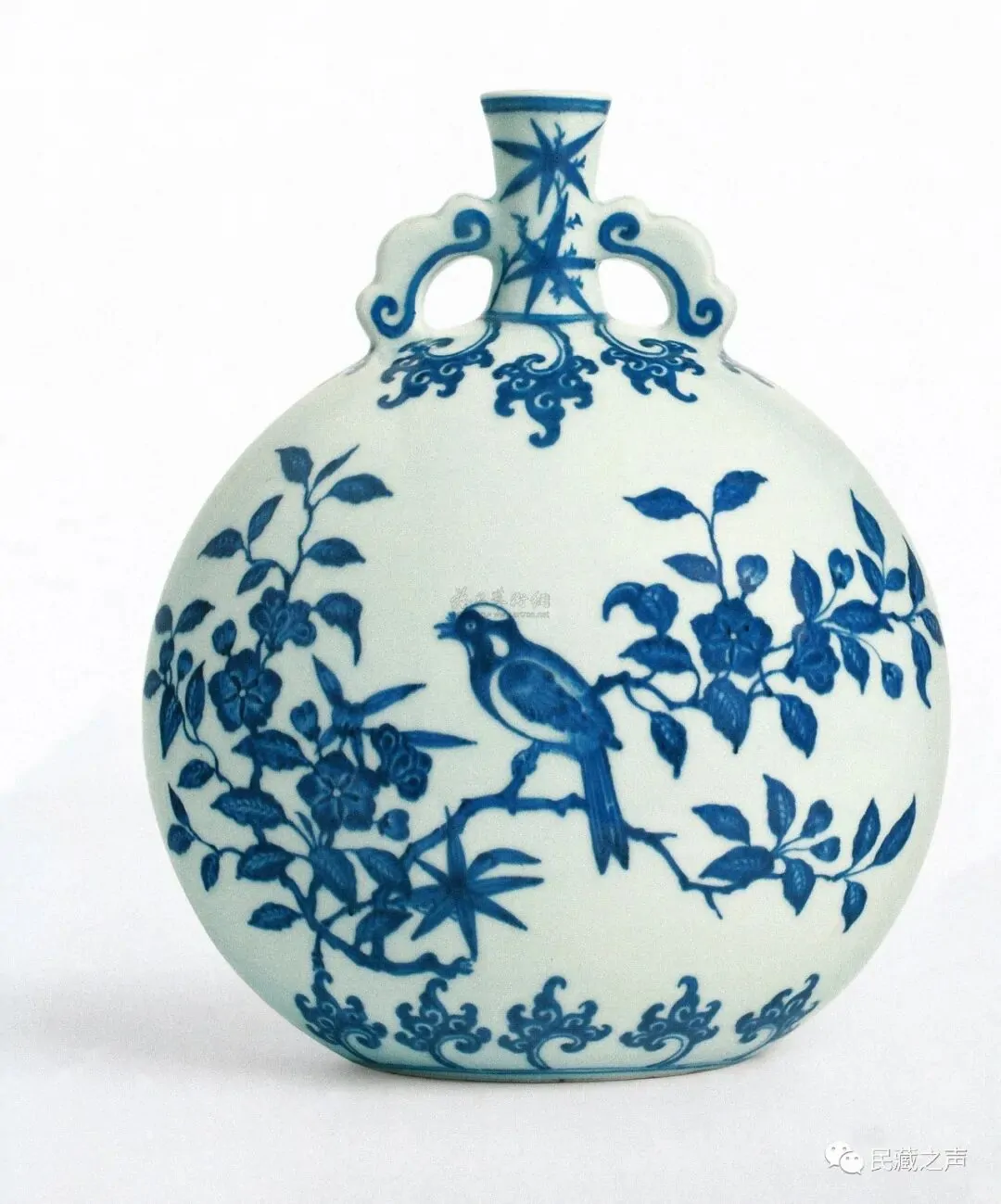
| Ming-style blue-and-white moon flask, birds and flowers (H 30.5 cm) | Sotheby’s Hong Kong, 7 Apr 2011 | 17,058,920 |
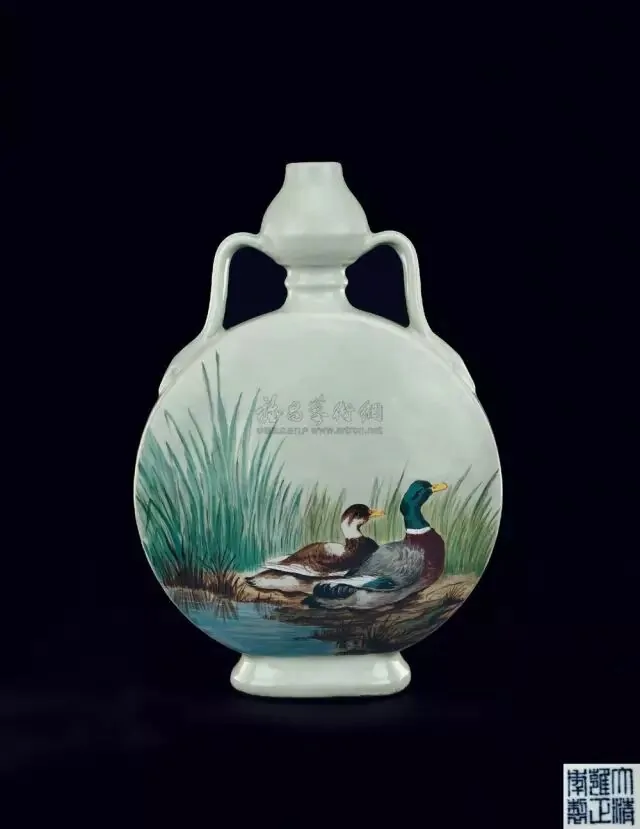
| Guan-glaze yangcai moon flask, wild geese (H 55 cm) | China Guardian, 22 May 2011 | 12,650,000 |
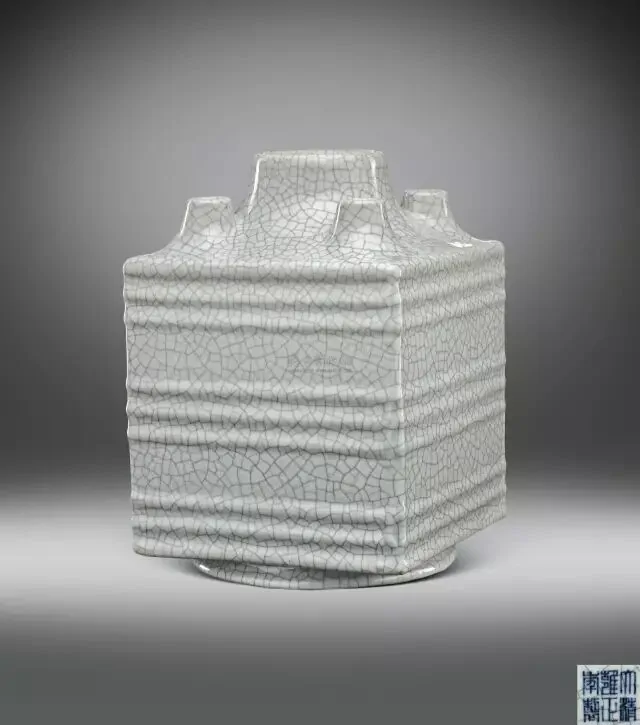
| Large guan-glaze square hu, bowstring ears (H 68 cm) | Beijing Poly, 6 Dec 2016 | 12,190,000 |
| Ge-glaze square zun, ruyi handles (H 52.5 cm) | China Guardian, 22 May 2011 | 11,500,000 |
| Ge-glaze five-necked vase (H 27.5 cm) | China Guardian, 12 May 2012 | 11,270,000 |
| Ru-type square hu vase, bowstring ears (H 63.5 cm) | Sotheby’s Hong Kong, 8 Apr 2011 | 10,929,160 |
| Ming-style blue-and-white faceted vase, morning glories (H 17.3 cm) | Sotheby’s Hong Kong, 5 Oct 2011 | 10,184,400 |
| Ge-glaze begonia-shaped moon flask (H 50 cm) | Poly Xiamen, 25 Oct 2015 | 9,430,000 |
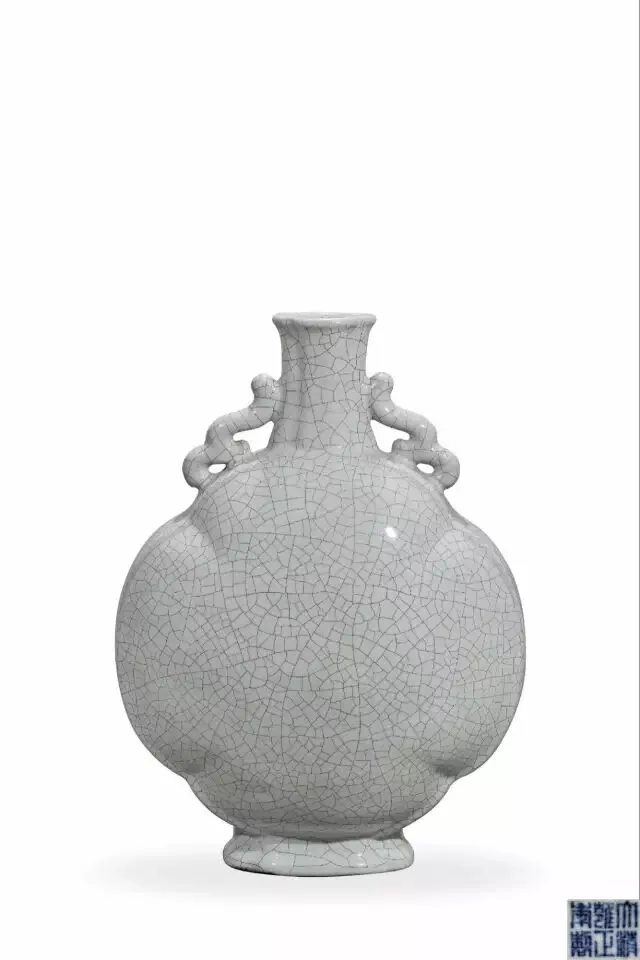
| Ge-glaze lobed moon flask, ribbon handles (H 50.5 cm) | Sotheby’s Hong Kong, 8 Apr 2011 | 8,100,040 |
What does this mean for collectors?
It confirms that provenance and revival can share the same price ladder. A related set of Yongzheng and later records u2014 including the three-necked flask, the taotie vase and the birds-and-flowers moon flask above u2014 appears in our round-up of how old archaistic porcelain really is, and what it is worth, and further Yongzheng sales are analysed in our earlier study of Yongzheng archaistic porcelain at auction. Buyers today can draw a practical conclusion: quality of revival u2014 glaze depth, forming accuracy, finish u2014 is what separates the lots that sell in eight figures from those that do not, a checklist we apply in four standards for judging an archaistic reproduction and in our buyer’s guide to the archaistic market.
Explore Jingdezhen craftsmanship: every piece we make follows the same hand-built traditions described above, from thrown forms to hand-painted enamel. Browse the Jingdezhen Heritage collection to find archaistic-inspired porcelain for your own table or study.
Contact Jingdezhen Heritage: for enquiries about our archaistic porcelain and other hand-made wares, email service@jingdezhenheritage.com or message us on WhatsApp.