
Every ceramic object — from a thrown teacup to a pressed porcelain figure — begins with a forming technique. Chinese potters developed six distinct approaches to shaping clay, each suited to different scales, different forms and different levels of technical ambition. This article maps all six, from the oldest hand-built methods to the modern industrial process of slip casting.
Six ways to form clay
All six methods are still in use today. They are not a historical sequence — coil building is still practised alongside slip casting in Jingdezhen — but they can be grouped by the degree of human versus machine involvement.
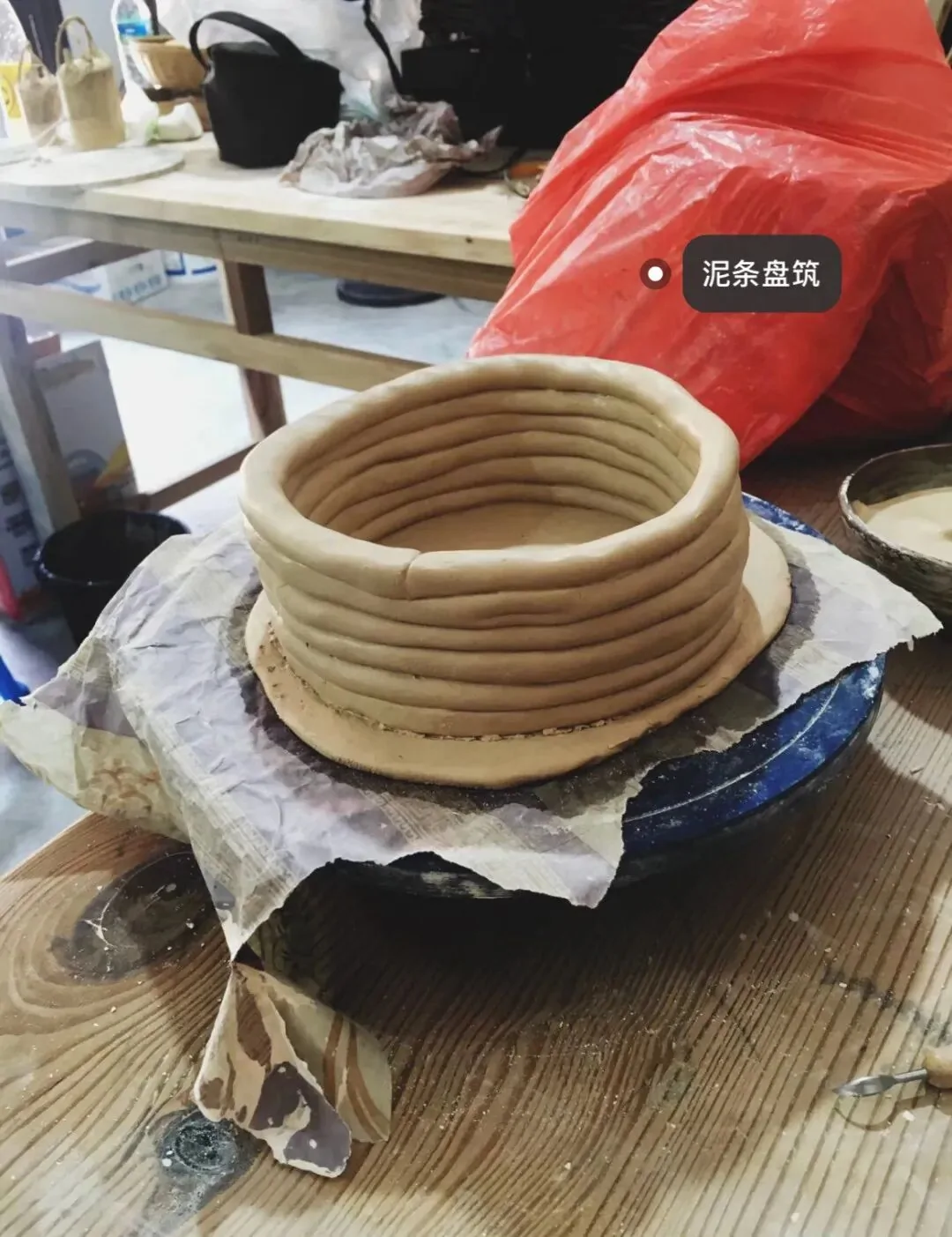
1. Coil building (ni tiao pan zhu)
The oldest method of making pottery — practised for 10,000 years worldwide. Clay is rolled into long, even ropes (coils), stacked in a spiral and pressed together with the fingers and thumb. The wall of the vessel must be compressed on both inside and outside after each new coil is added to avoid cracking during drying. Coil building requires no tools beyond the potter’s hands, a flat surface and water. It works for very large forms — giant storage jars, chimneys, sculpture — and produces a distinctive uneven thickness that is now prized as a sign of hand-made authenticity. The famous Yangshao culture pottery of the Neolithic period, the painted vessels of the Banpo phase, were almost entirely coil-built.
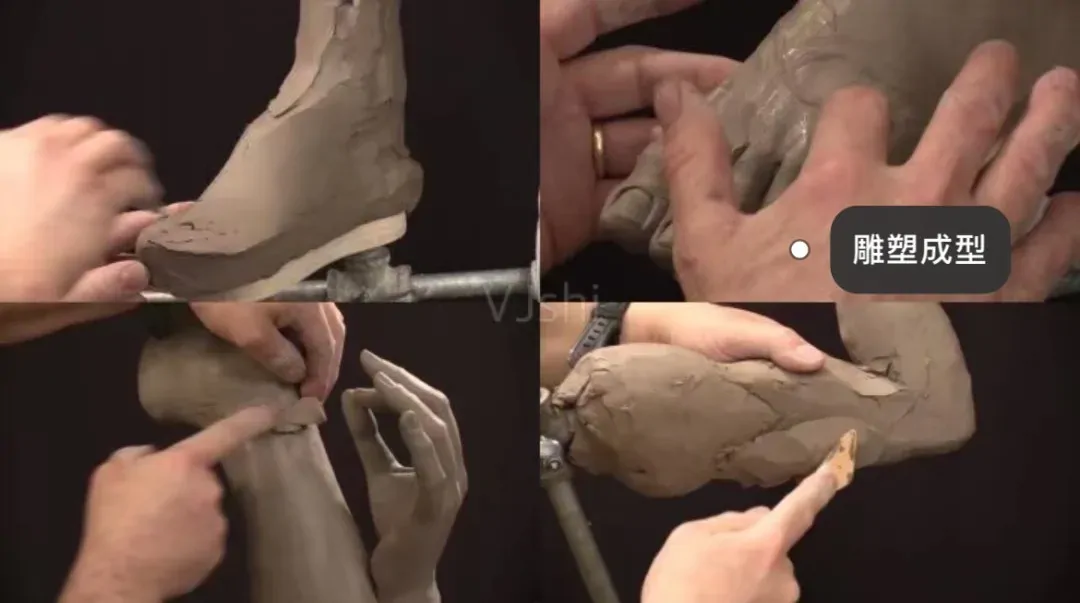
2. Hand-forming and sculpture (su diao cheng xing)
The simplest forming technique: take a lump of clay and squeeze, pull, press and shape it with the hands. No tools are required, though wooden or metal sculpting tools may be added for fine detail. Hand-forming is the method used for small figures, toys and sculpture — categories that have belonged to Chinese ceramic production since the Han dynasty. The method is also the starting point for larger sculptures: a rough clay body is hand-formed, then refined with tools, and when half-dry it is hollowed out from the inside to reduce weight and prevent cracking during firing. The “Three Friends of Winter” sculpture of pine, bamboo and plum blossom, and much of the Dehua ivory-white figure tradition traced in our guide to ceramic sculpture art, begin as hand-formed pieces.
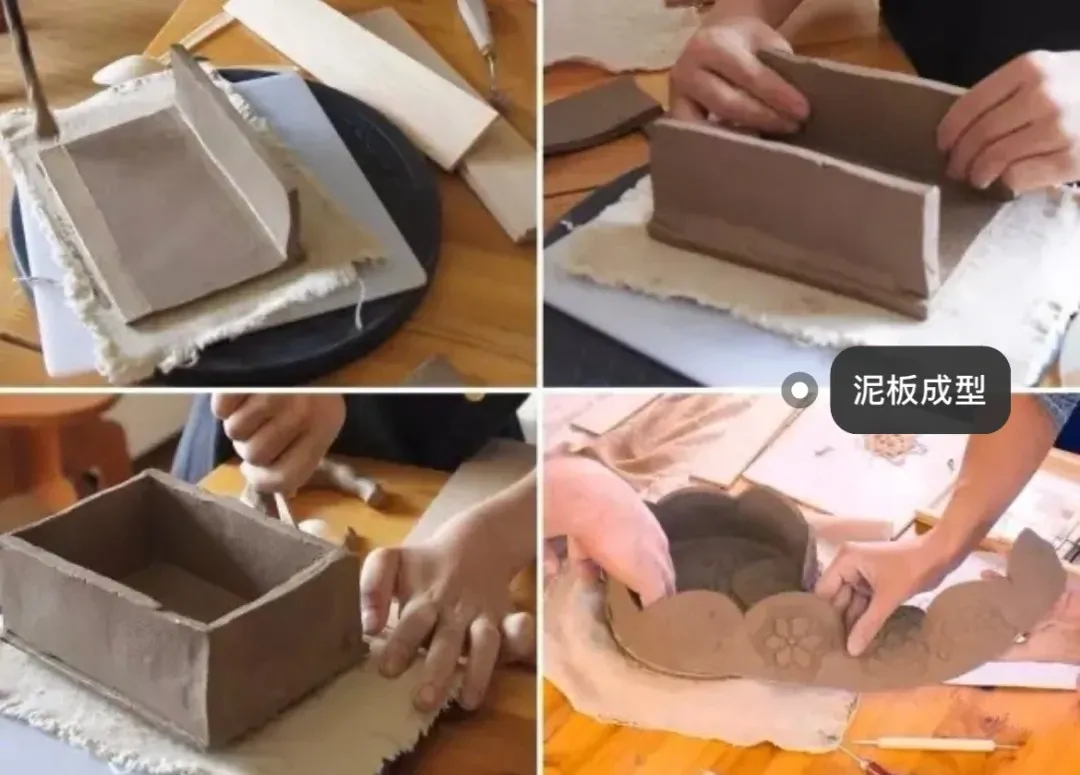
3. Slab construction (ni ban cheng xing)
Clay is rolled flat with a rolling pin or passed through a slab roller to an even thickness, then cut and assembled into forms. The slab can be used when soft (rolled into cylinders, folded into shallow bowls) or when leather-hard (assembled into boxes, houses, deep vessels). Slab construction gives the potter more control over flat surfaces and angles than wheel-throwing, making it ideal for tiles, building bricks, architectural relief, and sculptural elements that need to lie flat. The slab must be kept consistently thick — variations will cause differential drying and cracks. This is the technique most commonly used for modern studio sculpture and architectural ceramics.
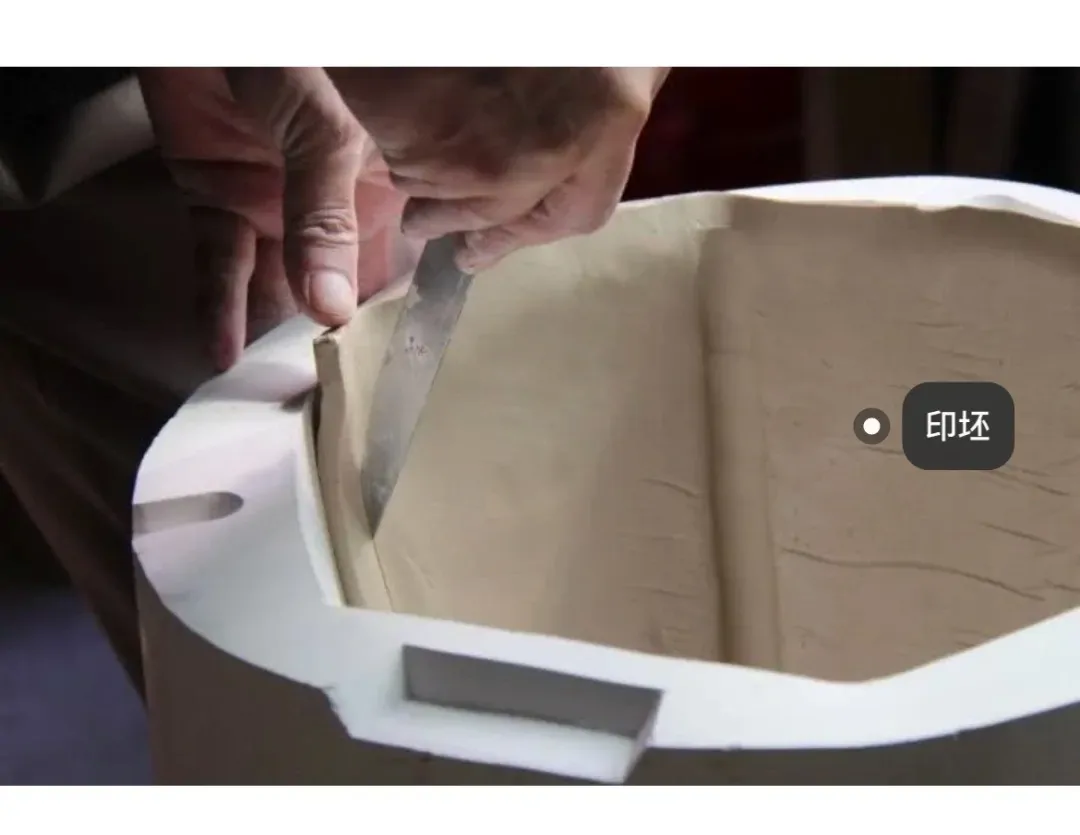
4. Press moulding (yin pi fa)
Press moulding uses a rigid master mould (usually plaster, sometimes fired clay) to press clay into a fixed shape. The master is made by carving or pressing clay into the desired form; when dry it is used to make multiple negative moulds (usually two halves for complex shapes). A slab of clay is pressed into each half-mould, excess is trimmed, and the two halves are joined with slurry. The mould is removed once the clay has shrunk enough to pull free without deformation. Press moulding has been used in Chinese ceramic production for well over two millennia and is still the standard method for producing multiple copies of the same form — tea bowls, flower pots, figurines, small statues and decoration elements on larger vessels. The method trades hand-made variety for reproducibility, and it is the technique behind the majority of mass-market ceramic sculpture and decorative ware.
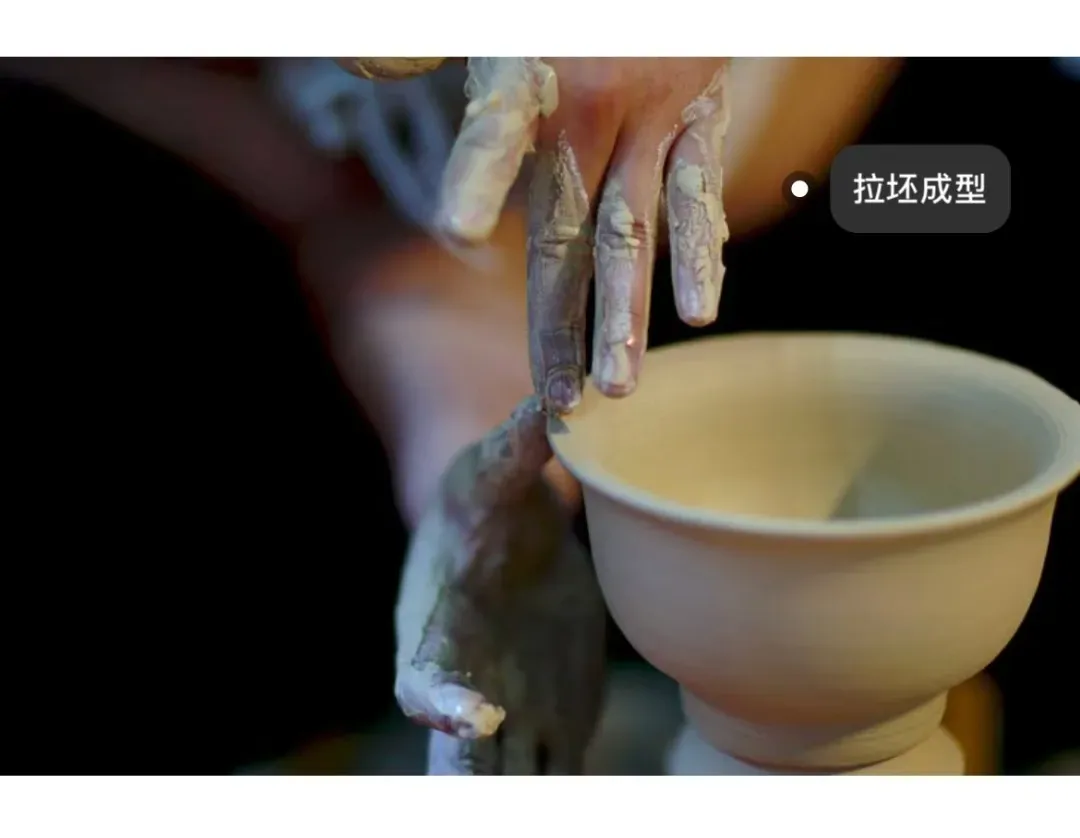
5. Wheel throwing (la pi cheng xing)
Wheel throwing is the technique that produces the classic round-bodied teacup, bowl, jar and bottle. A lump of clay is placed on the centre of a spinning wheel head, centred by hand, then drawn upward from the inside out to form the walls. Mastering the wheel takes years: centring requires equal pressure from both hands at once; drawing the walls up requires steady fingers and precise control of clay thickness; opening and shaping the mouth and base require a further set of movements. A beginner may take several months to consistently throw a simple bowl without it collapsing or ending lopsided. Wheel throwing is the core technique of Jingdezhen’s fine teaware tradition and of the daily studio practice of almost every major ceramic artist. It is also the technique most associated with “hand-made” authenticity — every thrown piece has subtle variations in wall thickness and surface that distinguish it from moulded ware.
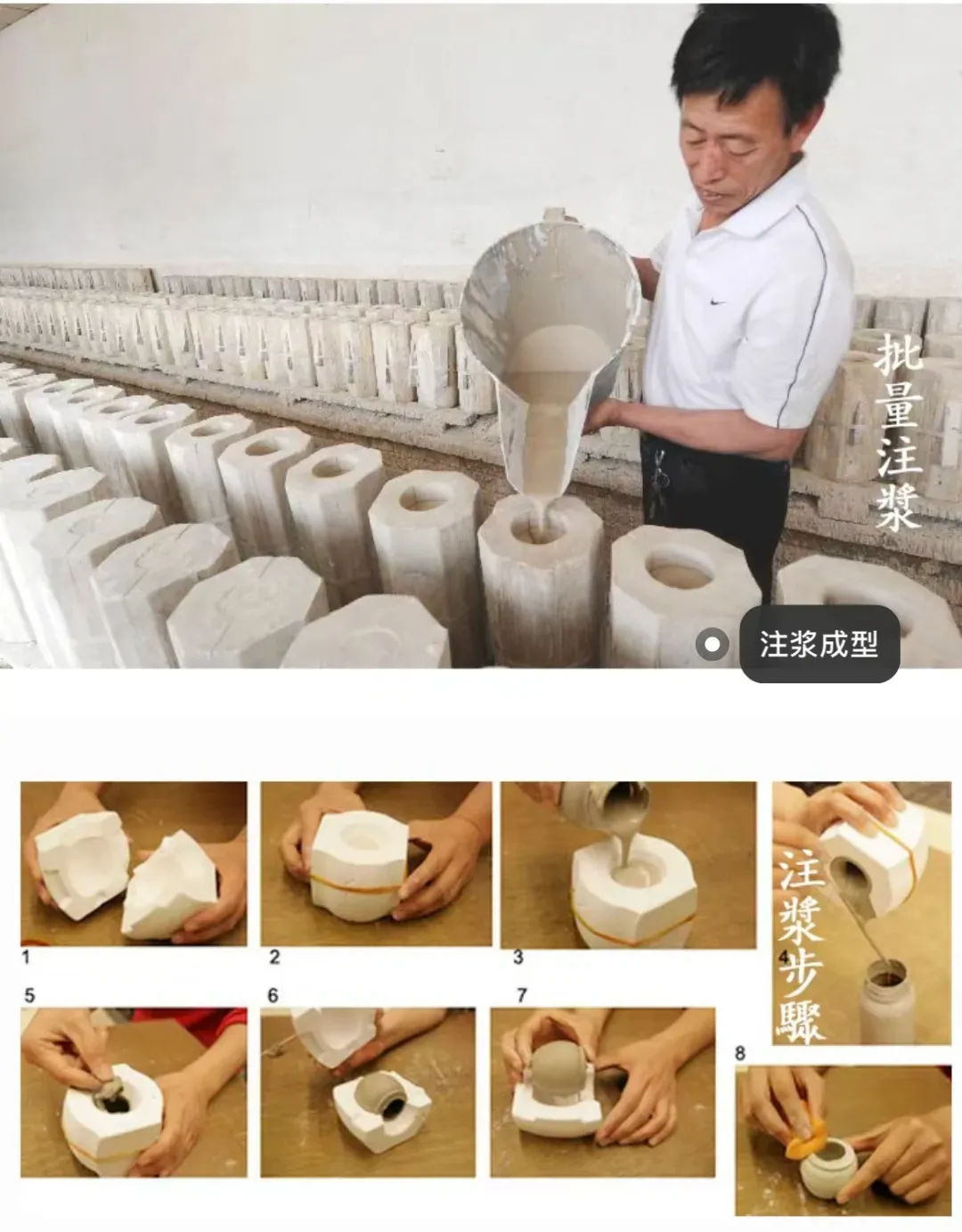
6. Slip casting (jiang ni fa)
Slip casting is the modern industrial technique that forms the majority of everyday ceramic products — from teacups to electrical insulators. Slip (liquid clay mixed with water to a precise viscosity) is poured into a porous plaster mould. The plaster absorbs water from the slip, leaving a thin layer of clay on the mould wall. Once this layer reaches the desired thickness (a few millimetres), excess slip is poured out. The mould is left to dry until the clay layer shrinks away from the plaster, then opened to release the hollow piece. Slip casting was developed in the early 20th century for mass production, and it is the technique behind most hotel and restaurant tableware today. It can produce thin-walled, light-weight forms very efficiently — including the blue-and-white teaware traced in the dynasty-by-dynasty history — but it has none of the subtle variation of hand-made wheel-thrown ware.
Forming technique and final value
All six techniques produce legitimate ceramic objects. But the choice of technique has a direct relationship to value, and understanding that relationship helps when collecting. Three distinctions matter.
Variety versus uniformity. Wheel-thrown and hand-formed pieces vary from one to the next. Press-moulded and slip-cast pieces are intended to be identical. Collectors who prize the individual quality of a piece will prefer the former; those who value consistency for functional use will choose the latter.
Technical ambition. Wheel throwing at a professional level is one of the hardest craft skills in any medium. Coil building, by contrast, can be learned in an afternoon. A piece that combines difficult technique with aesthetic achievement — a perfect thrown bottle that is also beautifully decorated — will command a serious premium.
Scale of production. Slip casting can produce a thousand identical teacups in a day. Hand-forming and wheel throwing produce one piece at a time. The quantity made influences both availability and price: mass-produced slip-cast ware is affordable, while unique hand-formed or thrown pieces cost more and increase in value if the maker becomes established.
An example: one form, three techniques
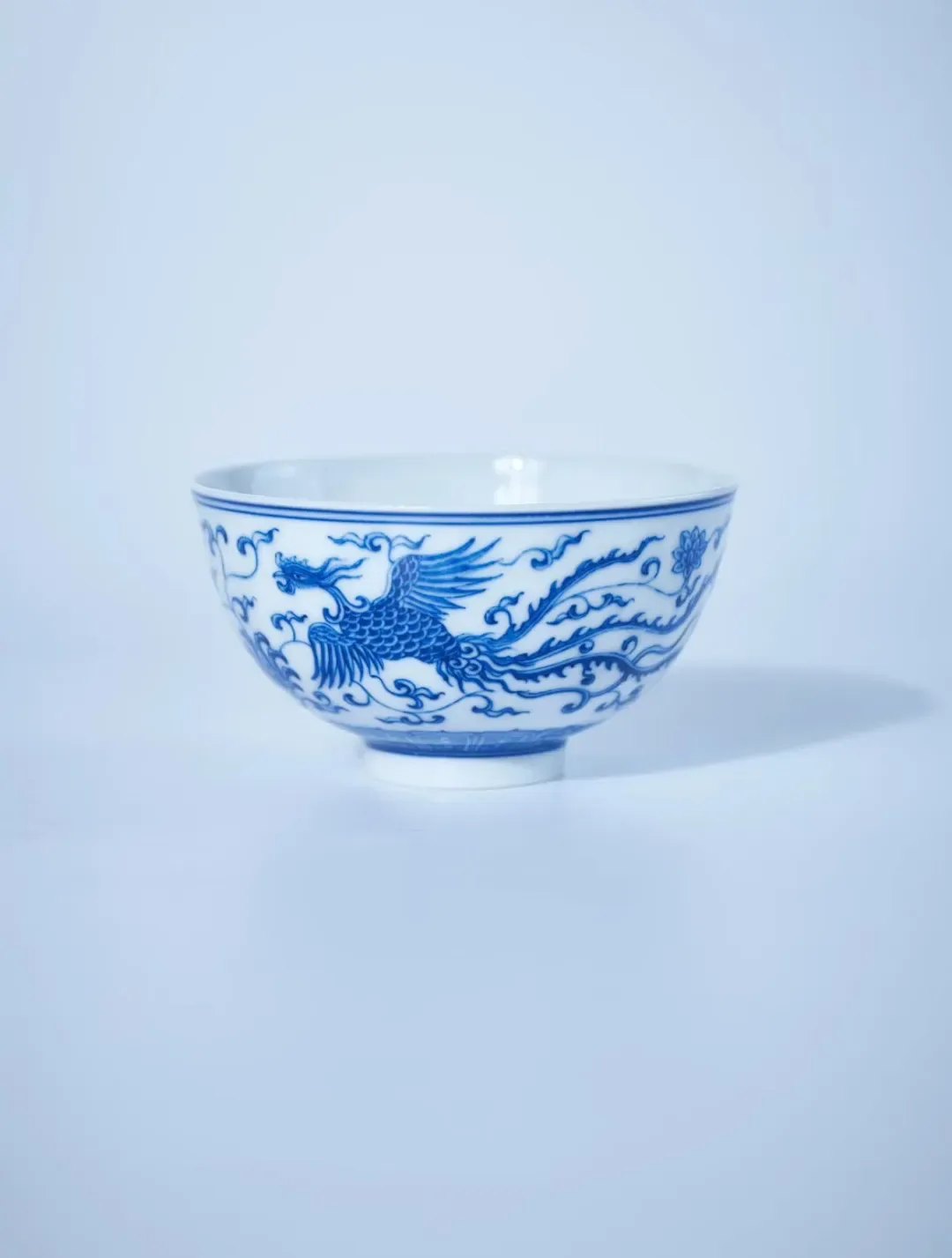
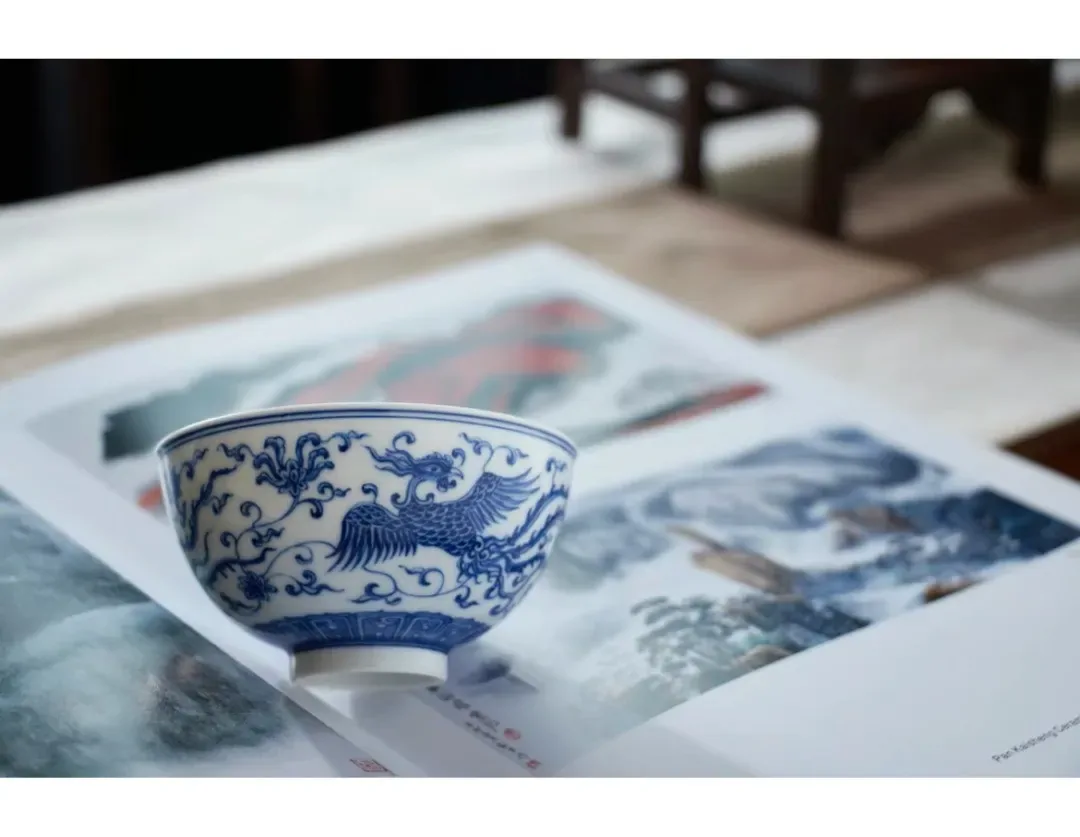
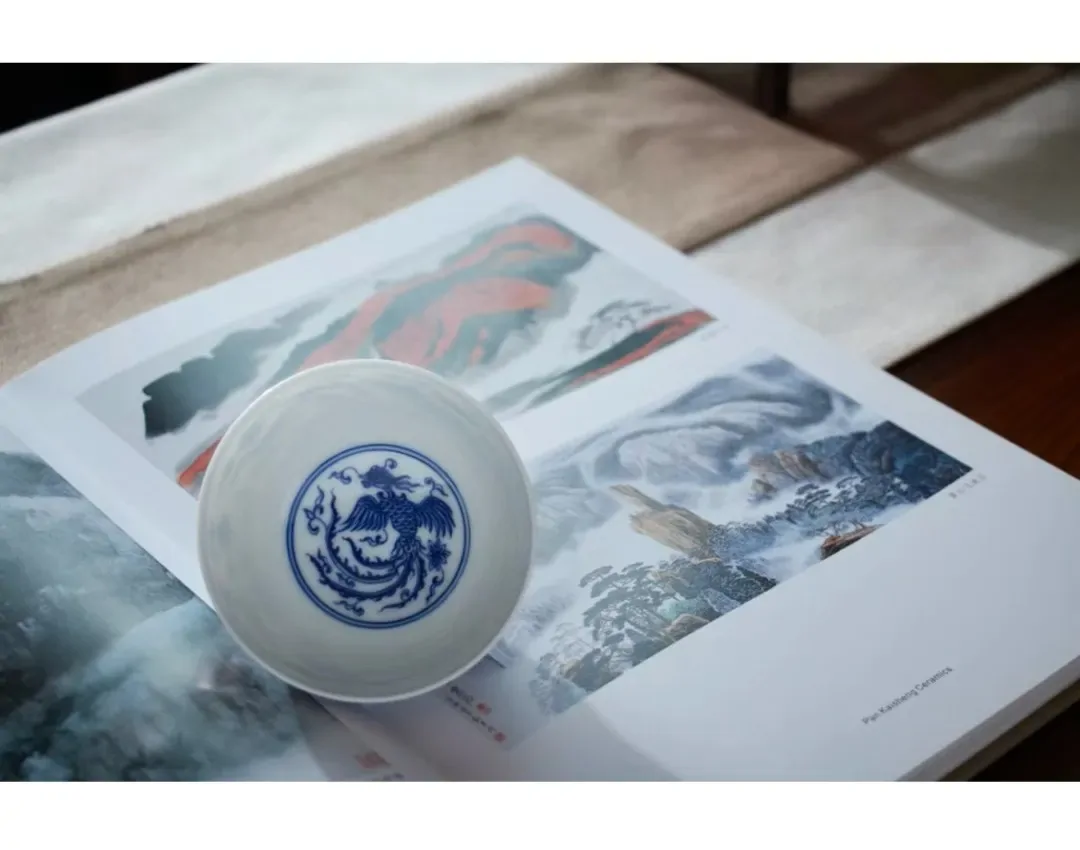
Consider a blue-and-white phoenix-and-dragon bowl — the form illustrated below. It could be press-moulded (quick, consistent, cheap), hand-formed and hand-carved (slow, unique, expensive), or wheel-thrown (skill-dependent, individual, moderate to expensive). The finished piece may look similar at a glance, but the weight, wall thickness, surface feel and subtle irregularities will reveal which method was used. Collectors learn to read these signs.
Related reading
- Ceramic sculpture art: three kiln traditions and material magic
- Blue-and-white porcelain: a dynasty-by-dynasty history
- How to judge porcelain before you buy
Explore our collection
Browse the Jingdezhen Heritage collection for hand-made ceramic sculpture and teaware.
Contact Jingdezhen Heritage
Questions about a piece or a technique? Email service@jingdezhenheritage.com or message us on WhatsApp. We reply within one working day.