Ceramic sculpture occupies a distinctive space in Chinese ceramic art: it is porcelain, but it is also sculpture. Unlike functional bowls or display vases, its purpose is the object itself — a three-dimensional figure, animal or scene fired from clay. This article maps the forms, the three great production centres and the material properties that set ceramic sculpture apart from every other sculptural medium.
What ceramic sculpture is
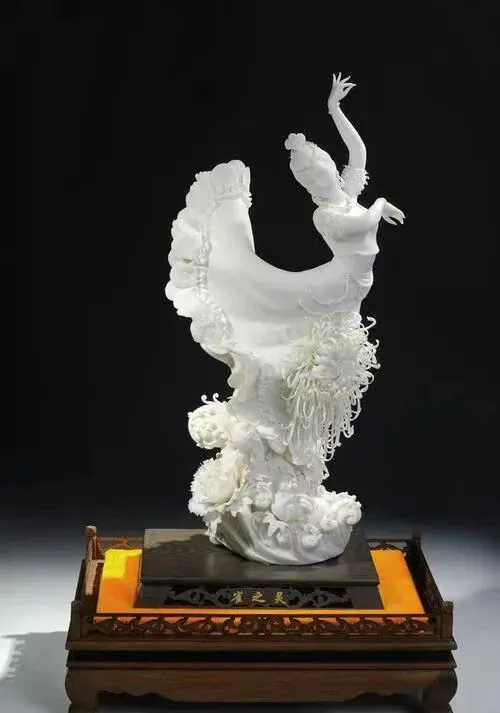
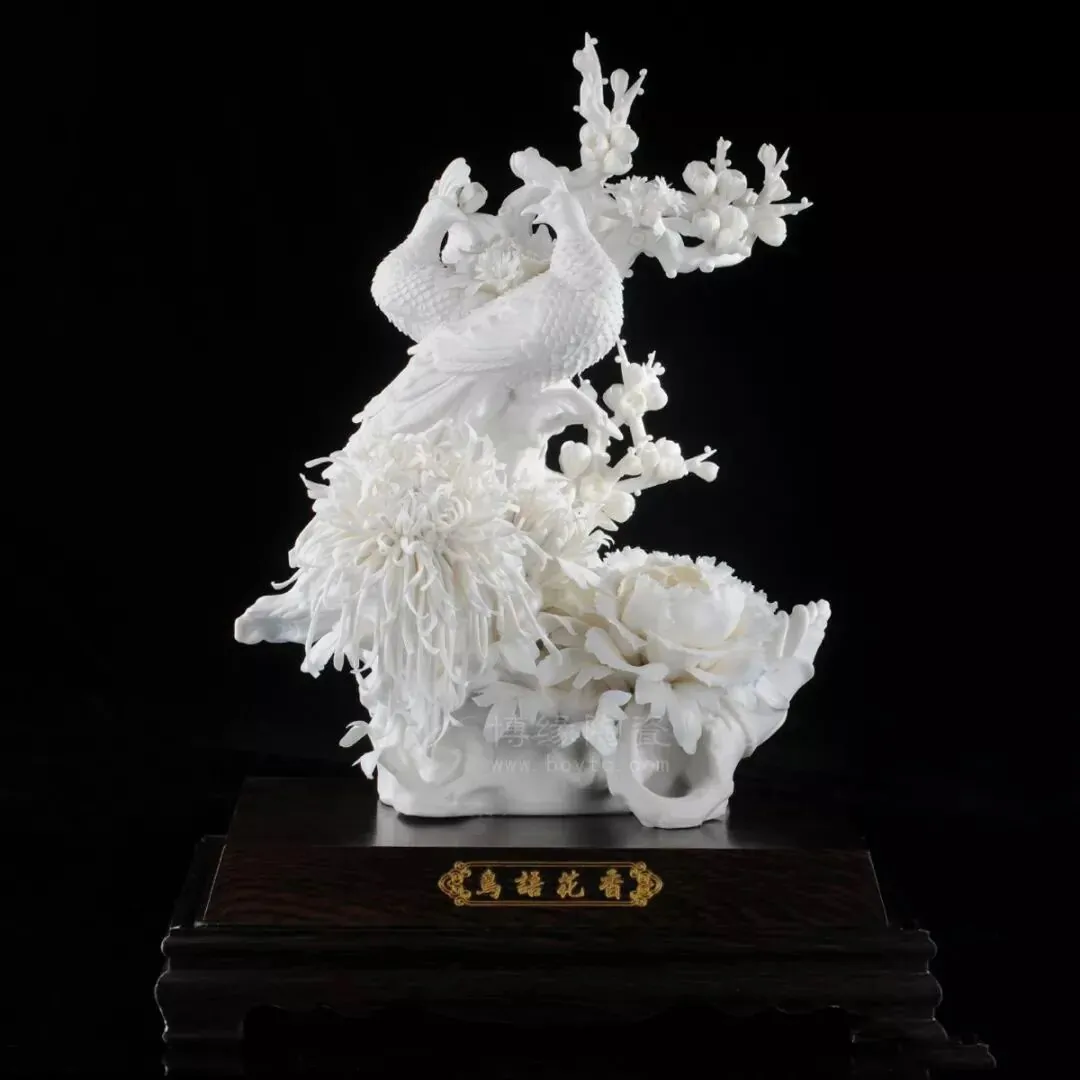
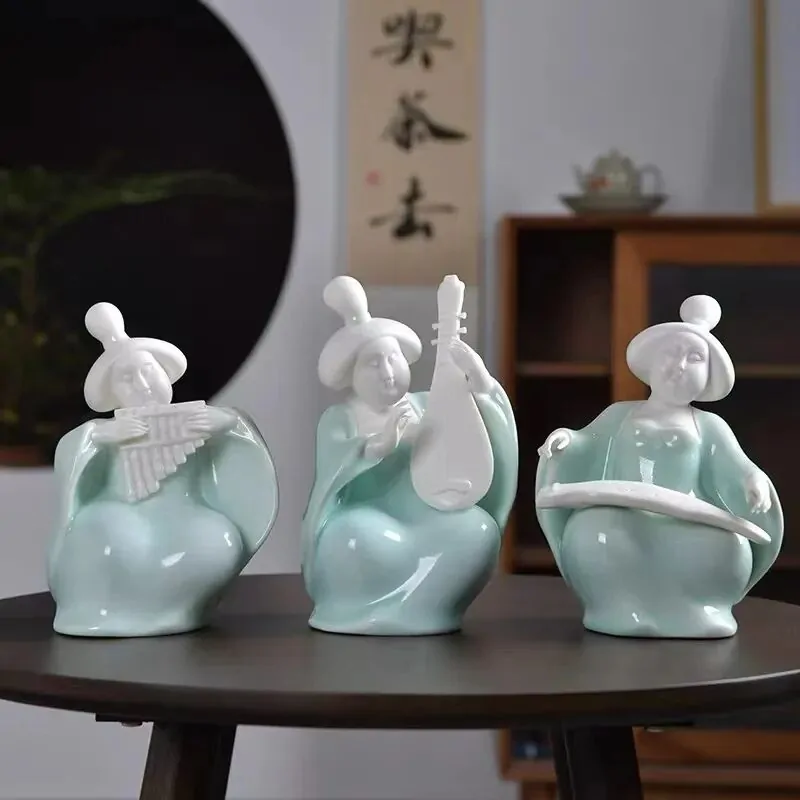
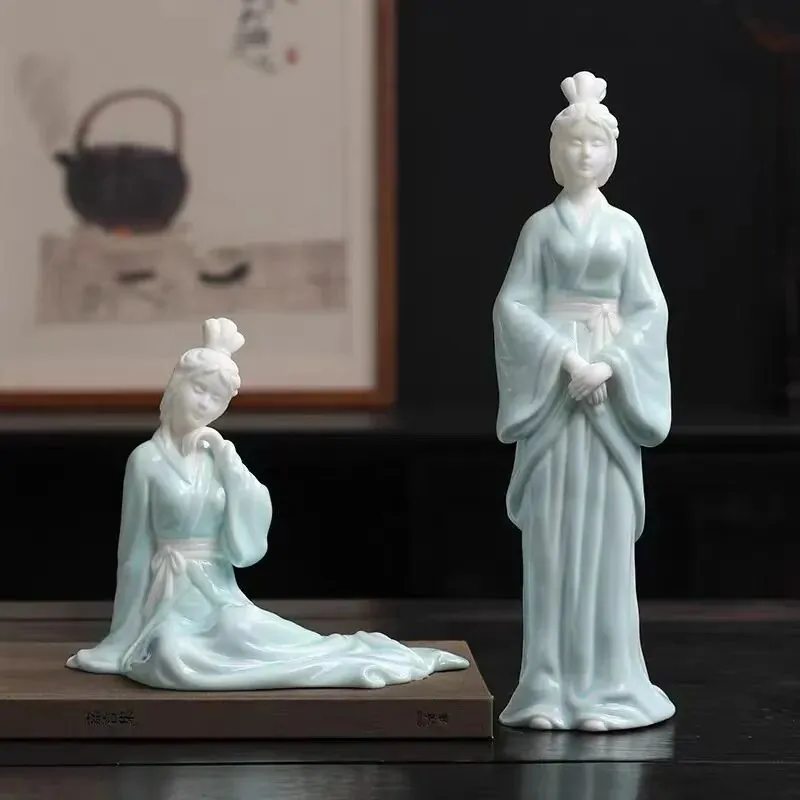
Ceramic sculpture — diao su ci — is fired porcelain shaped through moulding, inlay, openwork, coiling, modelling and carving. The process is close to that of other fired ceramics but far more sculptural: the clay body must support complex projections, fine appendages and undercuts that would be lost in slip-cast ware. Pieces are classified by production method rather than decoration: full-round sculpture (yuan diao, freestanding in the round), relief sculpture (fu diao, attached to a flat ground), openwork sculpture (lou diao, perforated through), and pinching or hand-modelled sculpture (nie diao). A separate line divides plain-glaze figures from decorated figures — the latter including famille rose, doucai and underglaze blue painted on top of the fired glaze.
The three great production centres
Ceramic sculpture was made across China, but three kiln centres defined the genre. Each developed a distinct language tied to local materials and local taste.
Dehua: The ivory-white figures
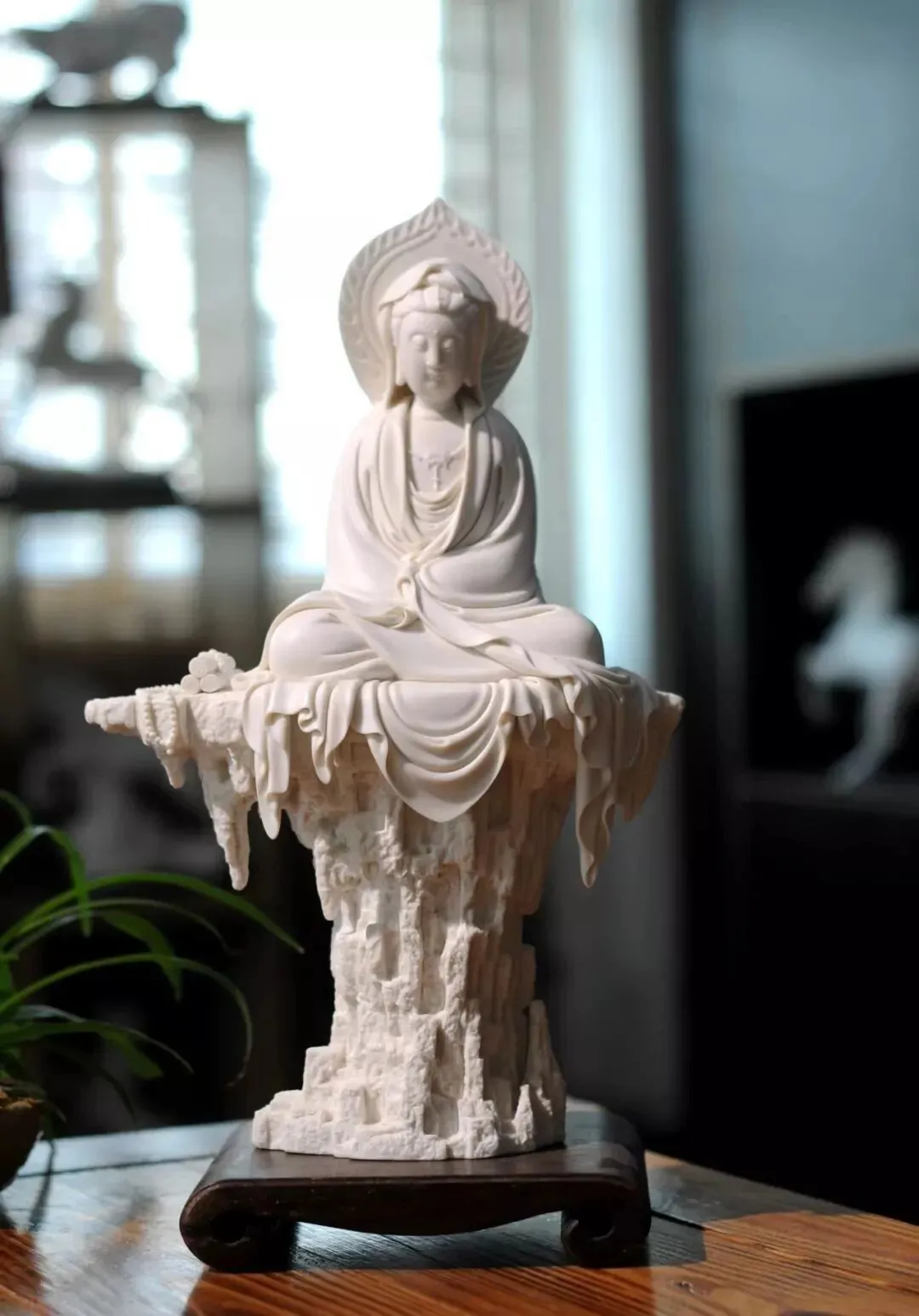
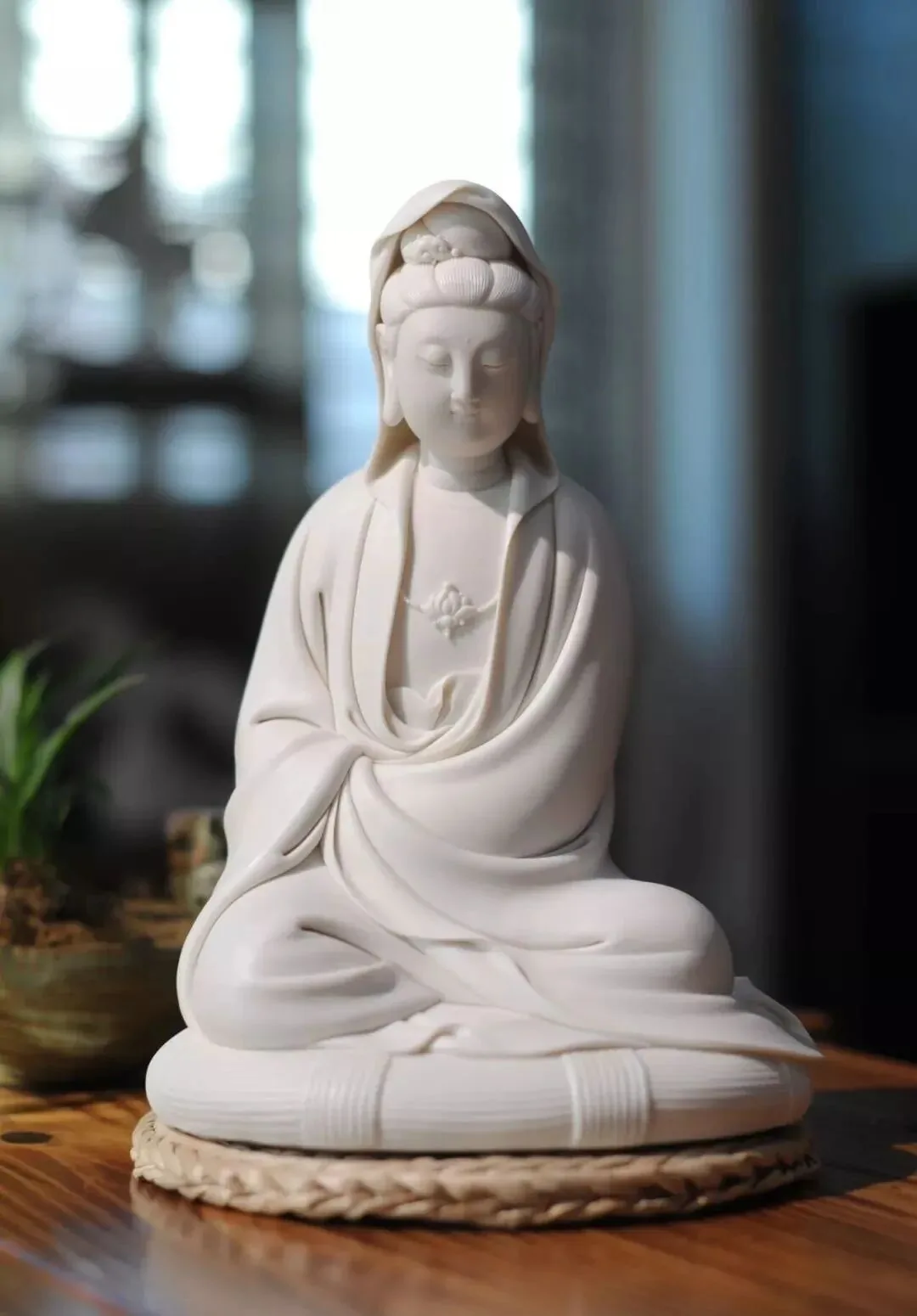
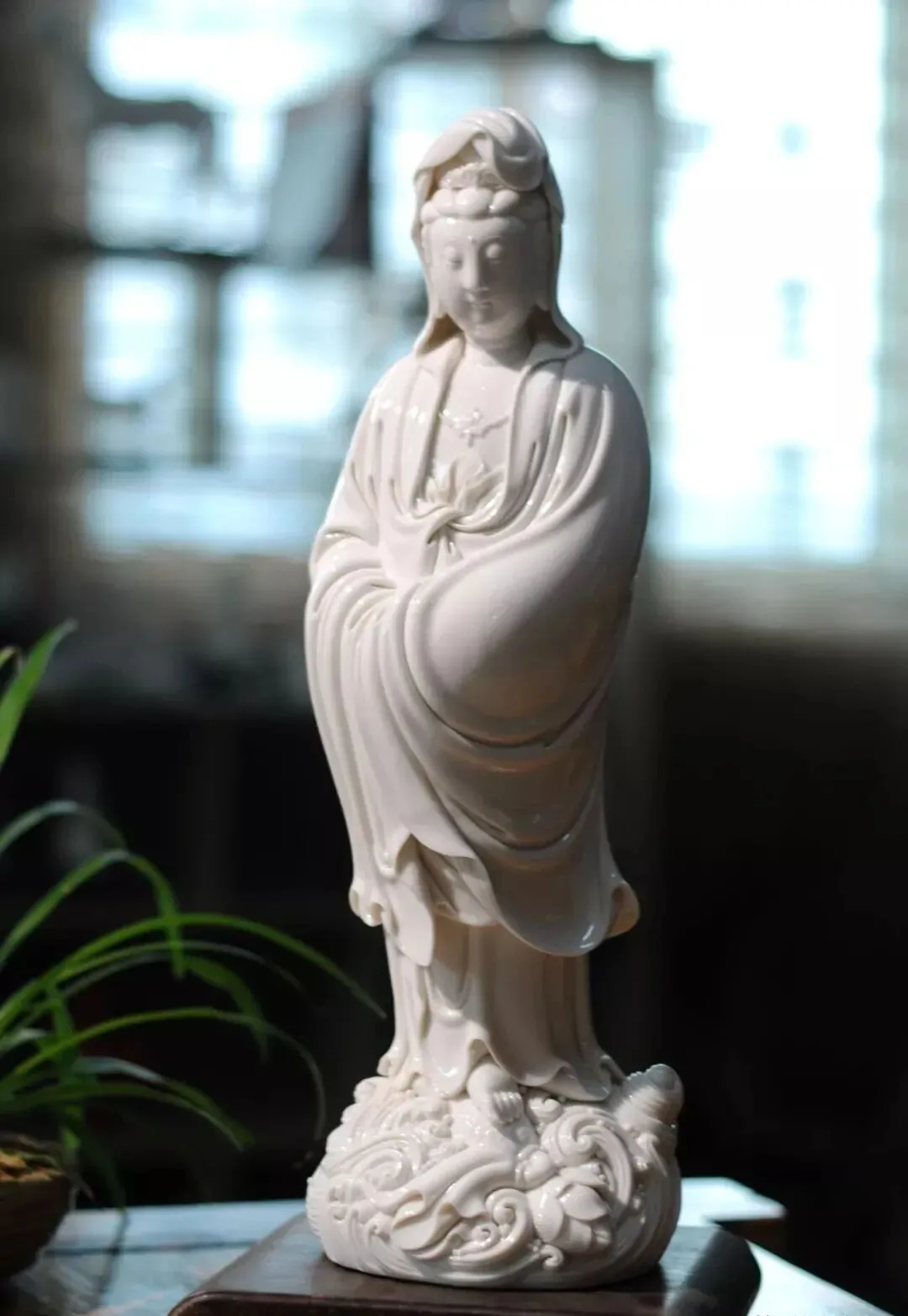
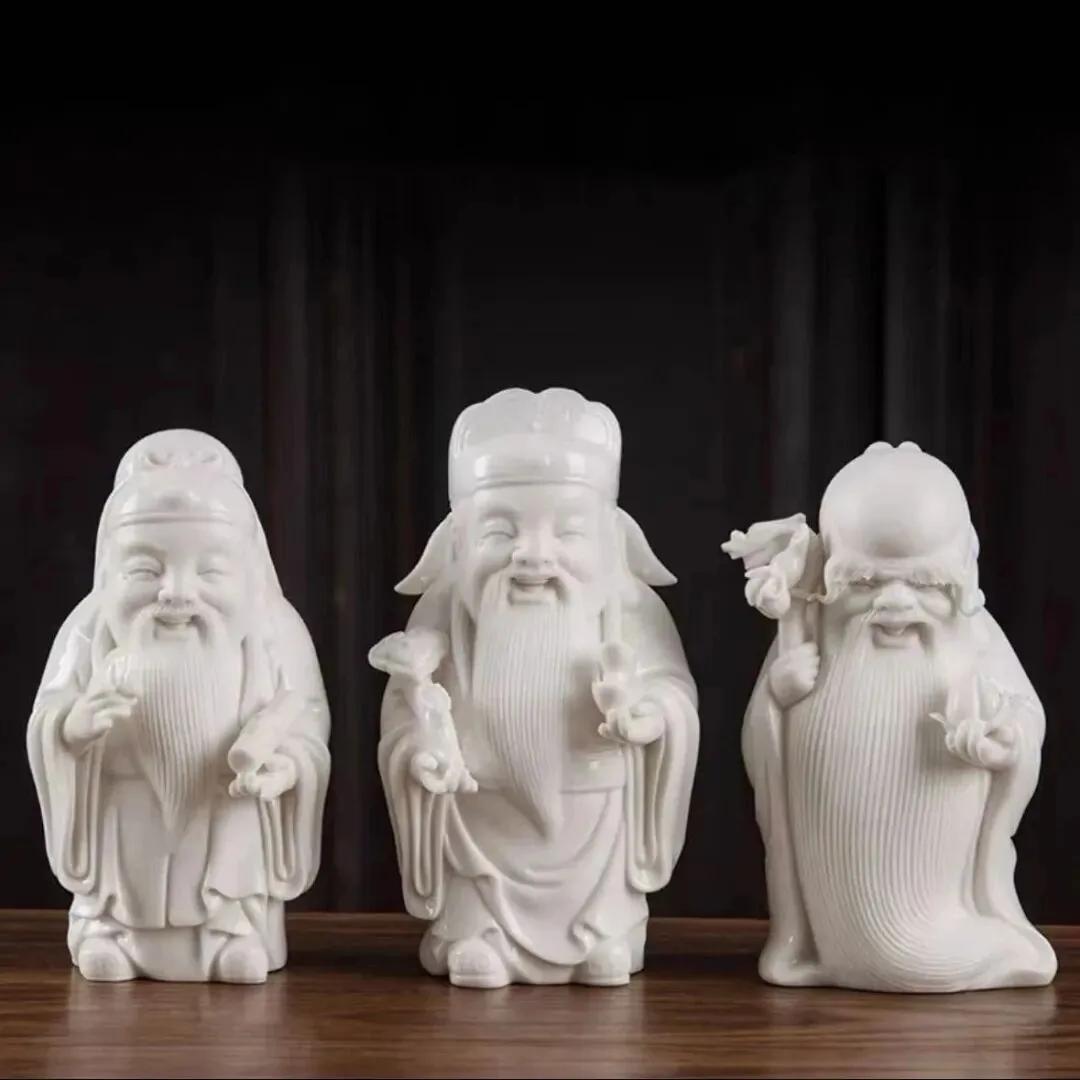
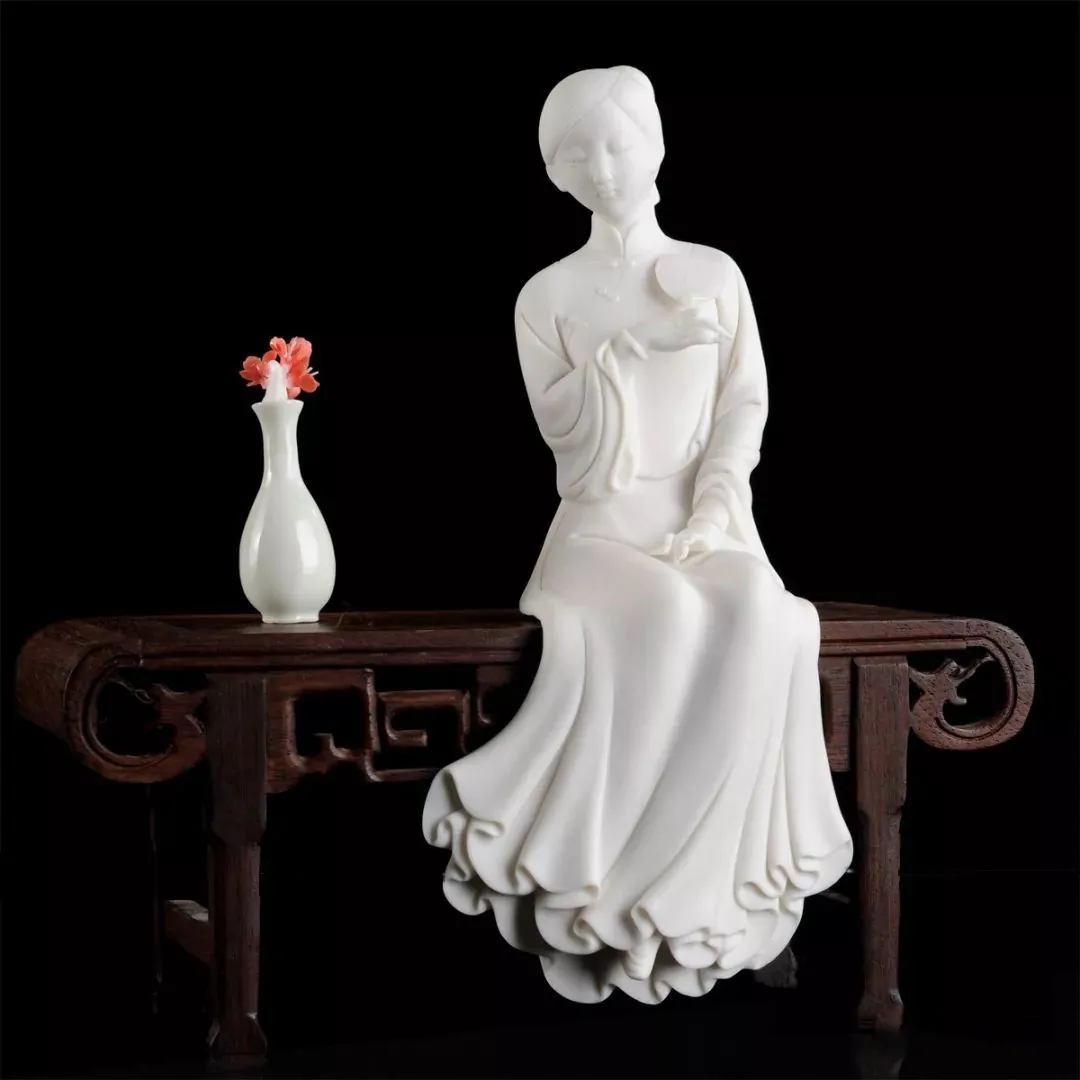
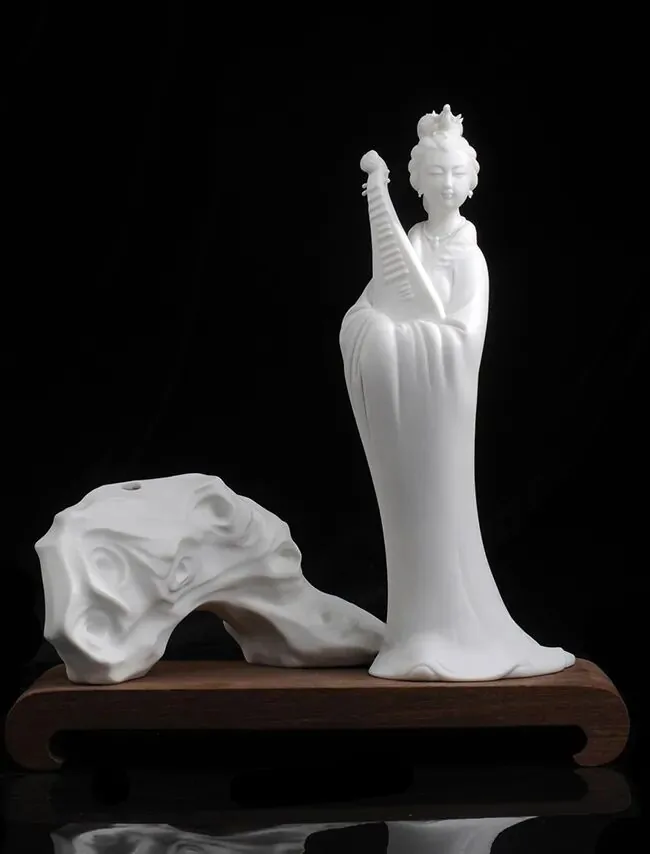
Dehua, in Fujian, began making porcelain in the Song and by the Ming had developed what collectors call “ivory white” — a warm, faintly pinkish-white glaze that fires without the cold blue tint of Jingdezhen white. Dehua’s speciality was religious figures: Guanyin, the Bodhisattva of Compassion, seated or standing on rock thrones with flowing robes and serene expressions; Buddhist disciples, Daoist immortals and Confucian sages. The finest Dehua pieces reached a point where the glaze and the body seemed to merge into a single substance — an effect the Chinese called “grease white”. Dehua figures were also made for export to Europe in the eighteenth century, where they entered royal collections and fed the European vogue for “Chinoiserie” sculpture.
Shiwan: Folk figuration with colour
Shiwan, in Guangdong, developed a very different tradition. Where Dehua figures were usually single-colour white and religious, Shiwan figures were vividly coloured and rooted in folk themes: opera characters, street scenes, children at play, animals and birds. Shiwan glaze included iron-red, cobalt blue, yellow and green — fired together on a single piece, a technique Shiwan had pioneered by the mid-Ming. The figures themselves were robust, sculpted from a coarse local clay and fired at a lower temperature than Dehua white porcelain, giving them a matte, earthy surface that accepted multiple glaze colours well.
Jingdezhen: Imperial technique, all subjects
Jingdezhen ceramic sculpture reached its peak under Qing official-kiln production — figures were decorated with famille rose, doucai or underglaze blue, and technical constraints came from the court rather than from local tradition. The Qianlong-period “revolving heart bottle” — an outer bottle with an openwork lattice, inside which rotates a decorated inner bottle — is the genre’s famous tour de force. Contemporary Jingdezhen ceramic sculpture is exceptionally varied: traditional religious figures alongside abstract modern pieces, both drawing on the city’s 500-year official-kiln technical heritage. The best-known names associated with Jingdezhen ceramic sculpture in the post-war period include the “Sanhua Brand” figures of Guanyin, Guan Gong, the Eight Immortals and the One Hundred and Eight Heroes of the Water Margin — mass-produced but at a standard that won national awards.
The material uniqueness of ceramic sculpture
Ceramic sculpture differs from every other sculptural medium in one critical respect: the material changes during firing. A clay figure that is soft, grey and uniform at the start becomes something else entirely after 1,280 °C firing — hard, translucent porcelain with a glazed surface that can carry colour, crackle, speckle or iridescence. No other sculptural medium undergoes such a fundamental transformation. Three properties follow from this.
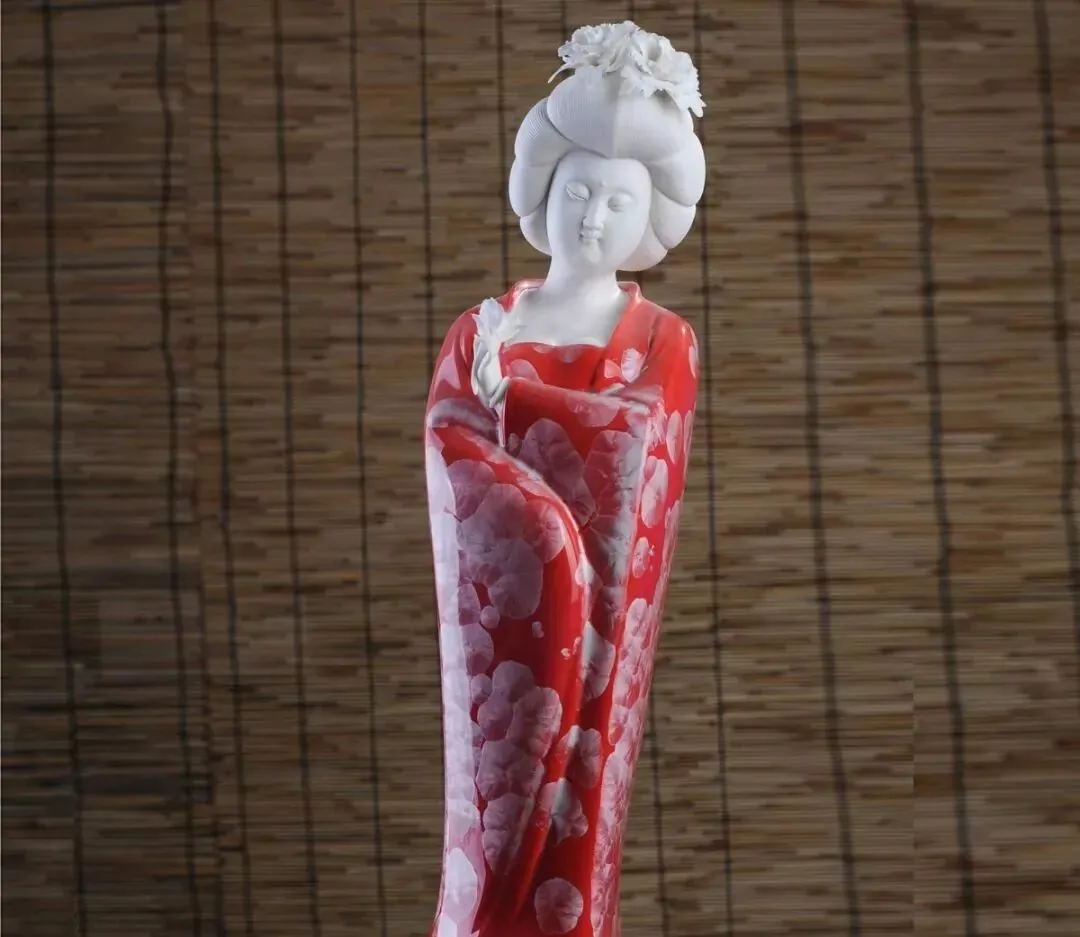
Porcelain glaze gives a surface no other sculpture can match. A single high-temperature glaze on a ceramic sculpture — the “blue “ glaze of the Jun kiln, the celadon crackle of Southern Song Guan ware, the “Sacrificial Red” of the Qing court — creates a surface with depth, movement and colour variation that casting or carving in stone, wood or bronze cannot produce.
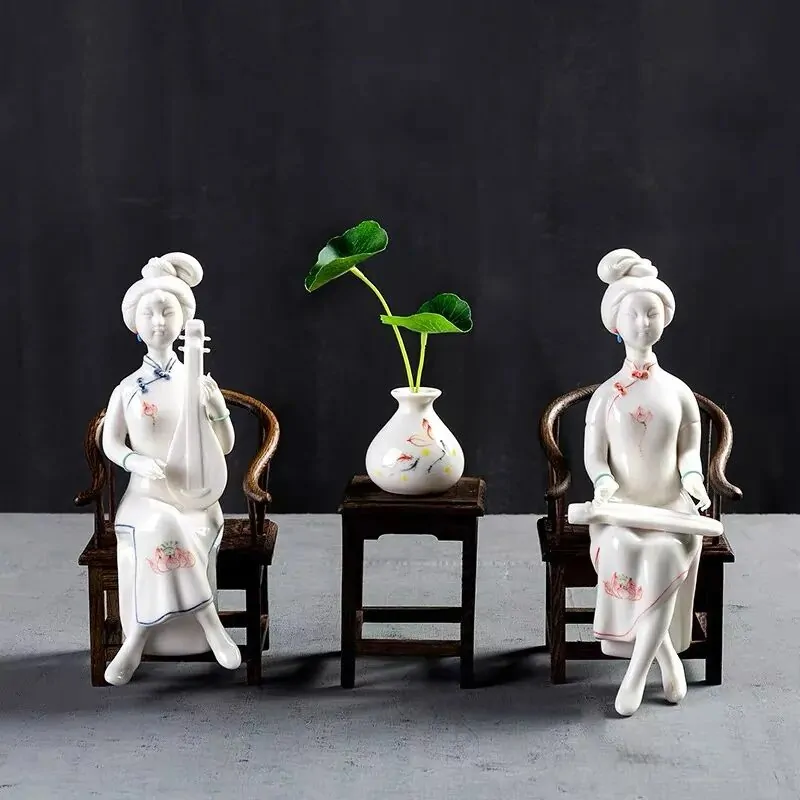
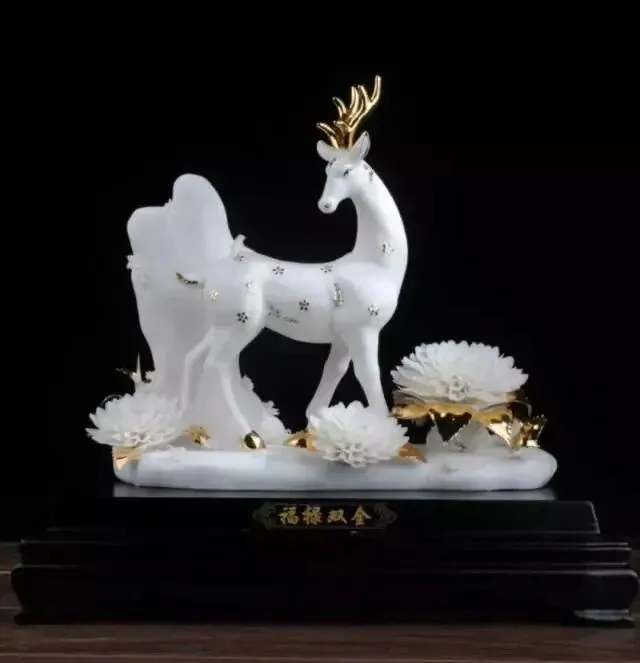
White-glaze porcelain can be painted after firing. This is the feature that most distinguishes ceramic sculpture from all other sculptural media. After a piece has been fired once, it can be returned to the kiln with overglaze enamels — famille rose, gilding, doucai outlines filled with colour. The result is a piece that is simultaneously sculpture and painting: the form is volumetric, the decoration is two-dimensional, and the two languages merge seamlessly. The “Hundred Flowers” figures — Guanyin and Luohan decorated with hundreds of different flower types, each painted separately — are the most celebrated example of this technique. Their origin, like the Hundred Flowers porcelains traced in what the hundred flowers pattern actually means, lies in Qing imperial taste and the court’s hunger for ever-richer decoration.
Shrinkage is both constraint and source of beauty. Porcelain clay shrinks by roughly 15 to 20 percent during drying and firing — a figure modelled at full size will emerge noticeably smaller, and parts of the sculpture may warp, crack or pull away. Master ceramic sculptors model the figure slightly oversize, anticipate the pull of thick versus thin sections, and accept that a perfect firing is never guaranteed. This element of chance is part of the appeal — and part of what sets ceramic sculpture apart from bronze or stone, where the finished piece is a precise copy of the model.
Modern ceramic sculpture
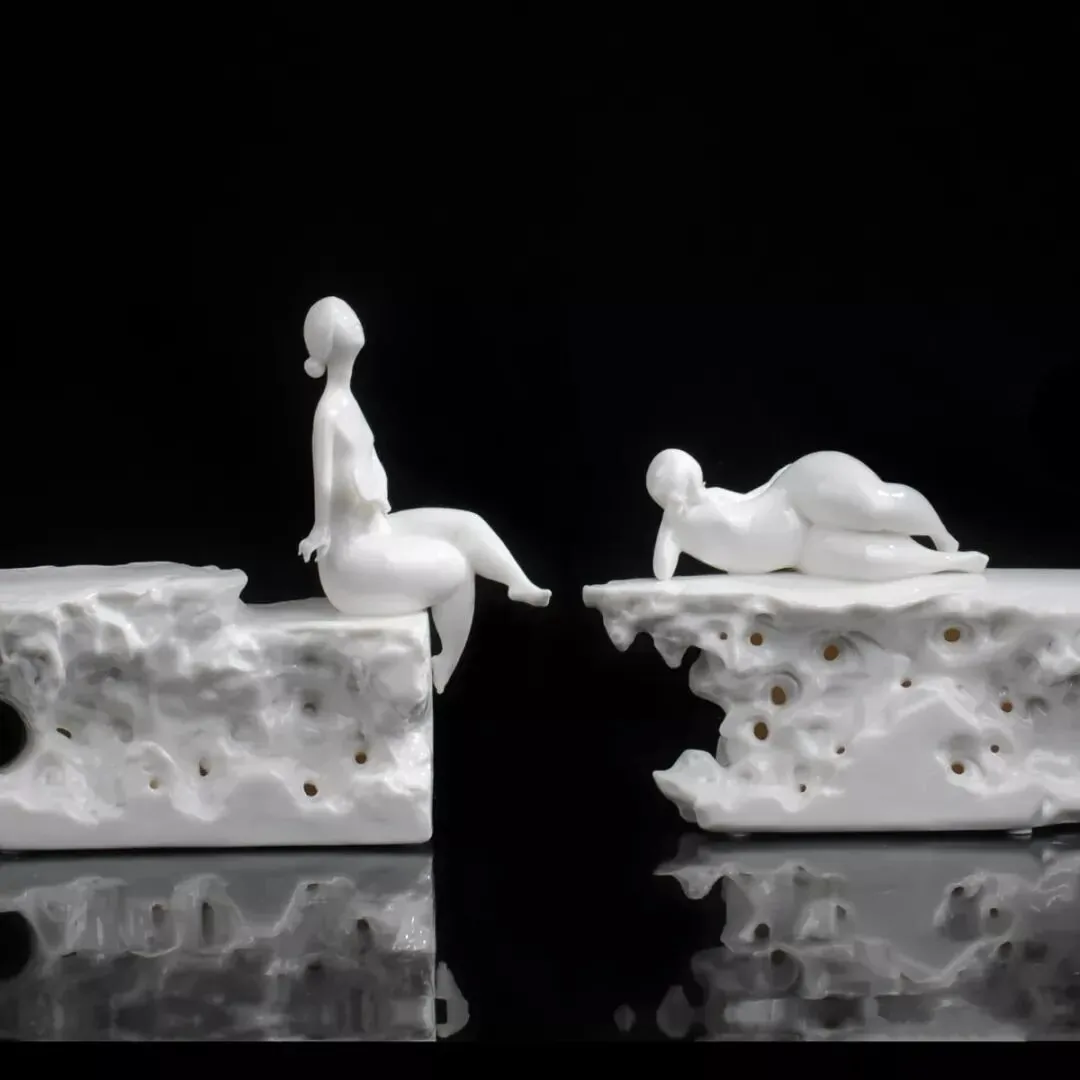
Contemporary ceramic sculpture in Jingdezhen has expanded in both direction and technique. Traditional religious figures continue to be produced — Dehua-style ivory-white figures command a serious market among collectors — but modern sculptors are also exploring abstract forms, political themes and cross-cultural references. The technical foundation remains the same: high-temperature porcelain clay, masterful control of glaze, and the patient handling of a material that responds to every detail of the maker’s hand. The best of this work sits alongside the revived ancient forms traced in the undervalued market for fine modern porcelain.
Key questions for collectors
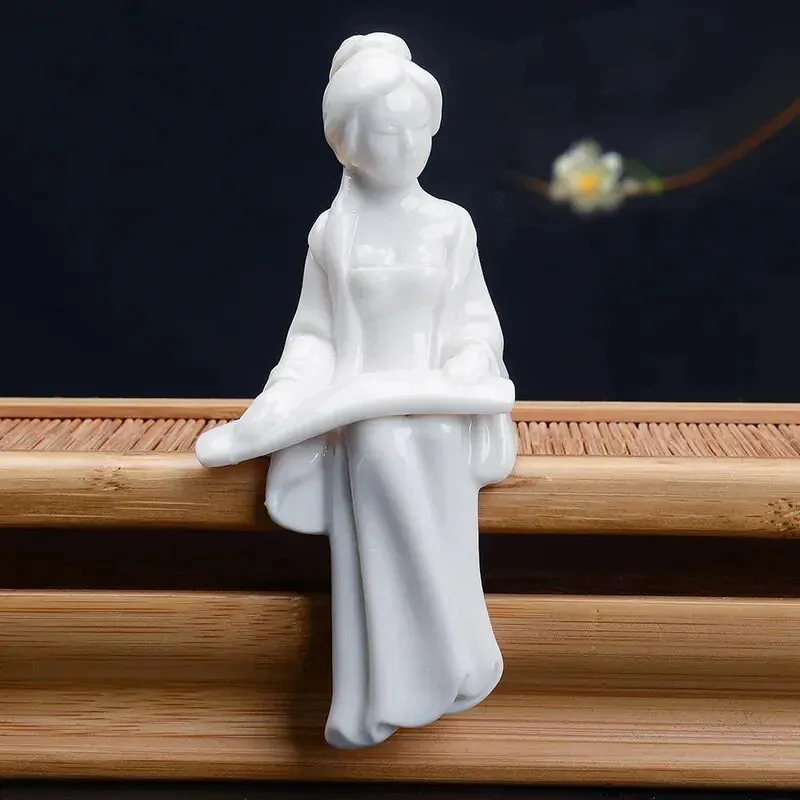
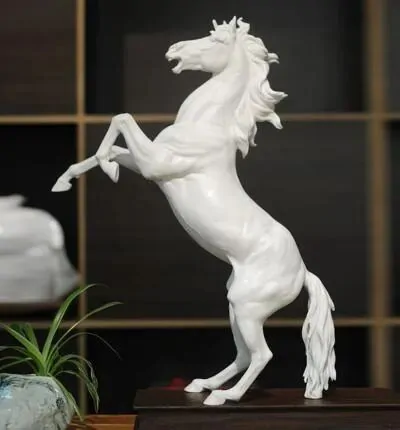
What subject makes sense as ceramic sculpture? Not every subject works well in porcelain. Heavy, solid forms can warp during firing. Very fine, open forms require exceptional control. Figures with flowing robes, projecting sleeves or open bases — the most technically demanding — are generally considered the highest standard.
Dehua or Jingdezhen? If the piece is single-colour white and religious, it is almost certainly Dehua. If it carries famille rose, doucai or underglaze blue painting, it is Jingdezhen. The ceramic sculpture of Shiwan is usually lower-fired, matte, multi-coloured and rooted in folk themes — a distinct category worth collecting on its own terms.
How much shrinkage is normal? A figure that models at 30 cm may emerge at 25 cm — this is expected. Warping, open cracks or parts that pulled away from the main body are firing defects and will reduce value. Perfect firing of a complex ceramic sculpture is a genuine technical achievement.
For a wider framework on judging porcelain value, see our buyer’s guide and the price ladder.
Explore our collection
Browse the Jingdezhen Heritage collection for porcelain sculpture from Jingdezhen-inspired traditions.
Contact Jingdezhen Heritage
Questions about a piece or an order? Email service@jingdezhenheritage.com or message us on WhatsApp. We reply within one working day.