
How old is the archaistic porcelain tradition u2014 and what is it worth today? Older than most collectors assume. Jingdezhen‘s true archaistic production began at the Yongle imperial kiln in the early fifteenth century, driven by the antique-loving emperors of the Ming, and it has run almost without interruption for six hundred years. Tang Ying, the celebrated superintendent of the Qing imperial kilns, described the standard it aims at: “In imitating the old, follow its elegance; in imitating the old, never lose its spirit and appearance.” The Palace Museum’s own collections let us check that standard directly u2014 Song originals beside their Ming and Qing copies u2014 and the auction market has priced the tradition at every level from tens of thousands to over a hundred million yuan.
Where it began: the Yongle imperial kiln
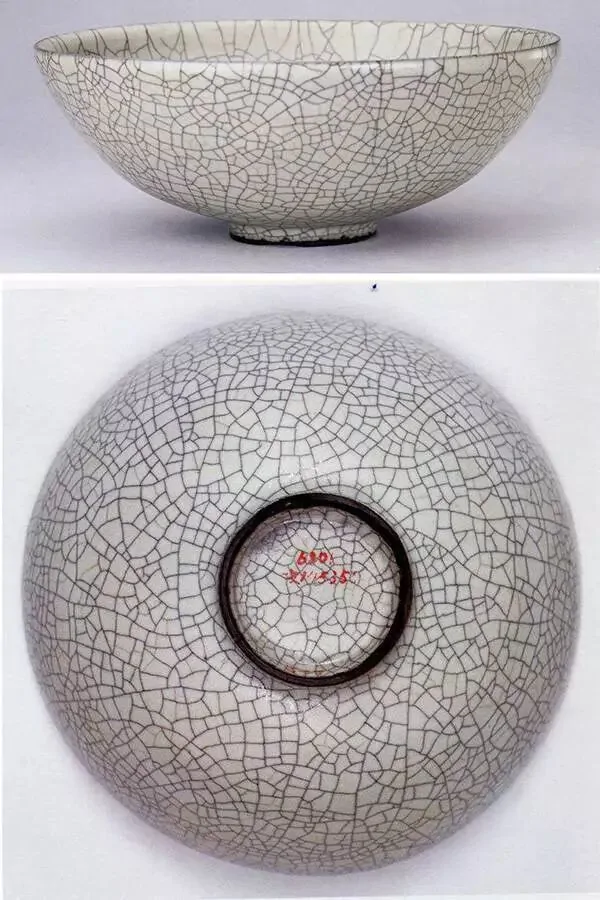
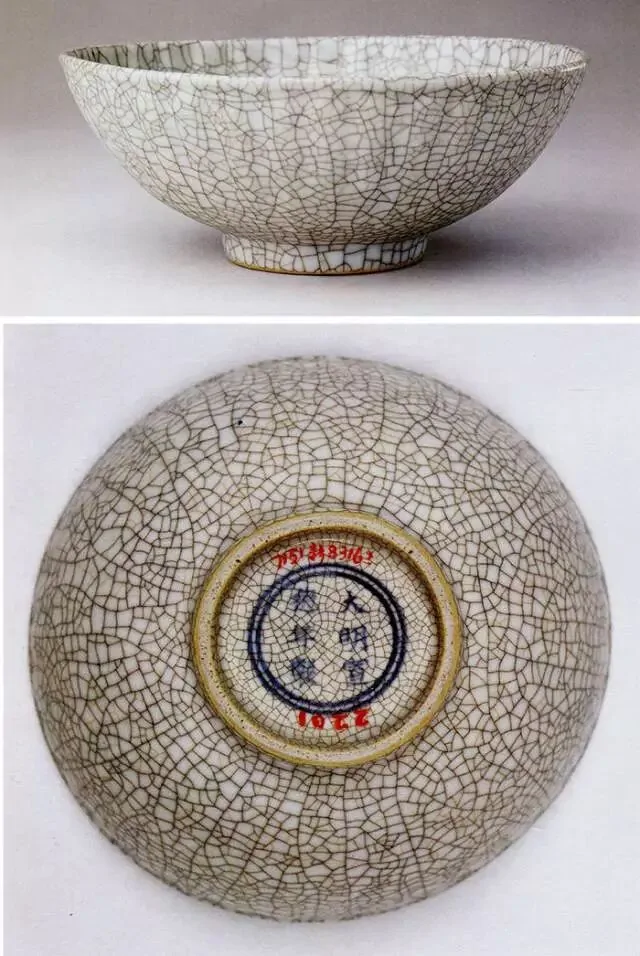
The Palace Museum still holds Yongle-era copies of Song Longquan carved bowls and celadon bowls. Under the Xuande and Chenghua emperors, the imperial kilns reproduced Song Longquan celadon and the wares of Ge, Ru, Guan, Jun and Ding u2014 but with a telling difference: these were acts of homage, not deception. They pursued the spirit and charm of the ancients rather than passing themselves off as old, and most bear their own reign marks in underglaze blue. Because they were made to imperial order, a portion achieved what connoisseurs describe as “so faithful to the ancient that they merge with the true”. The pair below shows how close that could come u2014 a Song Ge ware bowl and its Xuande copy, side by side.
The Qianlong golden age u2014 and the Republic’s echo
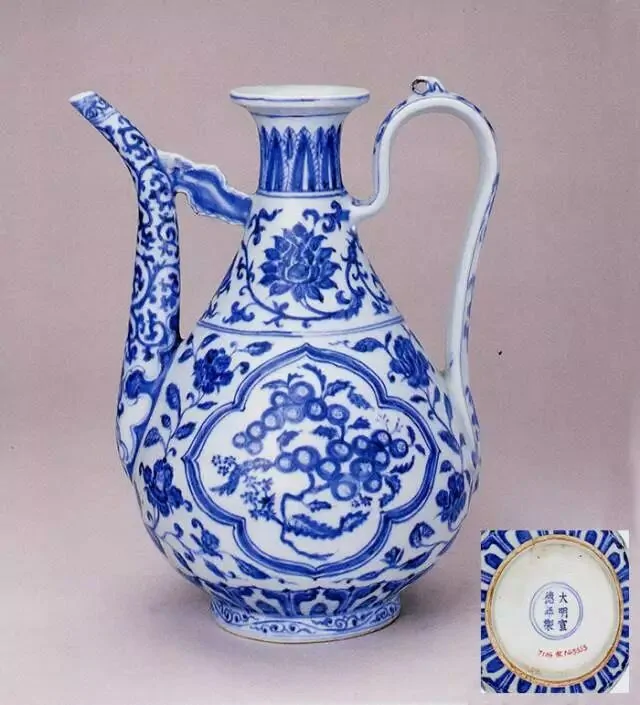
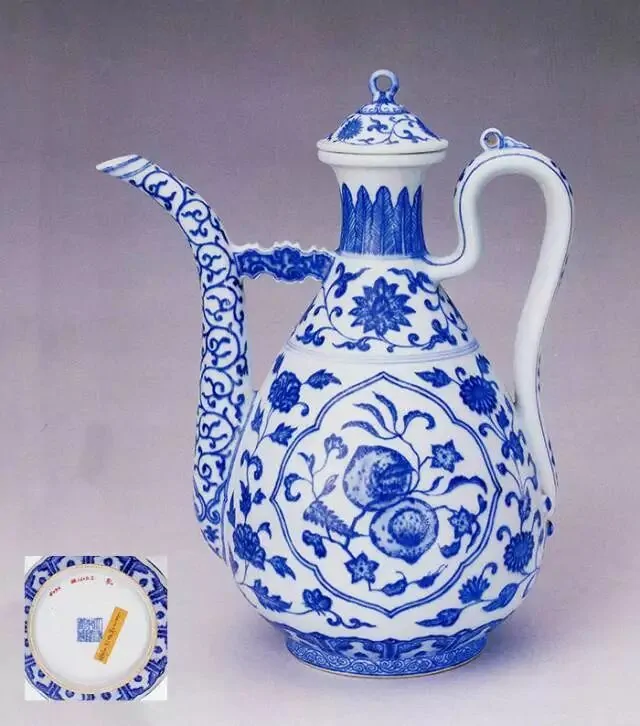
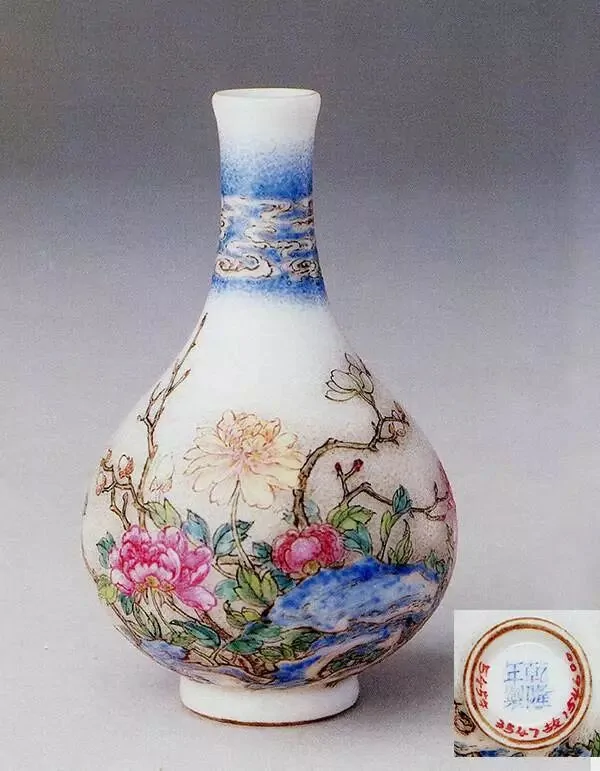
Under the prosperous Kangxi and Qianlong reigns, archaism became a pillar of imperial production. Lan Pu’s Jingdezhen Ta Lu (Record of Jingdezhen Pottery), compiled in the Qing, records the scene: “The wares of our dynasty have reached perfection u2014 workmanship fine and ingenious, colours refined and complete; in following the ancient models, forms and styles change month by month and year by year.” The museum pairs below trace the lineage: a Xuande ewer and its Qianlong re-creation, then a Qianlong enamel vase and a Republic-era copy of the same design.
The 1980s revival and an expert’s price tag
The tradition reached its modern chapter in the early 1980s, when the Jingdezhen Ceramics Museum, short of funds, reproduced the Yuan and Ming blue-and-white masterpieces in its own collection. The Palace Museum connoisseur Geng Baochang, in town to grade the holdings, examined the replicas with delight u2014 and priced the very first reproduction meiping at 3,800 yuan, a sum a visiting Japanese tourist paid on the spot. His verdict on the craft, which we tell in full in our report on archaistic porcelain and national treasures: a reproduction that can genuinely deceive a trained connoisseur carries the same value as a national treasure. “Gold in hard times, porcelain in prosperous times” has become the collectors’ maxim; genuine period pieces are scarce and costly, while fine modern work is within reach u2014 and today’s new porcelain, decades and centuries on, becomes the treasured antique of a later age.
What the auction records show
The market has priced the tradition across its whole span. Eight records not commonly seen together:
| Piece | Price | Auction | Date |
|---|---|---|---|
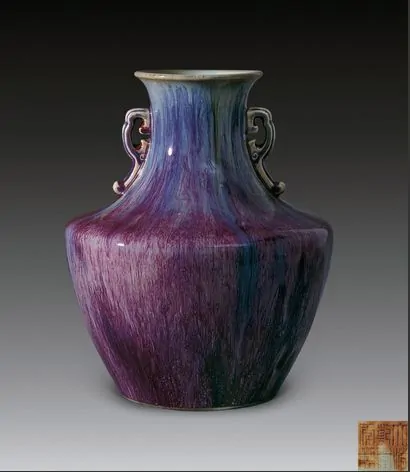
| Qianlong flambu00e9-glazed beast-handled zun, after Jun ware | RMB 4,945,000 | China Guardian | 2011-11 |
| Qianlong Ru-type glazed gu vase | HK$4,755,000 | Sotheby’s London | 2014-11 |
| Qianlong Guan-type tubular-handled vase | RMB 1,265,000 | Beijing Poly | 2014-12 |
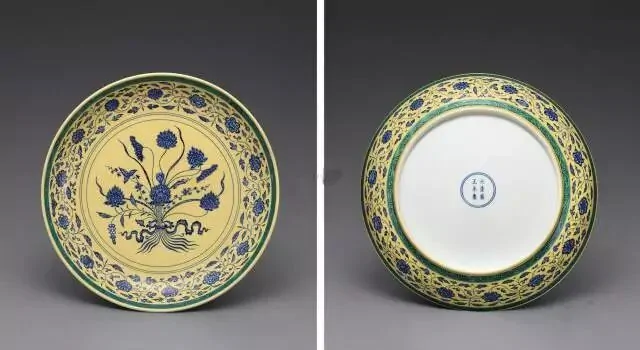
| Yongzheng yellow-ground blue-and-white ‘one lotus’ dish | RMB 18,400,000 | Beijing Hanhai | 2014-10 |
| Yongzheng blue-and-white fruit-spray meiping | HK$14,100,000 | Christie’s Hong Kong | 2009-12 |
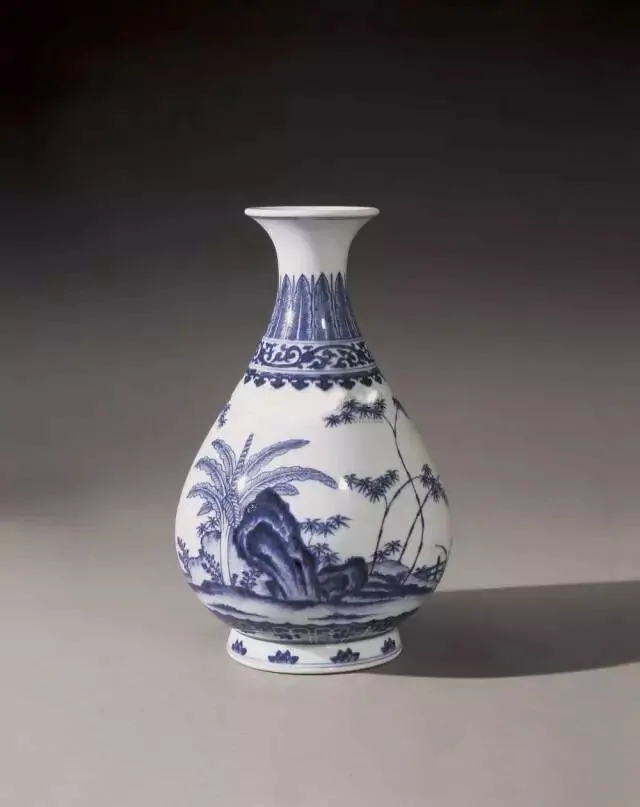
| Yongzheng blue-and-white bamboo-and-banana yuhuchun vase | RMB 4,876,000 | Sotheby’s Hong Kong | 2005-05 |
| Qianlong blue-and-white bamboo-and-banana yuhuchun vase | RMB 2,300,000 | Beijing Poly | 2012-06 |
| Daoguang blue-and-white bamboo-and-banana yuhuchun vases, a pair | RMB 2,875,000 | Beijing Poly | 2014-06 |
The last three rows make an instructive series: the same bamboo-and-banana vase form, made and sold across three reigns u2014 Yongzheng at 4.9 million, Qianlong at 2.3 million, Daoguang at 2.9 million the pair u2014 a single design carried down the dynasty by its own archaistic impulse. And for contrast, the originals that inspired all of this command their own ladder: a Yongle ‘one lotus’ dish sold for RMB 5,194,000 in 2011, and the Yongle fruit-spray meiping for RMB 138,301,200 u2014 figures we place in context in our report on Yongzheng archaistic porcelain at auction and our overview of what archaistic porcelain is worth.
A living discipline
From Yongle homage to Qianlong perfection to Republic echoes and the modern revival, archaistic porcelain is best understood not as imitation but as transmission u2014 each generation of potters learning its ancestors’ craft by rebuilding it. The making standards behind that transmission are set out in the four standards behind a true archaistic reproduction. A piece made to those standards today, bought honestly as what it is, is simply the next ring in a six-hundred-year chain.
Explore Jingdezhen craftsmanship
Jingdezhen Heritage works with workshops that continue these traditions u2014 handmade blue-and-white, famille rose and archaistic pieces fired in Jingdezhen. Browse the collections to see how historic forms and glazes live on in contemporary handmade porcelain.
Contact Jingdezhen Heritage
For enquiries about any piece, custom orders or wholesale, email us at service@jingdezhenheritage.com or message us on WhatsApp.