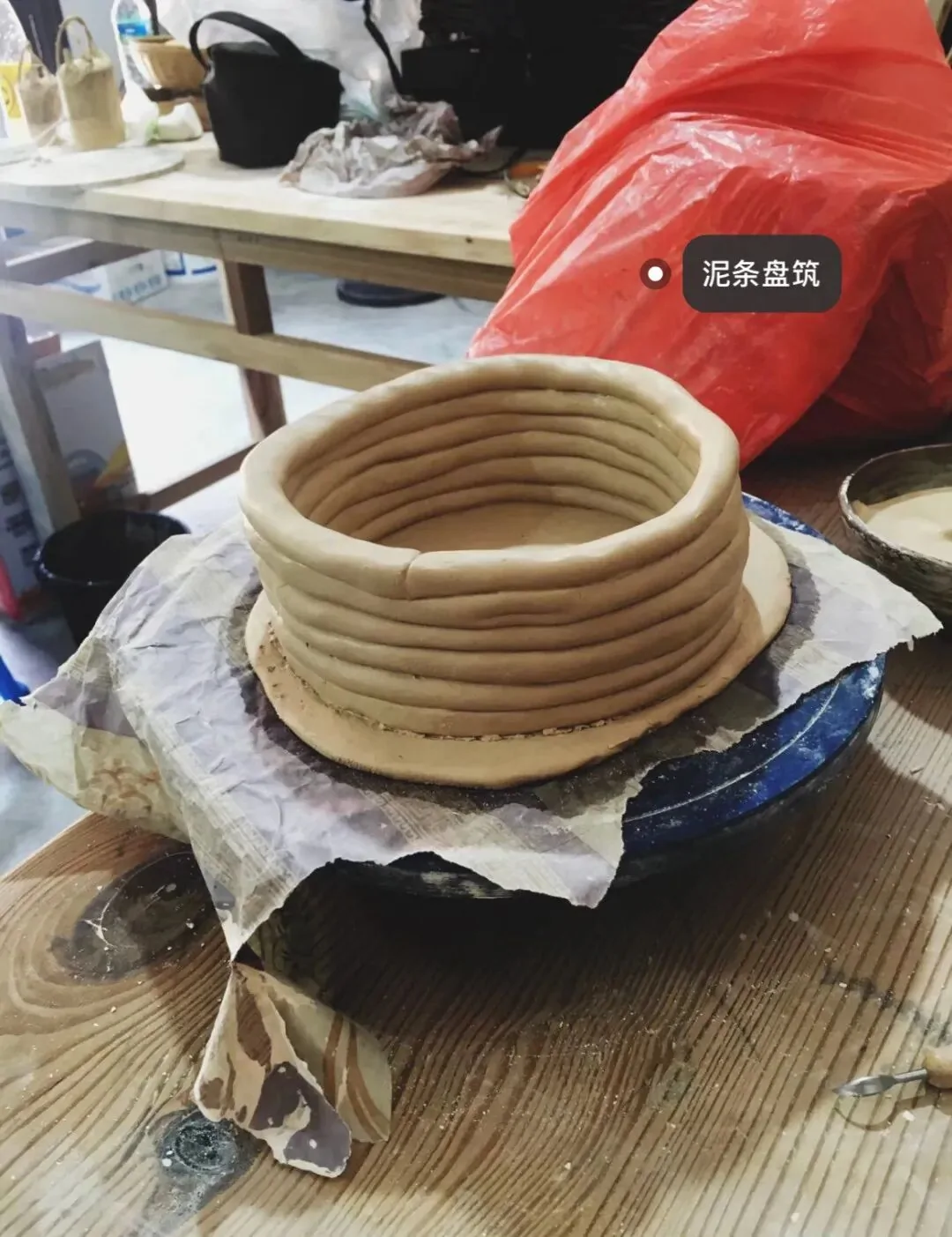
A block of clay, handled by many artists, in different bodies and by different firing methods u2014 and in China, from countless famous kilns. Can it become a cup, a bottle, a sculpture? Can a wire drawn through the clay to open its own section be a work of art? For Professor Bai Ming of Tsinghua University, who chairs the ceramic art committee of the China Artists Association, the answer is yes, and the harder question is the one that follows: how should we look at it?
His answer, given in a recent lecture on modern ceramic art, is that most of us were taught to judge ceramics by a single standard u2014 the imperial, functional, beautiful vessel u2014 and that standard is the wrong tool for the job. This article reworks his argument into a practical guide: what modern ceramic art is, why it looks so unfamiliar, and the questions to ask of any piece you meet.
The Object That Refuses to Be a Vessel
The ceramics most of us were raised on carry a complete value system: harmony between maker and material, utility dignified by beauty, forms refined over dynasties. Modern ceramic art sets that system aside. A sculpture in porcelain may hold nothing, pour nothing, and imitate nothing. Its job is to make you feel and think, in the way a painting does.
That inversion produces two common reactions, and Bai Ming has heard both: rejection u2014 “this is not art, we do not need it” u2014 and a startled attraction u2014 “why does this move me more than the objects I live with?” Both reactions come from the same place, which is habit. The trained eye reads a pot instantly; confronted with a piece that has no function and no precedent, the eye has nothing to hold on to, and either rejects the work or is gripped by it.
| Classical ceramic | Modern ceramic art | |
|---|---|---|
| Purpose | Use, ritual, display of taste | Expression; the object is the statement |
| Judged by | Lineage, fidelity to form, quality of glaze and firing | Originality, force of idea, command of the material |
| Form | Continuous with a named tradition u2014 meiping, guan, cong | Invented; may quote, distort or abandon tradition |
| Perfection | A fault is a failure | Cracks, warps and accidents may be the point |
| Maker’s role | Master of a known craft | Artist using clay as one language among many |
Neither column cancels the other. A modern porcelain sculpture and a Yongle blue-and-white dish are not in competition; they are answers to different questions.
Reading a Picture in Time and Space
Bai Ming’s most useful teaching is about time. We live, he says, in a linear present, and we read images only at the surface. But every work of art is a record of a time and a place, and modern ceramic art cannot be understood until that background is restored.
His comparison is deliberately unsettling. Sigmund Freud feels modern; the Guangxu emperor feels impossibly remote. Yet they were contemporaries u2014 Freud published while Guangxu reigned. We speak fluently about psychoanalysis because Western life developed smoothly into the present; Chinese life passed through ruptures so deep that its own late nineteenth century now feels like another civilisation.
The same gap runs through art history. Walter Gropius founded the Bauhaus in 1919, hiring Kandinsky u2014 whose first abstract paintings date to about 1910 u2014 while China was still at the end of its imperial age. Art Nouveau had already swept through European architecture, furniture, jewellery and book design in the 1890s. Modernism, in other words, is not a fashion of the last few years; it is a century deep, and much of the unfamiliarity of modern ceramic art is simply the shock of meeting a hundred years at once.
| Western milestone | Date | China at the same moment |
|---|---|---|
| Freud publishes on psychoanalysis | 1890su20131900s | Guangxu reign, late Qing |
| Art Nouveau movement | c. 1890u20131910 | Final decades of the Qing |
| Kandinsky’s first abstract paintings | c. 1910 | End of the Qing, 1911 Revolution |
| Gropius founds the Bauhaus | 1919 | Early Republic, May Fourth era |
| Studio pottery becomes an art movement | 1920s onward | Republican period, war years |
Seen against this table, the question “why is this piece so strange?” becomes “which hundred years is this piece in conversation with?” That is a question a viewer can actually work on.
Three Questions for Any Modern Piece
Bai Ming reduces connoisseurship of modern ceramic art to three relationships: technique and art, material and expression, aesthetic experience and imagination.
Technique serves art, never the reverse. In the producing regions, skill is revered, and the confusion of skill with art is common. Technique matters only to the extent that it serves what the artist needs to say. A flawless glaze on an empty idea is craftsmanship; an expressive work held together by adequate technique is art. Art first, craft in support u2014 that order is what creation means.
The material has its own voice. Clay is not a passive substance waiting for instructions. Porcelain clay has a demand for purity; coarse earthenware has a demand for roughness. Wood has its own language, and so does every body, glaze and firing method. The modern artist’s job is not to impose an idea on the material but to find what the material wants to express and guide it there. Much of what looks new in modern ceramics is simply the material being allowed to speak.
Experience must not strangle imagination. Taste is accumulated memory, and accumulated memory hardens into rule. The collector who has seen a thousand Song bowls may be unable to see anything else. The ideal viewer keeps a strong stock of experience and a childlike openness at the same time u2014 which is why Bai Ming ends his lecture with an appeal to tolerance: towards Western art, towards one’s own tradition, and towards the future.
| Ask | A strong answer looks like | A weak answer looks like |
|---|---|---|
| Is technique serving the idea? | Every difficult passage exists for a reason | Difficulty displayed for its own sake |
| Does the material speak? | Body, glaze and firing all carry meaning | Clay used as if it were plastic or stone |
| Is there genuine imagination? | The piece could only have been made now, by this maker | A famous antique, re-executed |
Fragility Is the Point
One story from the lecture deserves repeating. A local official once offered to fund research u2014 several tens of millions of yuan u2014 into an unbreakable ceramic. Bai Ming refused on the spot. Solve the breaking, he told the official, and you abolish the beauty.
Porcelain is loved because it is fragile; fragility concentrates the feeling we bring to it, exactly as mortality concentrates the value of a life. And the paradox runs the other way: a porcelain piece that escapes collision is effectively eternal. Fired ceramic does not rot, rust or fade, and long after its makers are gone it will still carry their hand and their time, readable by whatever civilisation finds it. The care that fragility demands is not a weakness of the medium. It is the medium.
Innovation Is the Only Tradition
The lecture’s sharpest claim concerns heritage. Copying the Song is often praised as carrying on tradition. Bai Ming disagrees, and his argument is chronological: there were no Song wares in the Tang, no Tang sancai in the Han, no high-fired colour glazes before the Yuan. Every classic we now call traditional was, in its own day, a radical innovation u2014 a new aesthetic standard set by the boldest makers of the time, which later ages inherited precisely because it was new.
So tradition and innovation are not opposites; innovation is the mechanism by which tradition is created. Three centuries from now, no one will credit the twenty-first century for re-executing Song glazes. They will credit what this century dared to make for the first time. Making faithful archaistic ware for the market is a legitimate business u2014 but it is commerce, not artistic honour.
Bai Ming closes with a metaphor for civilisation itself. A civilisation is not a riverbed u2014 a fixed channel, like the dead ruins of Jiaohe in Xinjiang, where a river once gave life and then vanished. It is the water: always moving, never the same twice. The Yellow River we see today is not the river Li Bai saw, and the one our grandchildren see will not be ours. Modern ceramic art, approached with a tolerant and curious eye, is simply the newest water in a very old river.
Frequently Asked Questions
What is modern ceramic art?
Ceramic work made for expression rather than use u2014 sculpture, installation and vessel-forms whose purpose is artistic statement. It shares materials and kilns with traditional ceramics but is judged as art, not craft.
Why does modern ceramic art look so different from classical Chinese porcelain?
Because it answers a different question. Classical porcelain refines inherited forms and glazes; modern ceramic art treats clay as a language for ideas, and may distort, damage or abandon the classical forms entirely.
How do I judge a piece of modern ceramic art?
Ask three questions: does the technique serve the idea, does the material’s own character speak in the work, and is the imagination genuine rather than a re-execution of an antique? Bai Ming’s framework is exactly these three.
Is making faithful copies of Song ware a contribution to tradition?
It is a legitimate craft and business, but not an artistic one. Every classic was an innovation in its own time; tradition advances only through new creation, not repetition.
Related Reading
For the classical standards modern makers are reacting against, see Song Ceramics: The Five Great Wares Explained and Ming vs Qing Porcelain. For the sculptural tradition that precedes modern work, read Buddhist Porcelain Figures, and for the vessel vocabulary, Chinese Vase Shapes.
Our own work is high-fired Jingdezhen porcelain, traditional and contemporary; browse the collection, or email us. We also answer questions on WhatsApp.