
Revival porcelain is not a forgery. A copy is legitimate when it passes three tests u2014 heart, source and use: an intent to transmit a tradition rather than deceive, materials and techniques that are genuinely traditional, and an open sale that never claims to be an antique.
For the definition of this tradition, see what revival porcelain is; for the physical checks that separate a later copy from an original, see how to tell a revival copy from an original; and for a single case study in form, see why a meiping vase has sloping shoulders. This article takes the next question: why a copy can be legitimate at all, and why the system that produced it could only have grown in one town.
Is revival porcelain fake?
The word fake describes an intention, not a technique. A fake is made to be taken for something it is not u2014 usually an older and more valuable object. A revival piece is made to be recognised for what it is: a contemporary work in an older idiom, fired with the materials and the methods of the model it follows. Two such objects may look alike on a shelf. What separates them is what the maker intends when the buyer starts asking questions.
The source article for this piece puts the definition more simply. Revival porcelain, it says, is porcelain fired in a later period in imitation of famous wares of an earlier one, and it is one of the most effective ways of carrying a ceramic tradition forward. On that view the category is defined by lineage, not by deception.
The comparison with printing is close enough to be useful. A fine-press reprint of a nineteenth-century novel may use the same paper, type and binding methods as the first edition, and it names its publisher and its date on the title page. Nobody calls it a forgery. It becomes one only when the title page is altered.
So a single question is not enough. The source article names three tests u2014 heart, source and use u2014 and each can be put to any object in a shop, a studio or a collection.
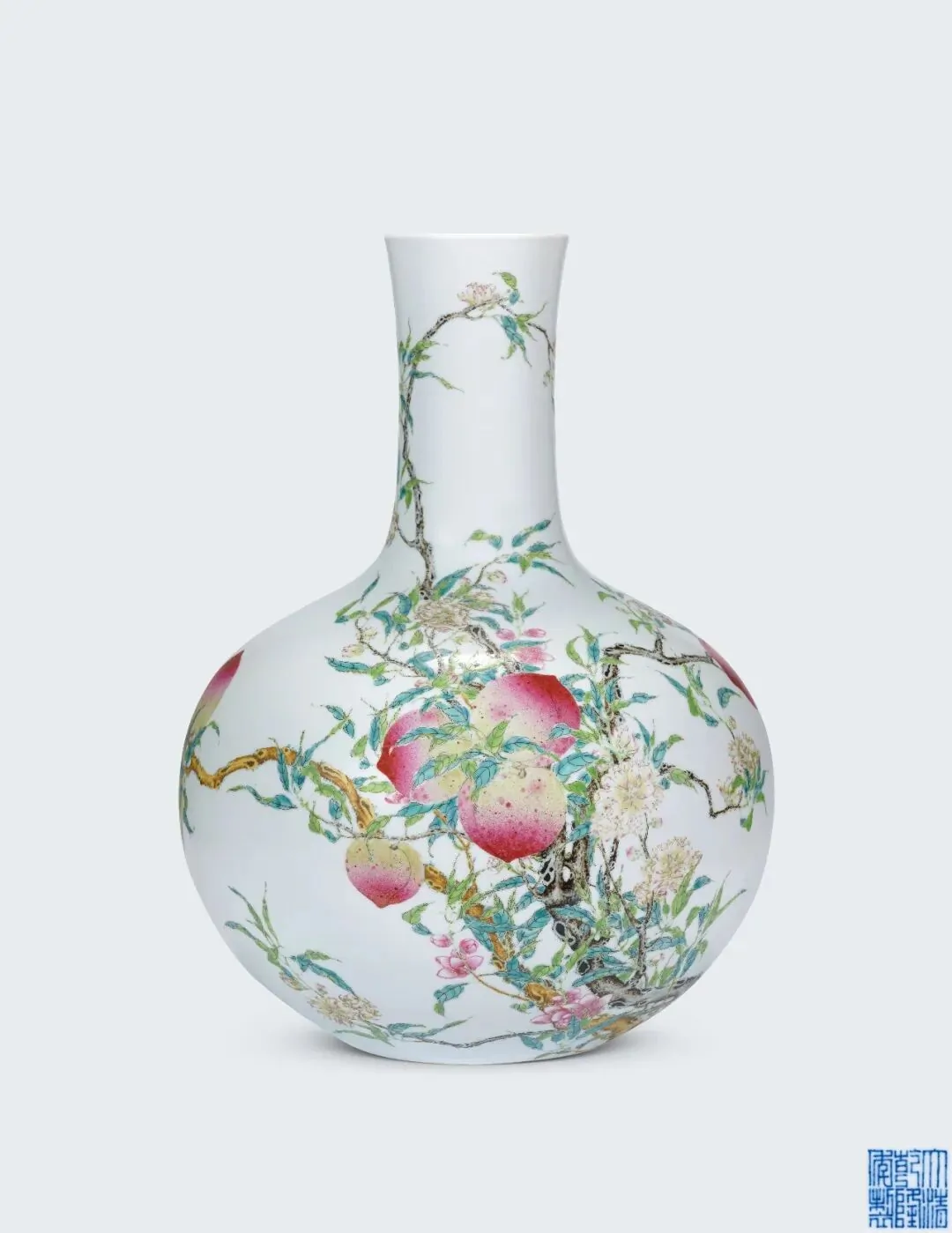
The test of heart, source and use
The three tests are cumulative rather than independent. A piece can pass one and fail another, and a single failure is usually decisive.
Heart: intent to transmit, not deceive
A potter who copies a Yongle bowl in order to understand how it was made is doing research by other means. The intention shows in small decisions: whether the piece is marked with the studio’s own name, whether the workshop tells visitors what it is reproducing, and whether the price asked is the price of good contemporary work rather than the price of an antique.
Intent is also the one test that documents can support. A studio that publishes its reproductions, labels them and exhibits them as modern work has made its position public. A workshop that sells unmarked pieces into the antique trade has made a different one.
Source: traceable materials and technique
Source is a question of material and method. Was the body made from kaolin and porcelain stone of the kind the region produces, or from an industrial substitute? Was the cobalt a mineral ore or a prepared pigment? Was the piece thrown on a wheel, turned by hand, painted with a brush and fired in a kiln whose regime the workshop can describe?
Traceability matters for two reasons. Technically, a copy made from the same materials behaves like its model in the kiln: the same shrinkage, the same pooling of glaze, the same way iron in the cobalt breaks through the surface. Historically, it keeps the knowledge in the hands of people who can still use it. A copy made from modern materials may photograph well and teach nothing.
Use: sold openly, never passed off as an antique
Use is the test most easily observed and most often failed. A revival piece should be sold as what it is, described by the period it follows and the workshop that made it. It should not carry the reign mark of an emperor to whom it does not belong, and it should not be aged, stained or chipped to suggest a century of handling. A copy offered as an antique, or simply left to be mistaken for one, has crossed from revival into forgery, however well it was made.
Intent and use are therefore linked. A piece made for study, for display or for daily use u2014 tea, flowers, a table u2014 fulfils the tradition. A piece made only to be distressed and sold into a market that believes it is old does not.
When all three tests hold, the source article argues, the object is not merely lawful but valuable: it carries the imperial kiln tradition in a form that can still be handled. When one fails, the object should be judged by the test it fails, not by the quality of its glaze.
Why is Jingdezhen the only place this story could happen?
The three tests would be academic if the technical chain had broken. It did not, and the explanation is institutional. The five most famous kilns of Chinese history u2014 Ru, Guan, Ge, Ding and Jun u2014 were all in the north, and none of them was in Jingdezhen. Yet the town became the reference point for Chinese porcelain, through a thousand years of state patronage.
The town was called Changnan until 1004, when the Northern Song emperor Zhenzong ordered imperial wares to be fired there and gave the place his reign title, Jingde. The name stayed, and with it a claim: porcelain made in Jingdezhen was porcelain made for the throne. In the Song period the town’s reputation rested on qingbai, the bluish-white glaze of the Hutian kilns, with a fine dense body and a colour that writers compared to ice and jade.
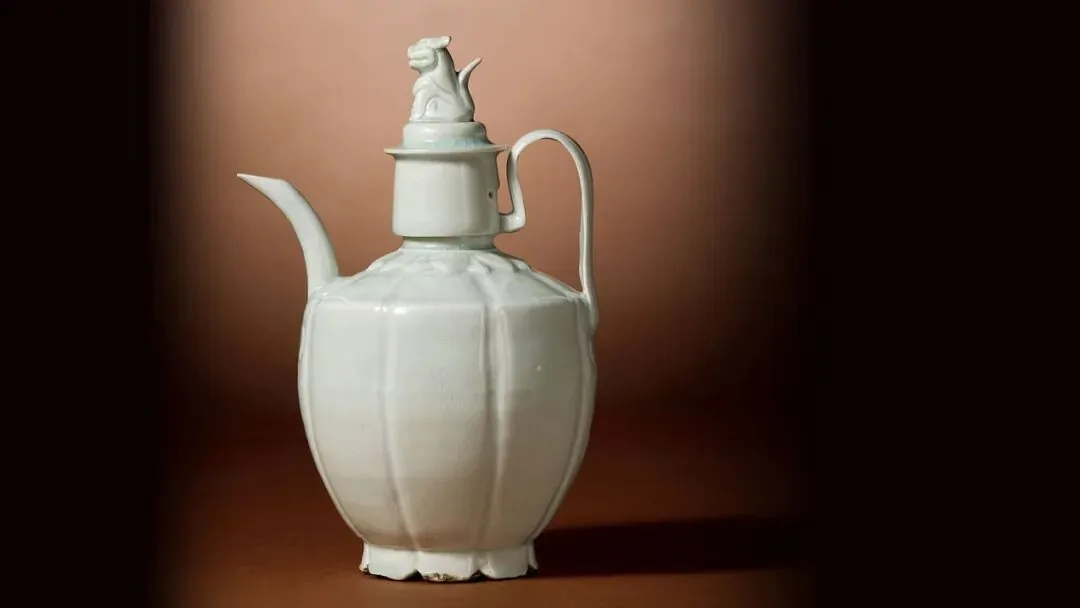
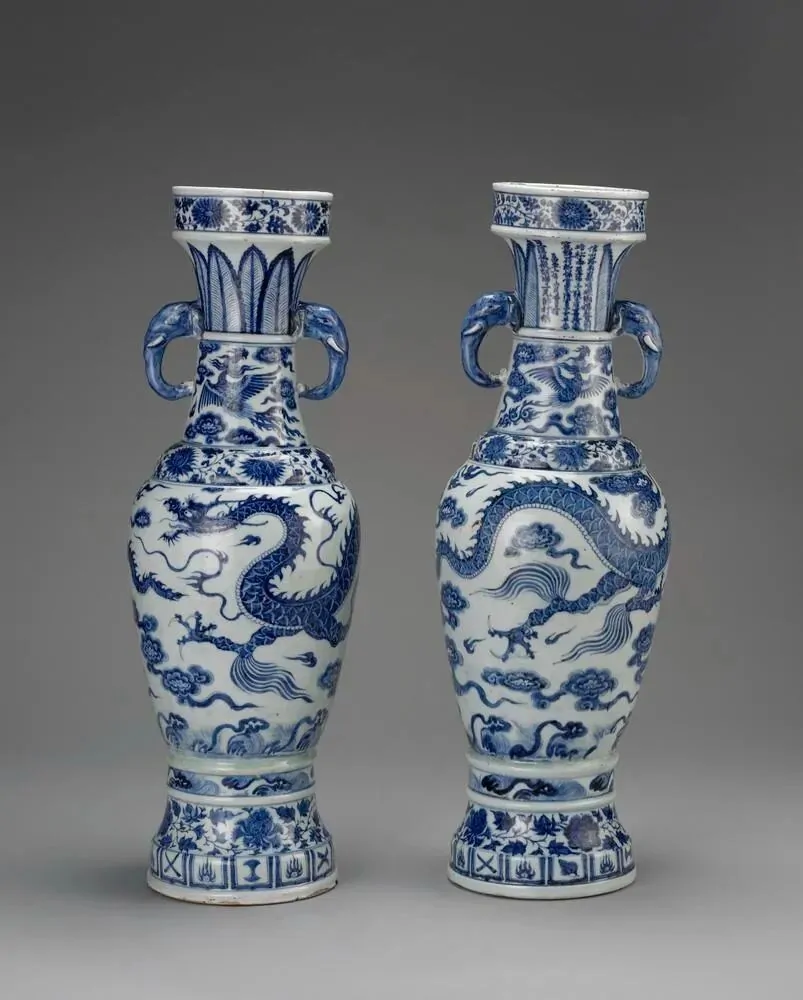
The decisive change came under the Yuan. Kublai established the Fuliang Porcelain Bureau, the first official body in Chinese history created specifically to fire porcelain for the imperial court. Under that arrangement Jingdezhen became the one production centre in the empire working for the throne, and the great Yuan blue-and-white and underglaze-red wares were fired there, among them the temple vases dated 1351 that are now among the best-known objects in the British Museum.
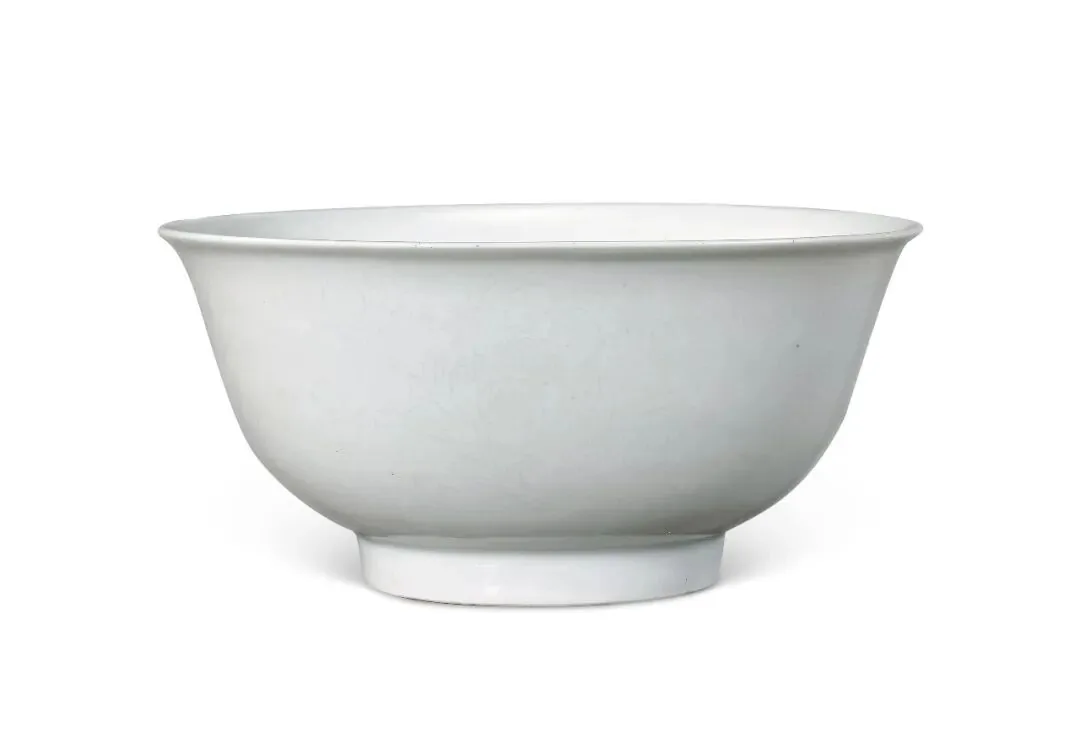
In 1369, the second year of the Hongwu reign, the Ming court reorganised the bureau into the imperial porcelain factory. The arrangement was known as official supervision, private firing: the court set the quotas, the designs and the standards, while workshops did the work under official control. The factory gathered the best craftsmen from the whole country and monopolised high-end production for the palace. Its output defines what later potters would have to reproduce. Yongle sweet-white glaze was thin enough in the body for a shadow of the fingers to show through it. Yongle and Xuande blue and white used the imported Sumali cobalt, whose iron-rich spots stain the surface. Chenghua doucai set enamel colours above the glaze within an underglaze-blue outline. The Jiajing and Wanli wucai palettes put red and green in strong contrast.
The Qing carried the system to its height. The imperial kiln operated under a supervisor who combined the roles of administrator, designer and technical director, and who worked from the emperor’s own instructions; Tang Ying is the best known of them. Kangxi wucai, the so-called hard colour; Yongzheng famille rose, the soft colour, built on a white enamel ground; and Qianlong falangcai, painted with enamels derived from European glass technology, mark the sequence of technical ambition.
By the end of the eighteenth century the town had what no other ceramic centre had: a single client with almost unlimited demands, a supply chain organised around that client, and a workforce whose skills passed between generations in the same streets. That continuity is the reason a Jingdezhen porcelain copy can be technically credible today. A workshop here is not reconstructing a lost industry from fragments; it is working inside a craft system that never stopped.
Seventy-two steps, one vessel
The most quoted description of the process is also the shortest. Song Yingxing, in Tiangong Kaiwu (1637), wrote that the making of a single vessel requires the strength of one blank, that it passes through seventy-two hands before it can be called finished, and that the finer details of the work cannot all be set down. The number is not a specification. It is an account of how many separate skills a single pot requires.
Modern descriptions reduce the sequence to five core processes: throwing the body on the wheel; turning and trimming it on a second wheel, which gives the foot and the profile their final precision; painting the decoration; glazing; and firing. Each is a specialism. In the historical workshops they were separate trades, practised by different people in different rooms, and a single vessel passed between them.
Around those five sit sixty-seven supporting steps: selecting and washing the stone, pounding it in water-powered hammers, levelling the clay, preparing glazes, making the refractory saggers in which pieces are stacked, firing the enamels in a small muffle kiln, and packing for transport. Together they make up the system usually called the seventy-two processes.
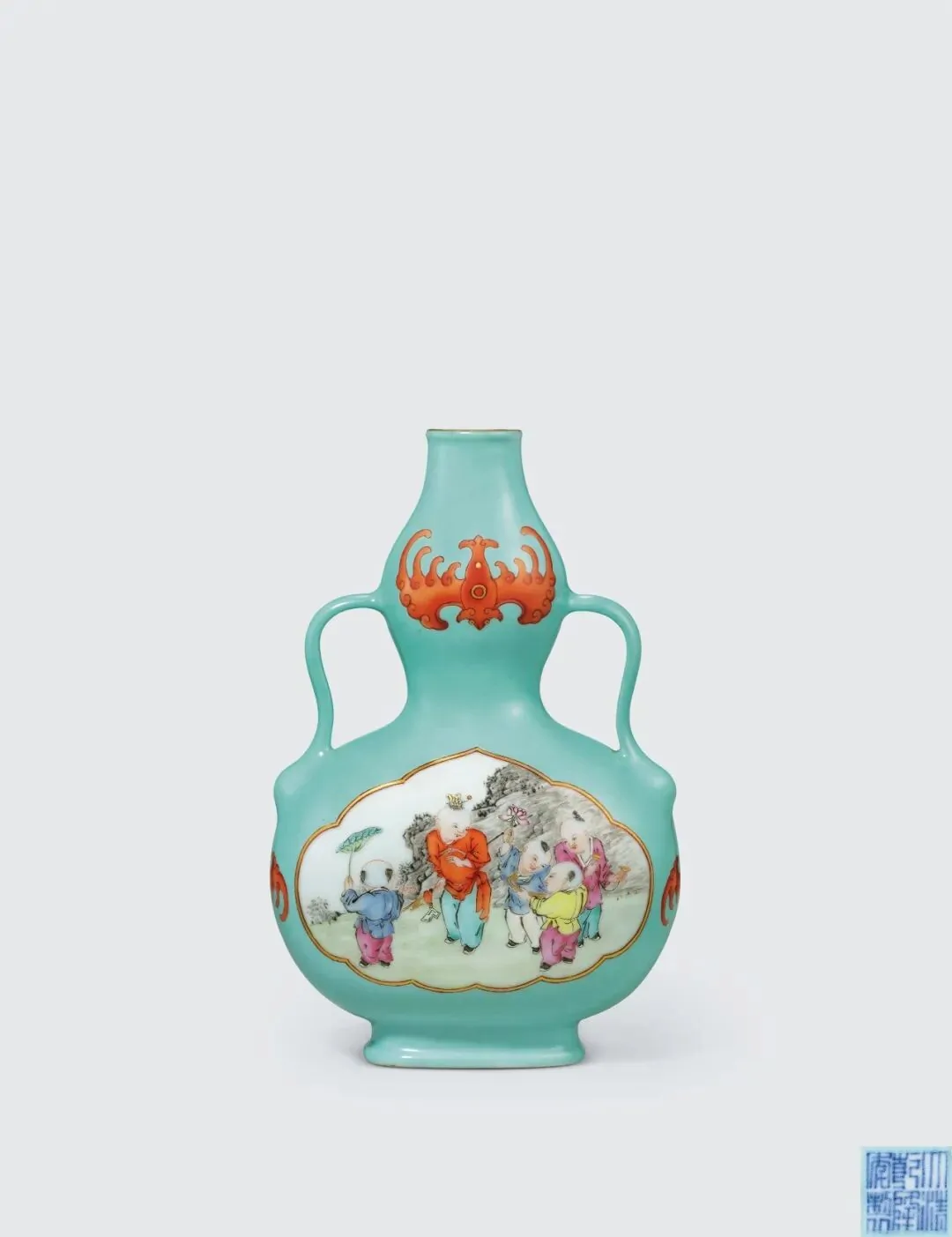
In 2011 the hand-made porcelain technique of Jingdezhen was inscribed on China’s national list of intangible cultural heritage. According to the source article, the former Ministry of Culture went further in 2014 and listed revival porcelain itself as an object of heritage protection u2014 a recognition not of the object but of the knowledge required to make it.
That distinction matters. A tradition can be recorded, photographed and written down and still die, because the knowledge lives in judgement: how wet the clay should feel, when to stop turning a foot, how thickly to lay a wash of cobalt, how a glaze will move in the kiln. Hand-painted porcelain cannot be specified in a manual. It can only be transmitted through long practice under someone who already has it.
Why is copying harder than inventing?
There is a common assumption that copying is the easier option, and that a potter who cannot invent falls back on reproduction. The opposite is closer to the truth.
A famous ware is famous because it solved a set of constraints at the highest level available at the time. The body had to be plastic enough to throw, white enough to carry a glaze and stable enough to survive firing. The glaze had to melt at the right temperature without running off the rim. The cobalt had to be ground and applied so that it stayed crisp beneath the glaze. The painting had to be composed for a curved surface. To reproduce the result, a potter must recover all of those decisions u2014 clay recipe, glaze recipe, firing curve, brushwork u2014 without the workshop that made them.
Designing a new form does not require that recovery. A potter who can reproduce a top-quality Song piece already commands the full vocabulary of the tradition, and can invent within it with far less difficulty, because the constraints are understood rather than guessed. The source article makes the point bluntly: whoever can copy the best Song wares can make any new form with ease.
This is why reproduction serves as a measure of skill. Judging a craftsman by work he has designed is partly a judgement of taste; judging him by a reproduction is a judgement of control. A copy either matches the model’s proportions, surface and handling or it does not, and the difference is visible to anyone who knows the model.
The argument is not against invention, and the tradition does not treat the two as opposites. Tang Ying’s career combined the reproduction of Song glazes with the design of new palettes, and the great Qing enamelled wares are revival and invention in the same object. What the comparison establishes is narrower: reproduction is the harder discipline, and a workshop that can do it well can do almost anything else.
A living specimen, not a forgery
The strongest argument for revival work is not economic but documentary. Some techniques survive only because someone is still performing them.
Yuan blue and white is the clearest case. A few hundred complete pieces are known, most of them from museum and tomb contexts, and the technology that produced them u2014 the refined body, the imported cobalt, the firing regime for a large, thick-walled vessel u2014 had been lost. Without modern reproduction, a visitor could look at a Yuan jar under glass but never see how it was thrown, how the cobalt was washed or how the fire was controlled. The object would survive; the knowledge would not.
Huang Yunpeng is a nationally recognised representative inheritor of the hand-made porcelain technique of Jingdezhen. The source describes more than fifty years of research into ancient ceramics and revival production, including work to reconstruct the clay and glaze recipes of Yuan blue and white and to standardise its forming process. That is a technical claim, and it is the kind of claim that can be checked against the ware itself.
The source article also reports that a Yuan-style blue-and-white jar with a narrative scene by Huang Yunpeng was acquired by the National Museum of China, and that a reproduction of a late Qing Dayazhai famille rose vessel was acquired by the Palace Museum. This article reports those statements as the source’s; what matters here is the institutional point behind them. National collections have treated high-quality revival work as evidence of a living technique rather than as an imitation to be hidden away.
The analogy the source draws is with Kunqu opera. The Peony Pavilion was written at the end of the sixteenth century, and the performance tradition it belongs to is older still. An audience today does not need a performance from that century in order to hear the music; it needs a company that has kept the technique. A revival vase works in the same way. It is not the original object, and it does not pretend to be; it is the technique, performed now.
That is what living specimen is meant to carry. A specimen is kept so that something can be studied and shown. The value of a revival piece lies in the completeness of the technique it preserves: the body prepared from stone, the form thrown and turned by hand, the painting done in the historical sequence of underglaze and overglaze colour, the firing controlled by eye and experience.
What revival porcelain means for new collectors
Two questions come up most often, and both are answered by the three tests.
Can revival porcelain gain in value?
The economics differ from those of an antique. An original’s price is largely a scarcity premium: the number of Yuan jars is fixed, and demand moves against a fixed supply. A revival piece carries a craft premium, because its price reflects materials, hours and the skill of the maker. Well-made examples can rise over time as the maker ages, as skilled hands become scarcer and as good raw materials become harder to obtain. The rise is gradual and tied to the workshop, not to the market. Revival porcelain is an object to collect, study and use; it is not a route to a quick return.
How do you judge the standard of the work?
Judgement rests on five things, in the order a potter would check them. Body: dense, well-levigated clay, with a foot that rings clearly when tapped. Glaze: even, with depth and a soft internal light rather than a hard shine. Form: proportions that follow the model’s logic, with shoulder, waist and foot in the right relationship, rather than a shape approximated by eye. Painting: brushwork with rhythm, spacing that varies naturally, and colour laid in the correct sequence. Mark: a workshop mark that is honest about what the piece is, and, where an imperial model is copied, an appropriate modern mark rather than a borrowed reign mark.
Handle the piece if you can. Weight, the feel of the rim, the finish inside the foot and the sound when tapped will tell you more than a photograph, and the tap test u2014 a clear ring from a well-fired, dense body u2014 is the quickest check available to a buyer without instruments.
None of this requires expertise in Chinese art history. It requires three questions, asked in order: what was intended, what was used, and how is it being sold. A piece that answers all three honestly is what the tradition has always produced: a well-made object, of its own time, in an older style.
Explore Jingdezhen craftsmanship
Jingdezhen still makes porcelain in the historical styles, and contemporary studios work with the same materials and many of the same techniques described here. Our porcelain collection brings together hand-thrown, hand-painted pieces made in the city today, from blue-and-white and famille rose to monochrome glazes.
Contact Jingdezhen Heritage
If you have a question about a piece, a commission or a visit to the workshops, we are glad to help. Email Jingdezhen Heritage u00b7 Message us on WhatsApp
Text and images adapted from a Chinese article published on a WeChat public account, which was written as a commercial promotion. This English version is an independent rewrite; all promotional material has been removed. Object labels follow the source.