Fahua is a low-fired Chinese ceramic decorated with coloured glazes held inside raised slip outlines. It was made in two branches: earthenware-bodied wares from Shanxi and porcelain-bodied wares from Jingdezhen. Its glazes are fluxed with nitre rather than lead, and its palette is limited to peacock green, peacock blue, yellow, aubergine and white.
What is fahua porcelain?
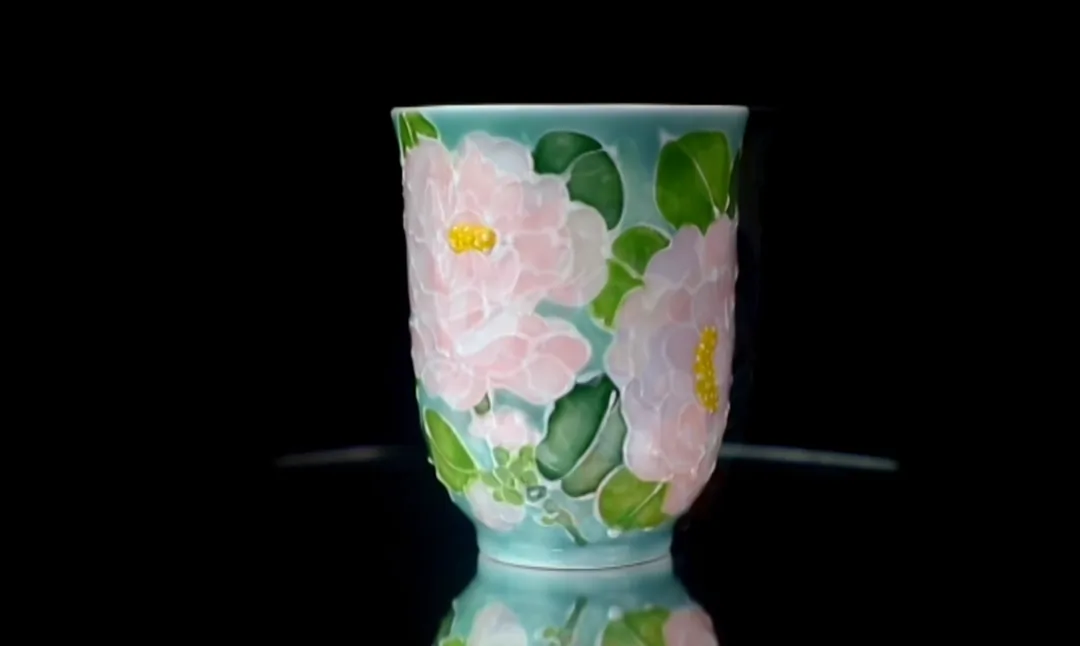
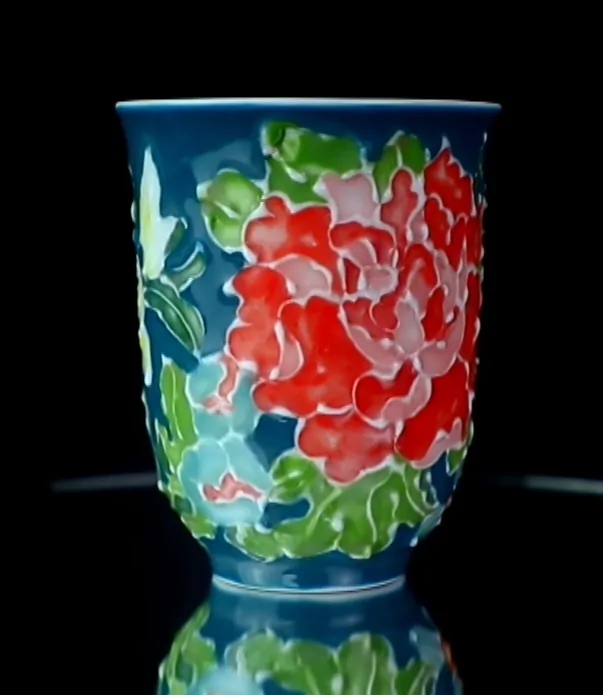
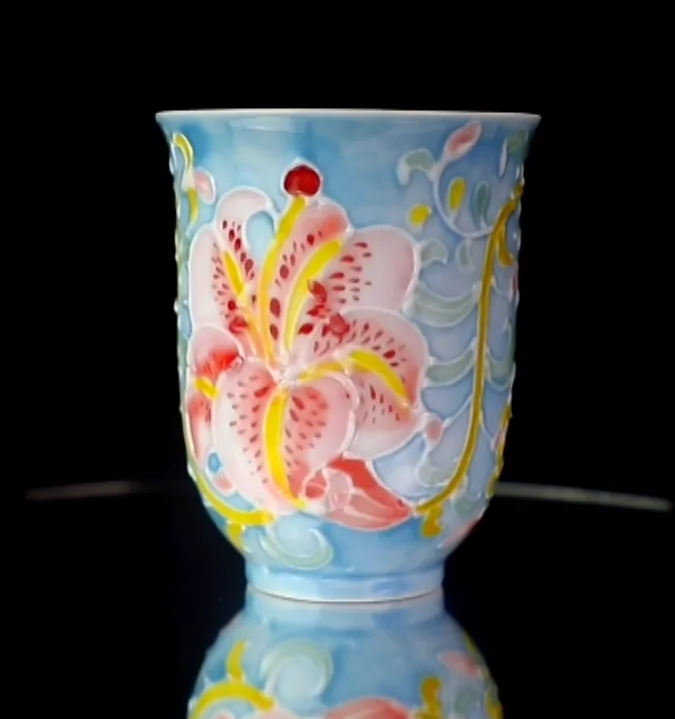
Fahua is a decorated ceramic in which thick, coloured glazes are floated into compartments formed by raised lines of slip. The lines stand proud of the biscuit, so the design can be read by touch as well as by sight. The ware is Chinese in origin and grew out of the earlier tradition of architectural and vessel glazes known as liuli.
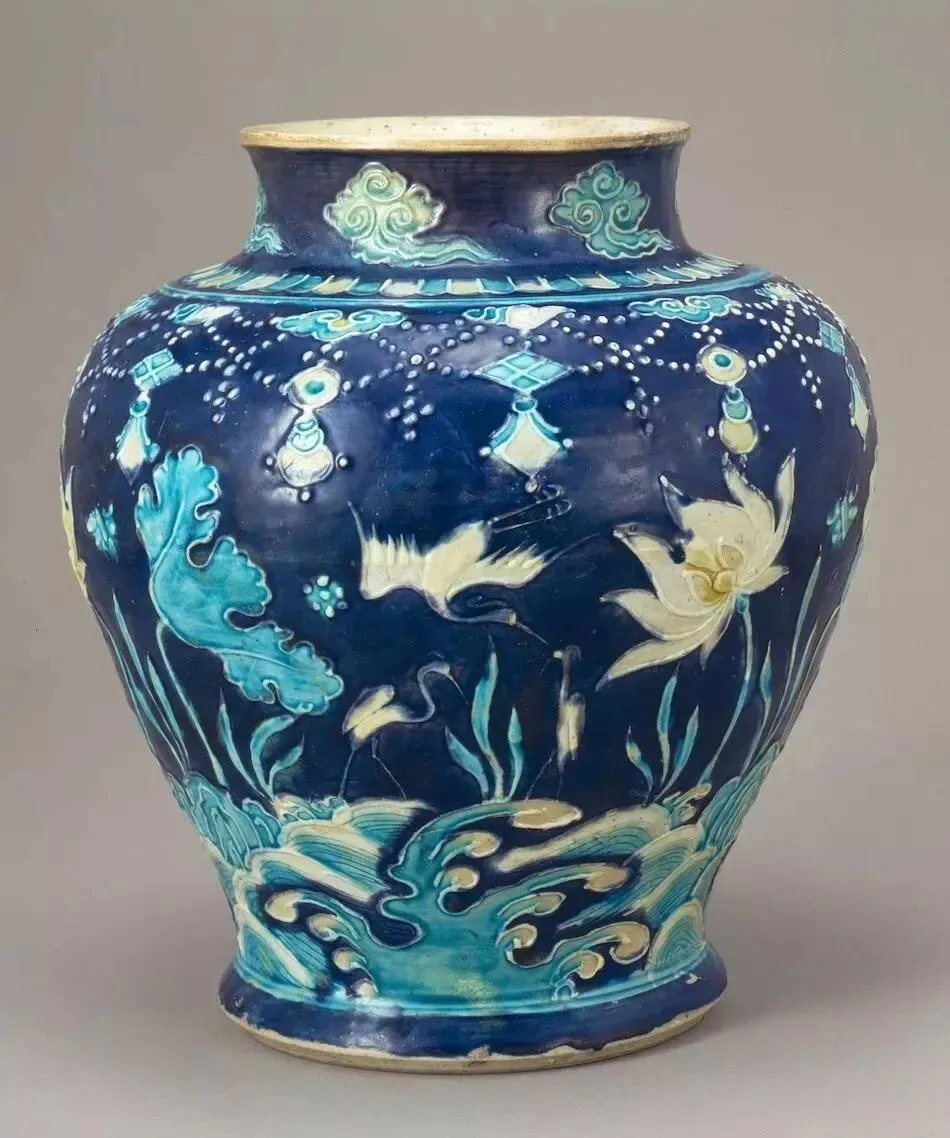
The ware is also written fa-hua, and older catalogues use several variants. It is easily confused in English with falangcai, a painted enamel of entirely different origin; the two are separated below. Within China the ware divides into two branches. Northern workshops, above all in Shanxi, built the decoration on an earthenware body. Jingdezhen potters worked on a porcelain body, which took a sharper line and held a cleaner pool of glaze. Because the technique is slow and output is small, fahua porcelain has always been a collector’s ware.
Why does fahua use so few colours?
The palette is deliberately narrow: peacock green, peacock blue, yellow, aubergine and white. Ming potters gave the principal colours their own names u2014 falan for the blue, facui for the green, fahuang for the yellow, fazi for the aubergine and fabai for the white u2014 and the prefix simply means “fahua”. The restriction follows from the chemistry. These are low-fired lead-free glazes coloured with a small group of metal oxides, and they were formulated to sit in pools rather than to be blended on the brush. The result is a decorative scheme built from flat, saturated colour blocks, not from the graded washes of a painted porcelain.
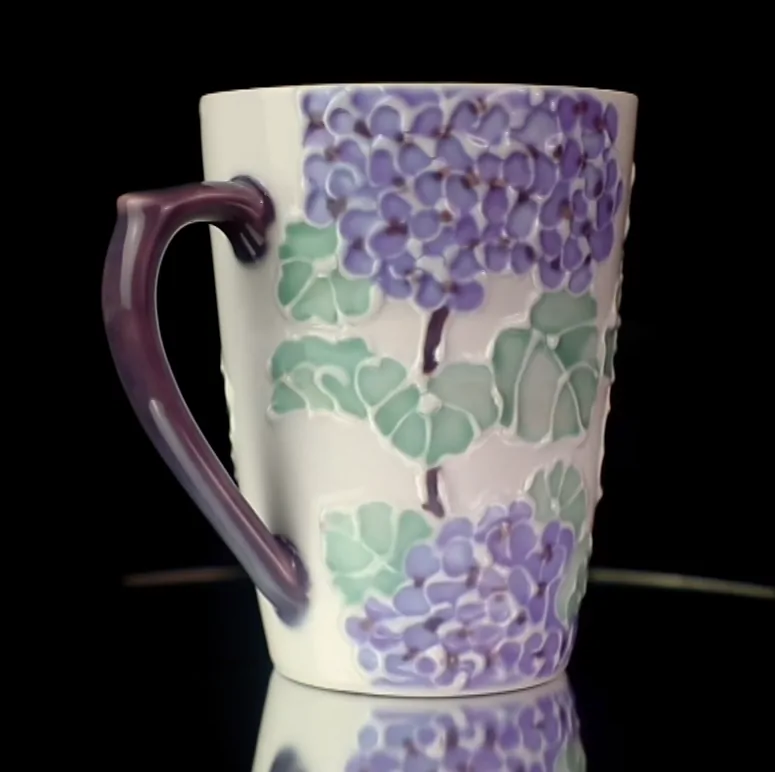
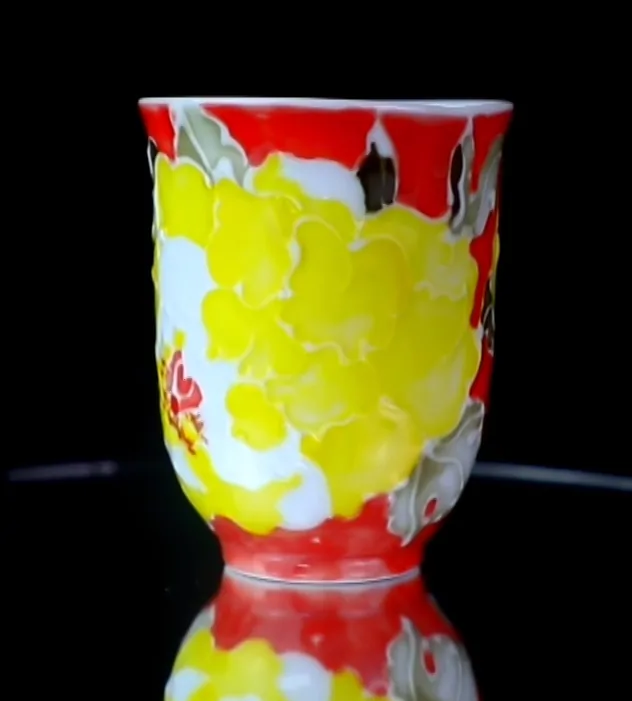
Unlike a painted glaze, a fahua colour field has a physical edge. Where the glaze is thickest it reads almost opaque; where it thins over the slip line it turns transparent and shows the white body beneath. That variation is one of the pleasures of the ware and one of the tests of a good potter, who must judge the thickness of the pool before the second firing.
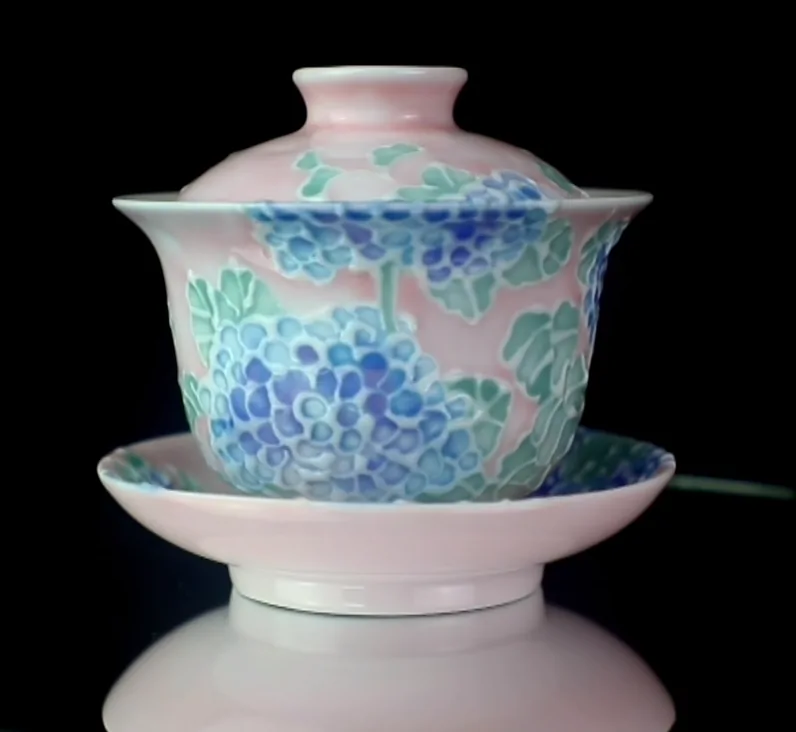
How is fahua made?
The Jingdezhen sequence has four stages. Only the second is unique to fahua, but all four must be controlled together, because a fault in the slip cannot be corrected once the coloured glazes have been laid over it.
- Forming and biscuit firing. The body is thrown or press-moulded, dried slowly and fired to a hard, unglazed biscuit. At this stage the piece is pure white and completely plain.
- Drawing the design in raised slip. A slip stiff enough to hold its shape is piped along the drawn design. On a porcelain body the potter uses a tube or a small nozzle; on a Shanxi earthenware body, a cloth bag fitted with a tube is squeezed like a fountain pen, laying a bead of clay slurry along every contour. The lines stand a millimetre or two above the surface.
- Filling the cells. Yellow, green, aubergine and white glazes are brushed into the compartments. The raised outline acts as a wall, so the glaze can be laid on generously without running across the design.
- Second firing. The piece returns to the kiln at low temperature. The glazes melt, fuse to the biscuit and soften over the slip lines, leaving the relief visible under a glossy skin.
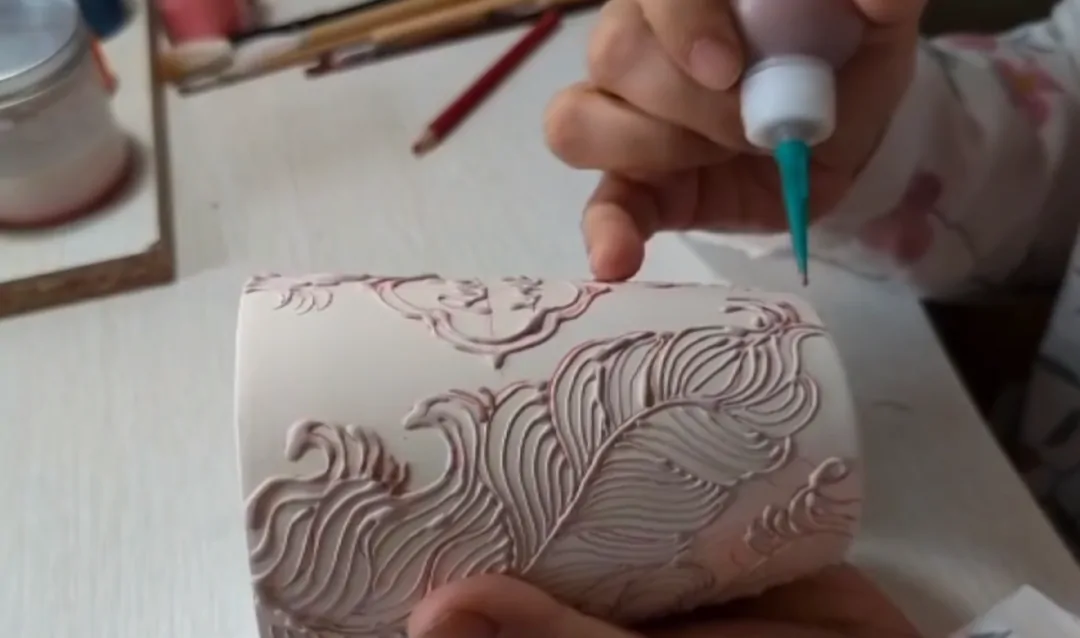
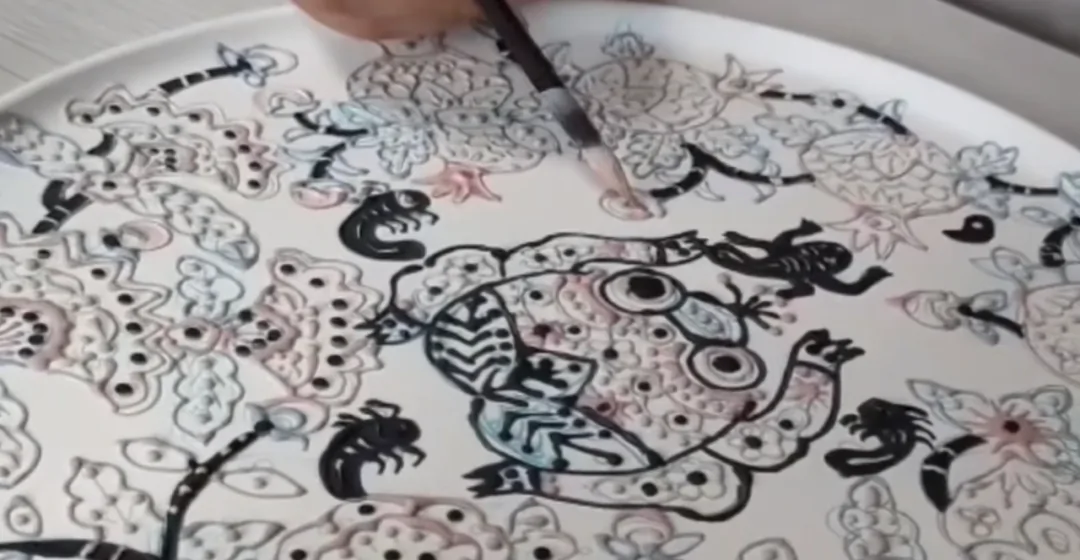
The raised outline is the technical signature of the ware. Unlike hand-painted porcelain, where the outline is drawn in pigment and the colour painted inside it, fahua builds the outline as a physical ridge of slip and traps the colour behind it. That is why fahua decoration looks modelled rather than painted, and why the technique is described as raised-slip colour filling.
Fahua versus liuli: what is the difference?
Fahua developed from liuli, the bright glazed ware used for roof tiles, garden walls and Buddhist figures. The two look alike at a glance, and both are low-fired, but their chemistry and their crackle separate them.
- Flux. Liuli glaze is fluxed with lead. Fahua glaze uses nitre, that is potassium nitrate, together with plant ash; the Chinese term for the resulting material translates as “tooth glaze”. Lead-free glazes fire to purer, more controllable colours.
- Crackle. Fahua crazes into a fine sesame-seed pattern. Liuli opens into a much larger network often described as tortoise-shell crackle.
- Surface. The fahua glaze is thin enough in places for the body to show through, a quality known as seeing the body through the glaze. Liuli is more uniformly opaque.
- Iridescence. Both crackles lift slightly at the edges and can show a faint clamshell sheen. On liuli this is associated with lead bloom on the surface, which is one reason the two are told apart by glaze rather than by decoration.
- Use. Liuli belongs to architecture and sculpture. Fahua is a vessel ware, made for tables, shrines and collectors’ cabinets.
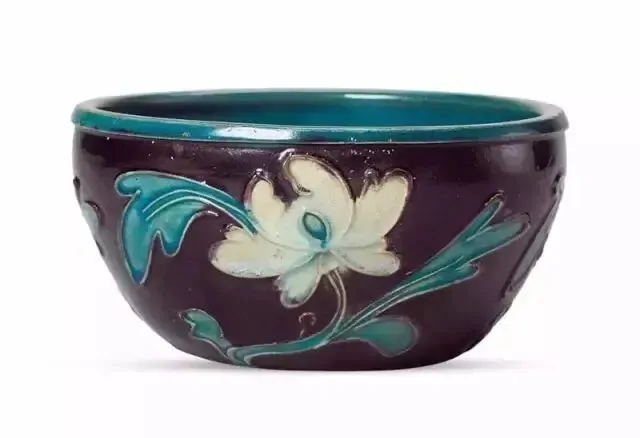
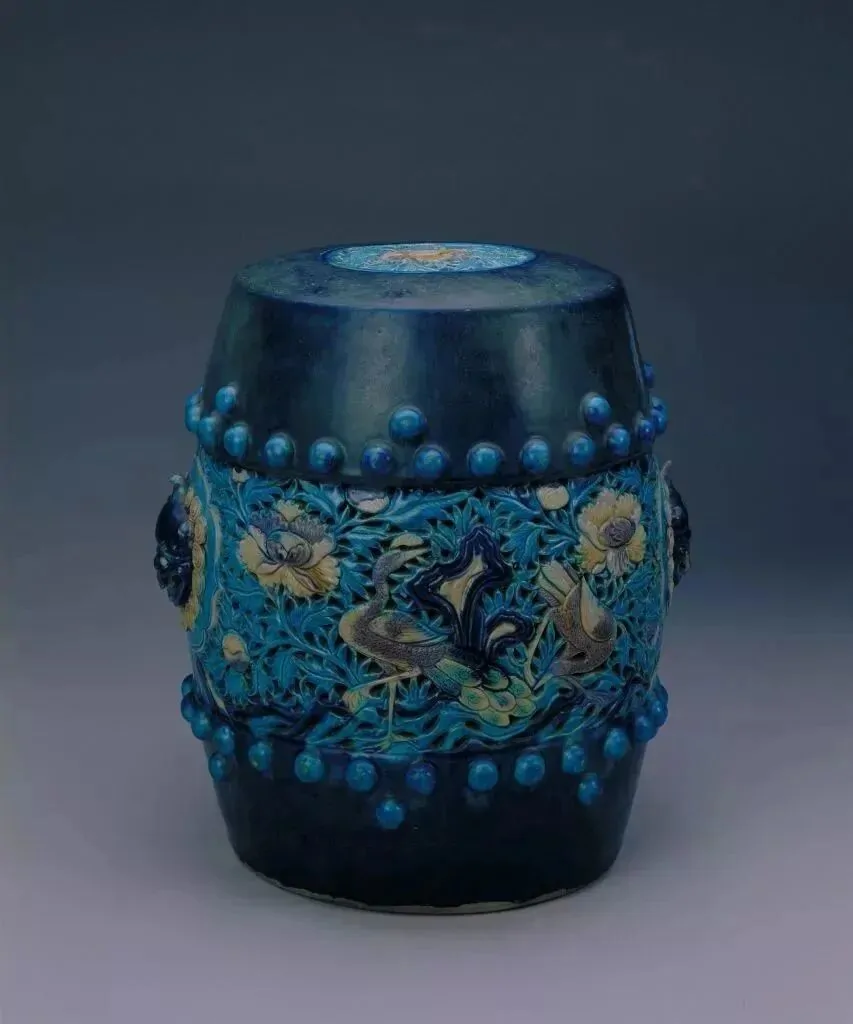
Fahua and falangcai: what is the difference?
The two names are regularly confused in English because they look alike and both describe brightly coloured glazed ceramics. They are not related, and the difference is worth stating plainly.
- Origin. Fahua grew out of the Chinese liuli tradition and was established in Shanxi before it was adopted at Jingdezhen. Falangcai is a painted enamel technique that reached the Qing court from Europe.
- Body. Fahua is made on earthenware or porcelain. Falangcai is painted on metal, usually copper, or on a porcelain body.
- Decoration. Fahua colour is held inside raised slip outlines and fired as a glass. Falangcai colour is painted with a brush as an opaque enamel and may be gilded.
- Palette and surface. Fahua is glossy, translucent in places and visibly relief-modelled. Falangcai is smooth, opaque and pictorial.
- Period. Fahua begins in the Ming dynasty, with the earliest Jingdezhen pieces assigned to the Xuande reign. Falangcai belongs to the Kangxi, Yongzheng and Qianlong reigns, and it is the immediate predecessor of famille rose.
In short, fahua is a glazed relief ware and falangcai is a painted enamel. For the painted-enamel process in detail, see what falangcai enamel is and how it is made.
How did fahua change from Ming to Qing?
The earliest Jingdezhen fahua wares so far identified date to the Xuande reign. Surviving forms include vases, zun vessels, jars, garden stools and reticulated boxes. Production reached its height under Chenghua, when the slip lines were drawn with exceptional control and the glaze pools were at their most even. The technique continued through the middle and late Ming, and pieces of the Chenghua to late Ming period are the ones collectors prize most.
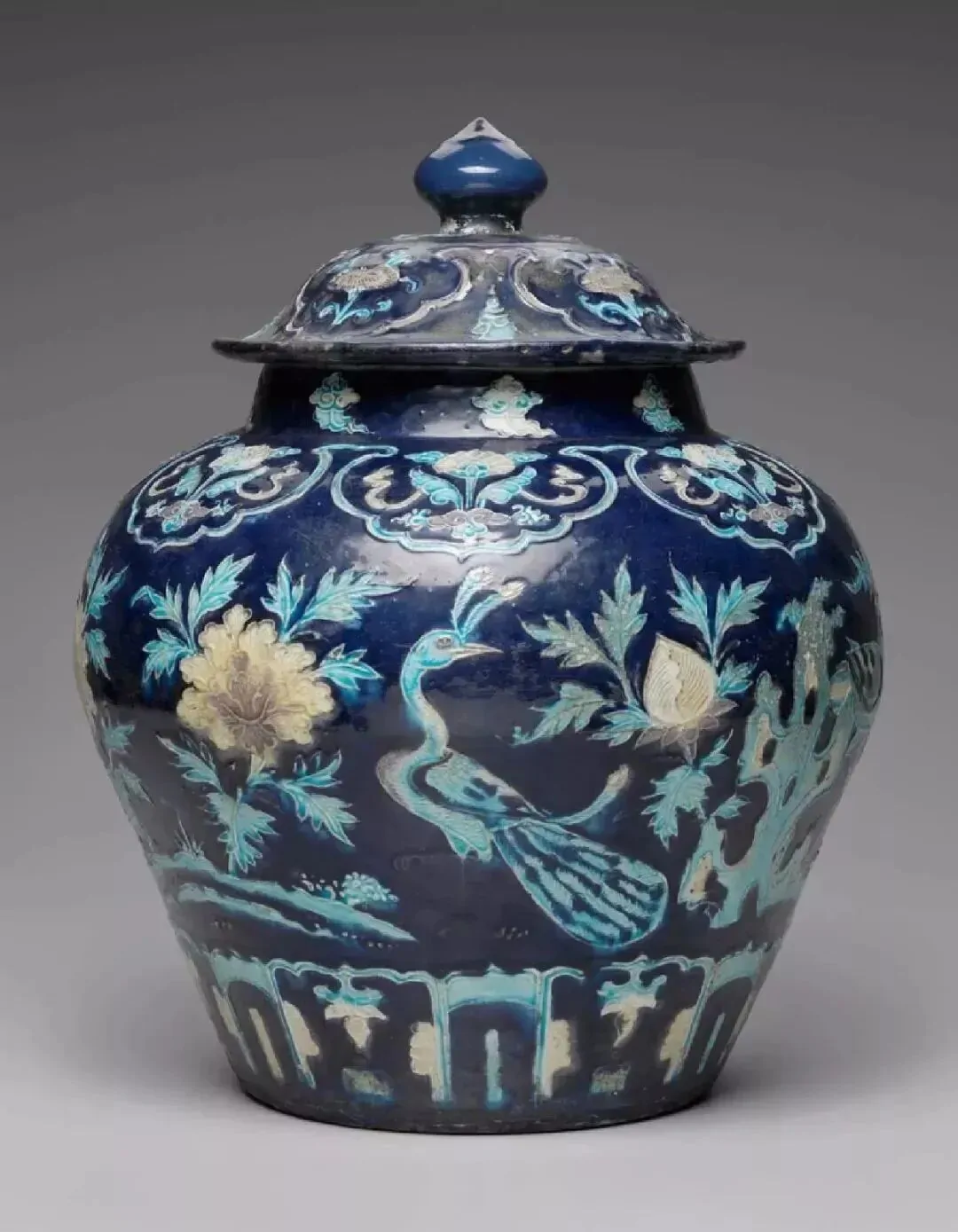
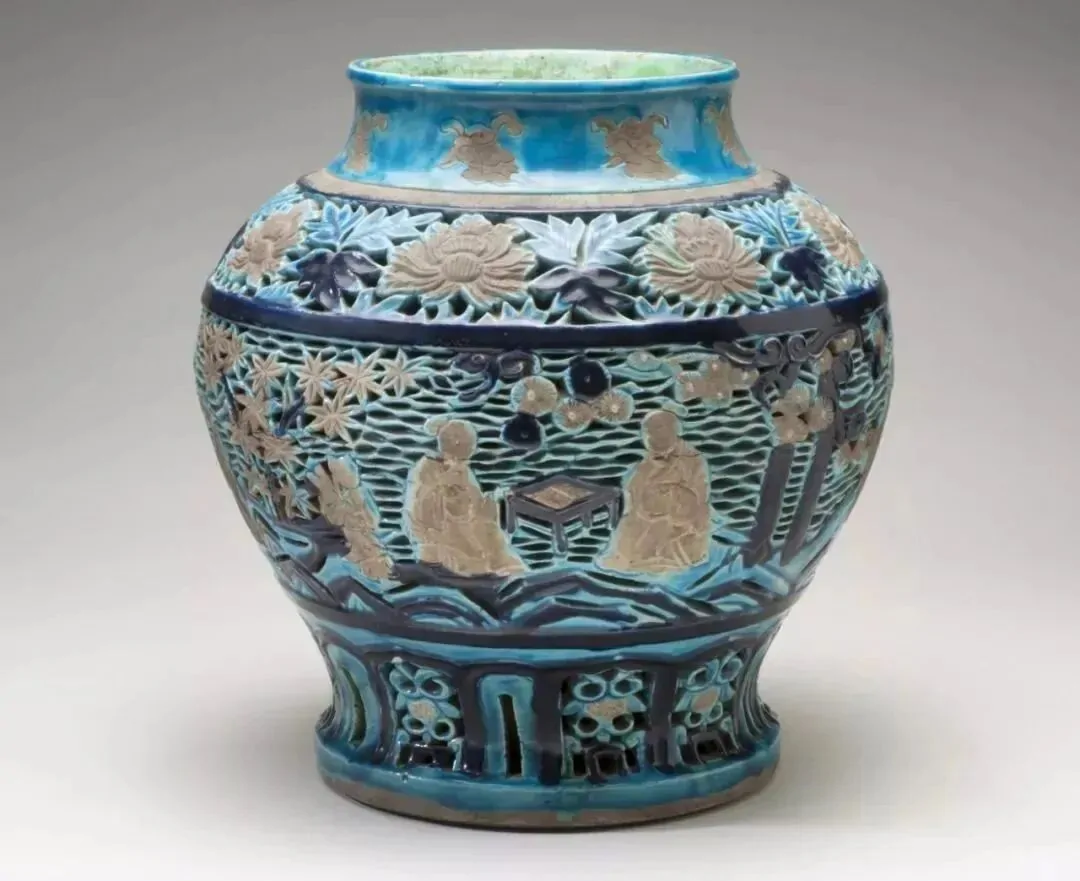
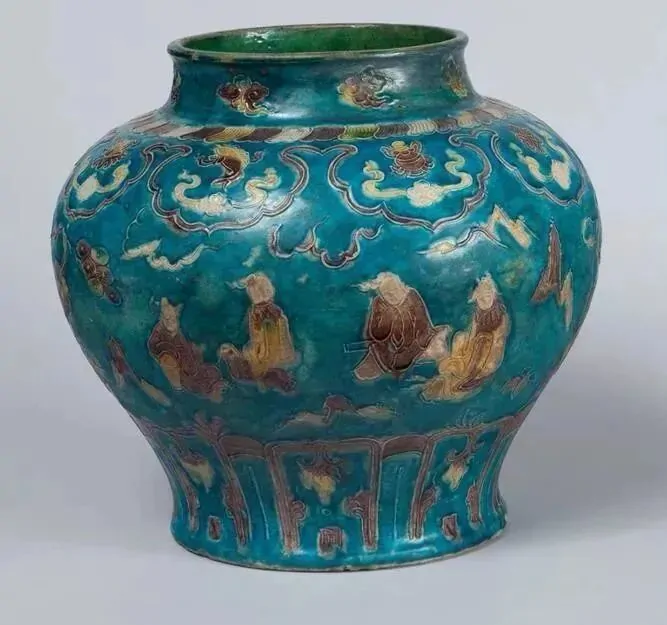
The Qing dynasty brought a decline in output rather than a loss of skill. Kangxi fahua follows Kangxi shapes, and its appliquu00e9 and incised lines are less rounded than those of the Ming. The colours also shift slightly. Under Qianlong the wares become more rigid: shapes and ornament are governed by a demand for regularity, and the glazes are graded from dark to light in a way that comes close to contemporary famille rose. These changes make reign attribution possible, but they also mark the point at which fahua stopped being a living style and became a revival.
Why is fahua recognised as intangible heritage?
In 2017 the Jingdezhen fahua-making technique was entered in the fifth batch of Jiangxi province’s provincial intangible cultural heritage list. The listing recognises a skill that exists only in the hands of individual potters: the judgement of slip stiffness, the speed of the piping hand, the depth of each glaze pool.
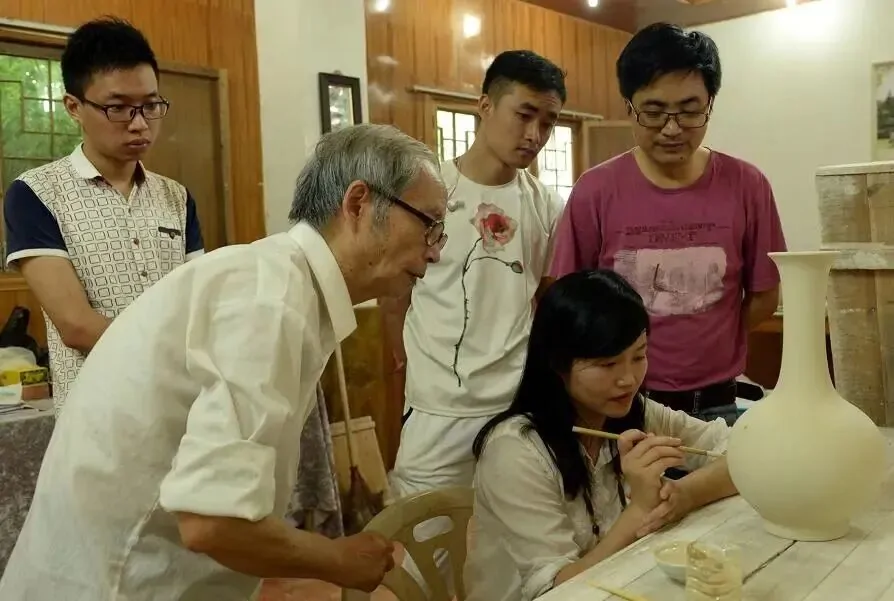
The craft is fragile in every sense. A fahua piece passes through two firings and depends on a relief that cannot be reworked after the glaze is applied. Output is small, training is slow, and the market for serious work is narrow. Workshops in Jingdezhen continue to teach the technique and to apply it to contemporary forms, from tea ware to sculptural vessels, which is how the tradition stays visible to new audiences.
Explore Jingdezhen craftsmanship
Our porcelain collection includes hand-thrown and hand-decorated vessels made in the city’s workshops, from blue and white to monochrome and enamelled wares. Pieces with raised decoration, coloured glazes and other historic techniques sit alongside the everyday forms that Jingdezhen still produces in quantity.
Contact Jingdezhen Heritage
We work directly with Jingdezhen potters and can source specific forms, glazes or decorative techniques, including fahua-style raised work. Write to us with your requirements and we will reply with available pieces, lead times and shipping options.
Email Jingdezhen Heritage u00b7 Message us on WhatsApp
Image and text source: WeChat public account “Feiyi Shuoshi” (Intangible Heritage Speaks), 7 September 2023.