
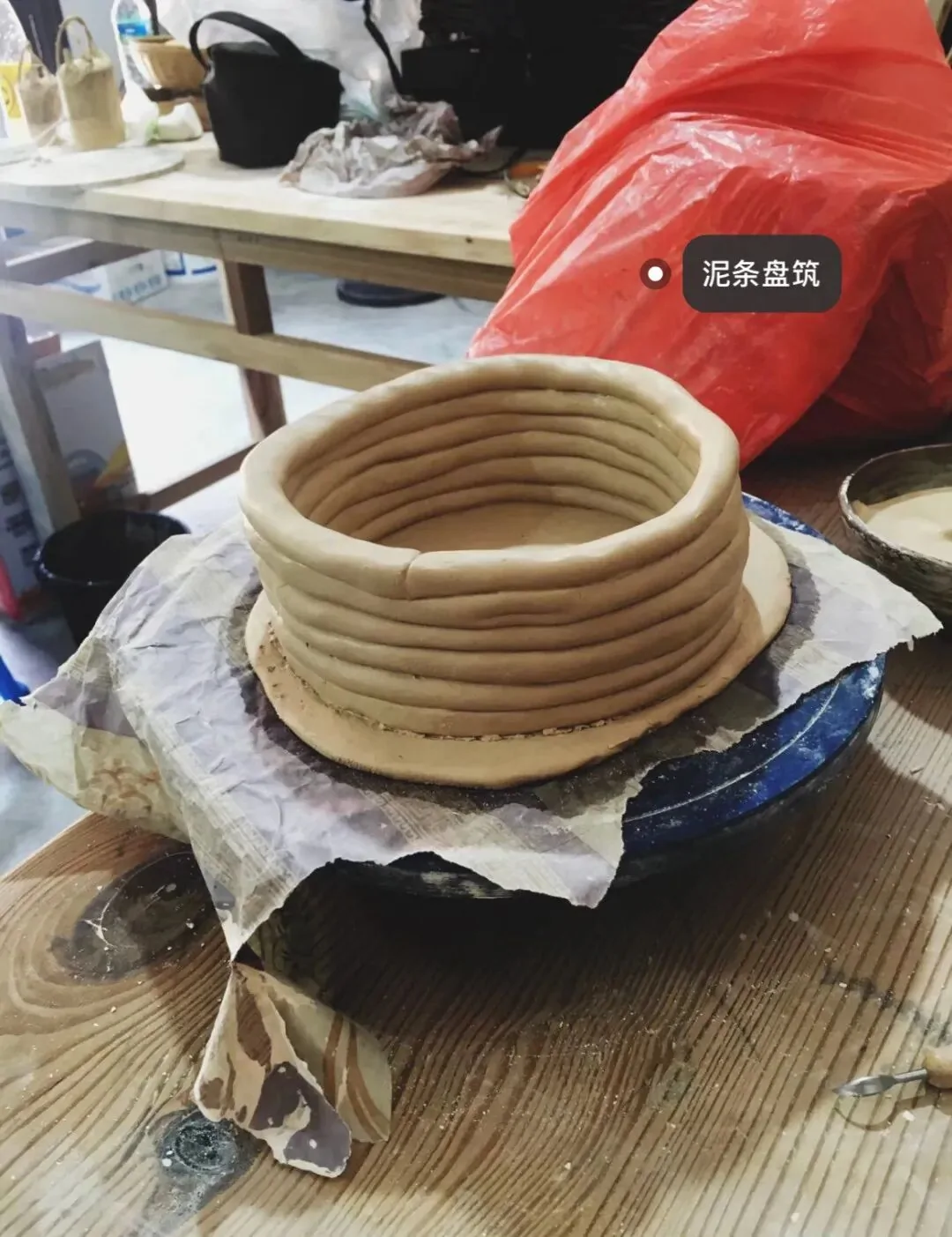
Ceramic Cracking Defects: Seven Types, Their Root Causes and Preventive Control
Cracking (Chinese: u88c2u7eb9, pinyin: liu00e8 wu00e9n) is the most economically destructive defect in ceramic production. A single crack u2014 invisible during forming, appearing during drying or firing u2014 can render an otherwise perfect vessel worthless. Cracking has one physical origin: tensile stress exceeding the body’s tensile strength. But its manifestation varies by location, timing and cause, requiring seven distinct diagnostic categories.
Cracking during firing was partially explored in our guide to ceramic firing stages, where we examined the 573u00b0C quartz transformation as the kiln’s most dangerous stress point. And drying-related cracking u2014 particularly wind cracking in slip-cast bodies u2014 was analysed in our slip casting temperature and humidity guide. This article consolidates all seven cracking types into a single diagnostic framework, linking each defect to specific stages in the production process and the physics that drives it.
1. The Unified Physics of Cracking
All ceramic cracking follows a single fracture mechanics equation:
u03c3_max > KIC / u221a(u03c0a)
Where u03c3_max is the local tensile stress, KIC is the body’s fracture toughness (typically 1.0u20131.5 MPau221am for porcelain), and a is the length of the longest pre-existing flaw in the body (a bubble, a layer interface, a surface scratch). Cracking occurs when the right-hand side u2014 the critical stress the body can withstand u2014 is exceeded by the left-hand side u2014 the stress actually applied.
The seven crack types below all differ in where the stress originates, when it peaks, and what local flaw initiates the fracture. But the governing equation is identical for all of them.
2. Seven Types of Cracking Defects
| Crack Type | Location | Stage of Origin | Primary Stress Source | Typical Causal Flaw (a) |
|---|---|---|---|---|
| Layer cracking (u91cdu76ae / u5c42u88c2) | Internal body planes; slip-cast “skin separation” | Forming u2192 drying | Interfacial stress between body layers with different moisture contents / densities | Entrapped air bubbles; incomplete particle consolidation between successive slip pours |
| Mouth cracking (u53e3u88c2) | Vessel rim, outer or inner edge | Forming u2192 drying u2192 firing | Localised drying shrinkage gradient; impact damage during handling | Excessive drying stress; damaged rim during trimming (scraper too sharp); residual mud on rim creating non-uniform drying |
| Bottom cracking (u5e95u88c2) | Vessel base, interior or exterior | Forming u2192 drying | Non-uniform water content; mould unevenness; mechanical stress during demoulding | Wheel-thrown: uneven wall thickness at base; mould-cast: poor plaster mould condition (worn, damaged, moisture gradient); excessive vacuum during suction pad demoulding |
| Shoulder cracking (u80a9u88c2) | Vessel shoulder u2014 the curve connecting neck to body | Forming u2192 handling u2192 drying | Impact stress during placement / movement; stress concentration at geometric transition (high radius of curvature) | Damaged during transfer to setting block; body yield strength too low (moisture content u2265 22% at handling); setting block diameter mismatched to vessel base |
| Foot cracking (u5e95u8db3u88c2) | Vessel foot rim, exterior or interior wall | Forming u2192 drying u2192 demoulding | Extensive surface moisture loss from thin foot wall; stress from mould vent holes | Too little mud placed; demoulded too late (foot adheres to mould); mould vent holes plugged by residual clay, pulling foot on demould |
| Wind cracking (u98ceu88c2) | Exposed surfaces, edges, ridges u2014 most common on complex shapes | Drying, early stage | Localised high-velocity airflow = evaporation rate 3u20135u00d7 workshop average | Direct wind exposure bypassing uniform drying; surface skins while interior still plastic u2014 shrinkage gradient exceeds body yield point |
| Cooling cracking (u51b7u5374u88c2) | Internal network of cracks, often invisible until post-firing stress | Firing u2192 cooling | Thermal contraction mismatch; 573u00b0C quartz transformation | Non-uniform cooling through body; glass phase too rigid to absorb 0.8% quartz contraction; body with high quartz content (>25%) |
3. Diagnosing the Crack: When, Where and How
Industrial quality control practice in Jingdezhen uses three sequential diagnostic questions to identify crack type:
- When did it appear? Cracks visible within 2 hours of demoulding u2192 drying related (mouth, bottom, foot). Cracks appearing 24u201348 hours later u2192 wind cracking or slow internal stress. Cracks visible only after firing u2192 cooling-related (quartz transformation) or under-firing cracking.
- Where is it? Rim cracks u2192 mouth cracking. Bottom cracks u2192 bottom cracking or foot cracking depending on geometry. Internal plane separation u2192 layer cracking. Multiple small surface cracks on edges exposed to airflow u2192 wind cracking.
- What is the crack shape? Thin, jagged lines u2192 brittle fracture (hand/firing stress). Wide, relatively smooth lines u2192 ductile fracture (drying stress, large deformation before crack initiation). Internal delamination with clean parallel planes u2192 layer cracking.
4. Preventive Control by Crack Type
| Crack Type | Primary Control Method | Precision Required |
|---|---|---|
| Layer cracking | Improve slip deflocculation (reduce air entrainment); extend mould contact time before pouring second layer (allow first to set); ensure mould moisture content uniform (6 u00b1 1%) | u00b10.2% mould moisture; Zahn cup viscosity 35 u00b1 2 seconds for porcelain slip |
| Mouth cracking | Control workshop humidity 55u201365% RH during drying; use 3-blade trimmer with 0.1 mm edge radius instead of sharp single blade; wipe rim clean after trimming | u00b15% RH; trimmer blade replaced every 200 pieces |
| Bottom cracking | Ensure wheel-thrown bases have uniform 4u20136 mm thickness; demould suction pads match vessel base area (90% coverage minimum); demould at 18u201320% moisture content | Moisture content checked by weighing; suction pad 90% base coverage |
| Shoulder cracking | Handle at 22u201324% moisture content (body has yield strength u2265 0.4 MPa); use felt-covered setting blocks; transfer with 2-person hand method for pieces >40 cm tall | Moisture content tolerance u00b11%; setting block felt thickness 3 mm minimum |
| Foot cracking | Place sufficient mud for 8u201310 mm foot thickness; mould vent holes cleaned every 5 cycles; demould at 19u201321% moisture with 20u201330u00b0 mould tilt | Foot thickness u00b11 mm; vent hole diameter 1.5u20132.0 mm, cleared every 5 cycles |
| Wind cracking | Eliminate direct wind exposure; hang heavy curtains over doorways; perimeter misting at graduated intensity; no open windows in spring/autumn | Wind velocity <0.5 m/s at any vessel surface; foggers calibrated in spring |
| Cooling cracking | Cool 20u201330u00b0C/hour through 700u2013400u00b0C zone (covers both 573u00b0C quartz transformation and 270u00b0C cristobalite transformation); ensure sufficient flux (u226518% feldspar) to form accommodating glass phase; body quartz content u226422% | Cooling rate u00b15u00b0C/hour; feldspar content controlled at batch level |
5. The Economics of Cracking
A 2024 Jingdezhen industry survey found that cracking accounts for 45u201360% of all ceramic production defects, with cracking occurring most frequently on complex forms and during transitional seasons (spring, autumn). The defect rate for uncontrolled workshops can reach 20u201330%, while properly controlled operations achieve 3u20135%.
For high-value handcrafted porcelain, the economics are stark. A master artisan might produce 80u2013120 pieces per year. A 15% cracking rate means 12u201318 pieces are lost u2014 representing 1.5u20132 months of production effort. Reducing this rate to 3u20135% recovers approximately one month’s output annually.
Frequently Asked Questions
Q: Why does my piece crack every time at the same location? It must be a mould problem, right?
A: Possibly, but 60u201370% of location-consistent cracking has nothing to do with the mould. The most common causes are: (1) geometric stress concentration u2014 every piece with that shape experiences stress at that point; (2) repeatable handling u2014 you’re placing every piece on the same wrong spot; (3) material variation u2014 your slip batch or mud block has a consistent flaw at a consistent location; (4) heating/cooling u2014 every piece reaches peak stress at the same thermal stage. Before replacing the mould, check: is the stress there in the digital thermal expansion simulation? Does a body with different flux content crack at the same point? If neither changes the crack location, look at the mould.
Q: Can a cracked porcelain piece be repaired or reused?
A: Three options: (1) Firing cracks: small cooling cracks can sometimes be filled with glaze slip, reglazed and refired at 1180u20131220u00b0C. This works for cracks <0.3 mm wide and <20 mm long, but only in non-critical locations; (2) Shibari-repaired (kintsugi): aesthetic repairs using gold lacquer fill. This is highly valued for antique and artistic pieces, but the piece loses structural strength and is not usable; (3) Reject: for structural cracks, contamination cracks (from mould vent holes), and cracks on functional pieces, discard is the only option. The economics almost always favour discard over repair u2014 the time spent on repair exceeds the value of a new piece.
Q: I’m doing everything the procedure says and pieces still crack. What am I missing?
A: The three most common “hidden” causes that standard procedures miss: (1) Batch-to-batch slip variation: your deflocculant (sodium silicate) supply has varied pH between batches u2014 measure pH with each new shipment and adjust dosage accordingly; (2) Mould fatigue: plaster moulds lose moisture-holding capacity after 30u201340 cycles u2014 monitor mould absorption rate monthly; (3) Subsurface damage: a 0.1 mm surface scratch from handling becomes a stress concentrator during drying or firing u2014 audit all handling points and replace any rough surfaces. A systematic approach: take 30 consecutive pieces, mark when they crack (by stage), trace back through the process for each, and the variation pattern will reveal the hidden variable.
Explore Jingdezhen Craftsmanship
If you are interested in commissioning hand-thrown porcelain, slip-cast sculptural elements or reproductions of classical forms from Jingdezhen, our collection includes contemporary works by master artisans who control drying, moulding and firing processes to maintain defect rates below 3%. Each piece carries a certificate documenting the specific methods, materials and quality control parameters used.
Contact Jingdezhen Heritage
For inquiries about ceramic technique, custom commissions, appraisals of antique porcelain or private tours of Jingdezhen kilns, reach us at: