
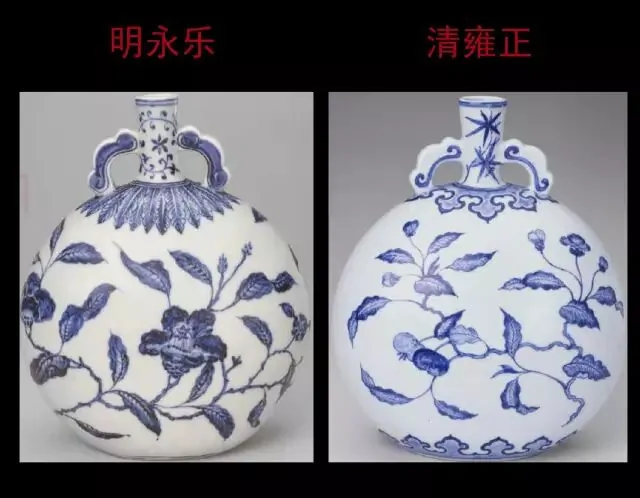
A revival copy can match an original in shape and decoration, yet differ in body, glaze, reign mark and wear. The Palace Museum in Beijing makes those differences visible by setting genuine pieces beside later copies. Reading that comparison u2014 and separating four very different kinds of object u2014 is the first step in how to identify Chinese porcelain.
Why does the Palace Museum collect copies?
China has long been described as the land of porcelain, and its ceramic history is a sequence of famous kilns and celebrated wares. From the late Yuan and early Ming periods, potters began to make a distinct category of object: porcelain deliberately modelled on the products of an earlier era. In Chinese this is fanggu ci, antique-style porcelain, or revival porcelain.
The motives were not uniform. Some makers worked from a reverence for antiquity. Some were moved by a genuine love of old porcelain as an art form. Others saw a commercial opportunity, because collectors would pay for convincing versions of wares they could not obtain. By the Ming dynasty, revival production had already reached a considerable scale. It then rose to three broad peaks: the Kangxi, Yongzheng and Qianlong reigns; the late Qing and Republican period; and the years since the 1980s.
The quality of surviving pieces varies enormously. A proportion are technically superb and visually very close to their models, which is precisely why they complicate the study of early porcelain. Rather than treat this as a nuisance, the Palace Museum has used it as a teaching method. It selects representative pieces from its own holdings and displays a genuine object together with a later copy of it, so that visitors can study the differences at first hand. Much of the material discussed here is Jingdezhen porcelain, made at the kiln complex that supplied the imperial court for centuries.
For the definition, the history and the four great traditions of revival work at Jingdezhen, see our companion article on what revival porcelain is. The present article concentrates on authentication, on the three peak periods, and on the political and commercial reasons why copies were made.
The displays also make clear that four categories are routinely confused:
- The original. Made in the period and at the workshop to which it belongs. Its value rests on date, quality and survival.
- The later imperial copy. Commissioned by a later court, often at the imperial kilns, and carrying the reign mark of the period that made it. It is a genuine object of its own date, with its own art-historical value; the Palace Museum collects such pieces.
- The modern revival piece. Made since the 1980s as a contemporary craft object. It may be technically excellent and expensive in its own right, but it is not an antique.
- The forgery. Made with the intention to deceive a buyer about its date or origin. This is a different category from the other three, and the distinction is moral and legal as well as technical.
The differences are therefore matters of date, patronage and intent, not only of appearance. Two objects can look alike and belong to opposite ends of this list.
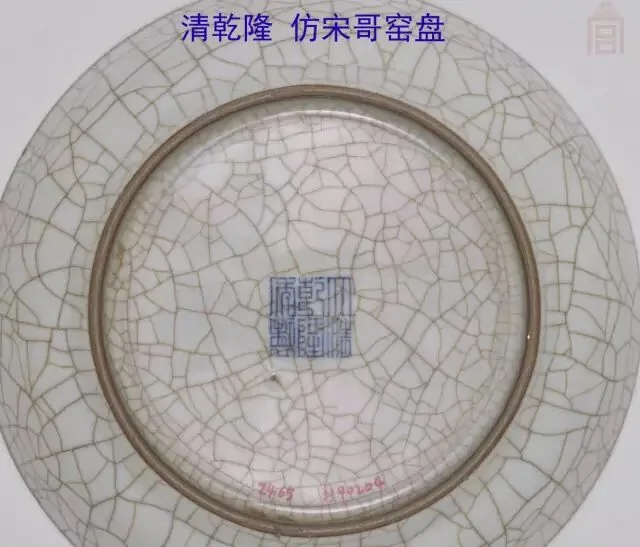
How can you tell a revival copy from an original?
Not by a single feature. Authentication weighs several observations together, and even then a confident attribution usually depends on handling the piece and, where the value justifies it, on scientific analysis. The points below are the ones most often compared in museum displays.
Body and paste. The clay body carries the signature of its place and period. Song imperial wares tend to be fine-grained and relatively thin, with a paste that fires to a soft grey or buff where it is left unglazed at the foot. Later copies are sometimes heavier, whiter or more uniformly refined, because the potter had different clays and different expectations of the finished object. The unglazed foot ring is one of the most informative surfaces on any piece: it shows the paste colour, the finish of the knife, and the way the glaze stops at the edge.
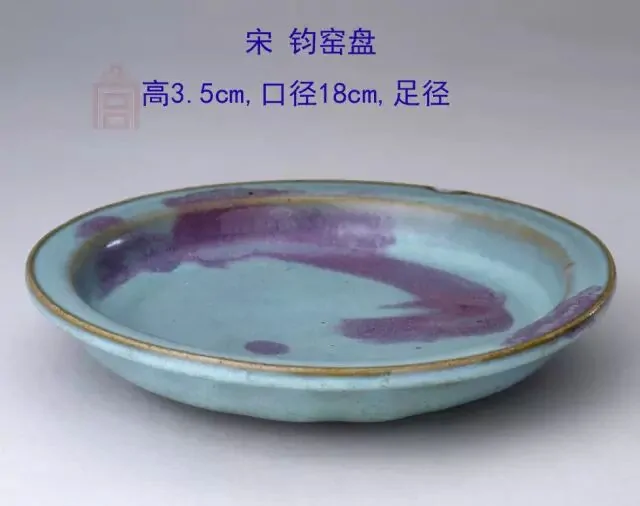
Glaze. Glaze is harder to imitate than shape. Ru ware is admired for a muted blue-green surface with a fine crackle; Jun ware for an opalescent blue that can carry splashes of purple; Ge ware for a pronounced crackle traditionally described as golden wire and iron thread. A later copy may reproduce the colour closely while differing in thickness, in the quality of the light it reflects, or in the regularity of the crackle. Artificial crackle can be induced, but it often looks even and mechanical rather than natural.
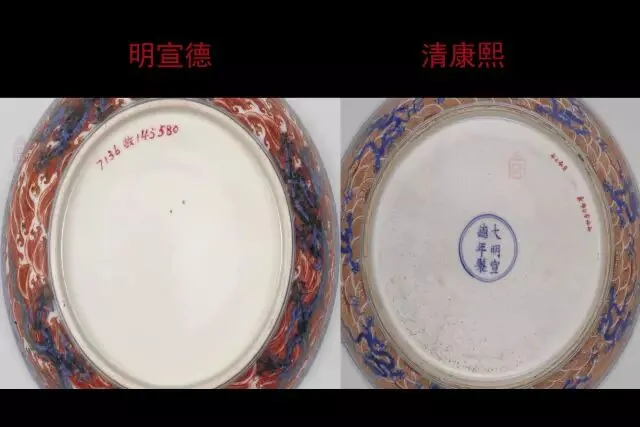
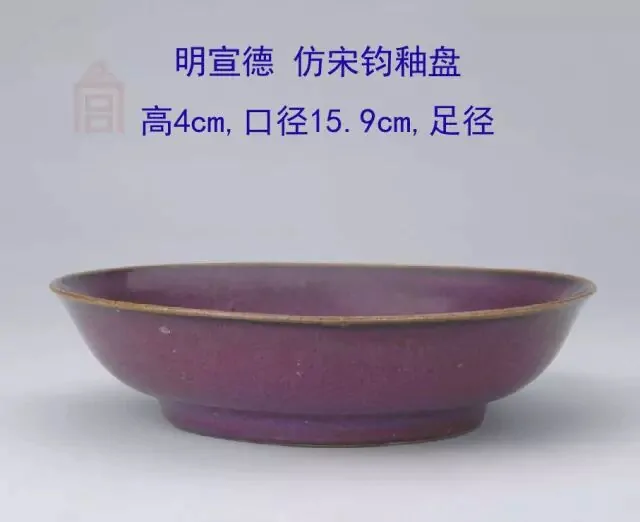
Reign marks. An early Song piece generally carries no reign mark at all. A Ming or Qing copy, by contrast, usually bears the mark of the dynasty that made it, not the dynasty it imitates. A Xuande-marked dish imitating Ru glaze is declaring itself as a Xuande object. This is useful evidence, but it is never sufficient on its own: marks can be added later, copied from a reference, or apocryphal. The mark has to agree with the body, glaze and decoration around it.
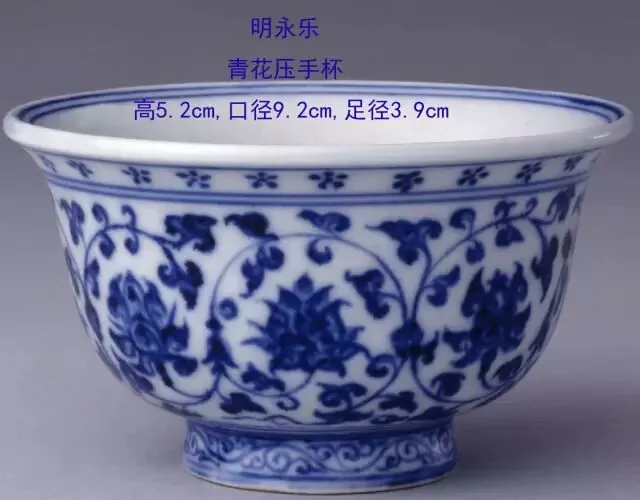
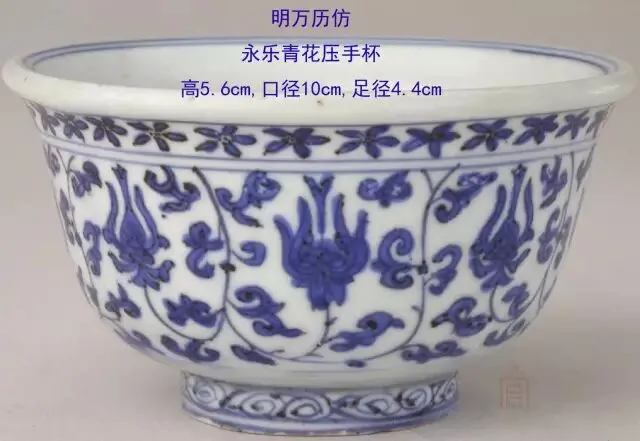
Decoration and painting manner. Where a piece is painted, the handling of the brush is as revealing as the pattern. Two hand-painted porcelain vessels can share a motif and still differ in the rhythm of the line, the spacing of the scroll, the tone of the cobalt and the confidence of the outline. Later copies are often slightly stiffer or more regular, because the painter is following a model rather than inventing within a living workshop tradition. That is a tendency, not a rule.
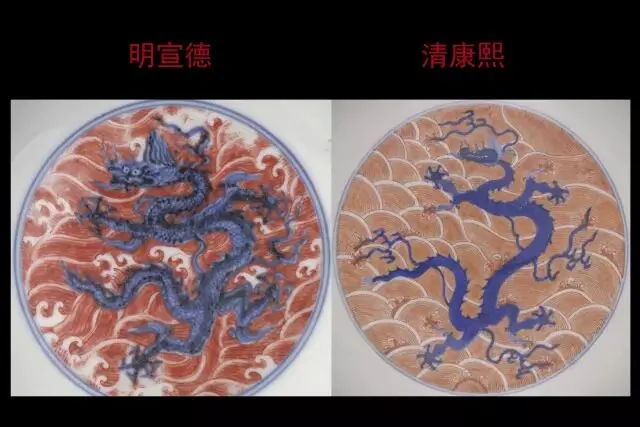
Firing, wear and condition. Firing leaves bubbles, grit and minor flaws in the glaze; centuries of use leave scratches, staining and wear on the foot and rim. These traces are difficult to reproduce convincingly, but they can also be induced, and an unusually pristine piece is not automatically suspect. Condition should be read as one part of the object’s history, not as a certificate.
No photograph, and no single test, settles the question. A mark can be added, wear can be accelerated, and a scientific result can date a material without identifying a workshop. The discipline lies in the combination, and in the willingness to say that a piece remains uncertain.
When did revival production reach its peaks?
The source account identifies three periods in which revival work flourished, each with a different clientele and a different level of technical ambition.
The Kangxi, Yongzheng and Qianlong reigns. In the late seventeenth and eighteenth centuries, the imperial kilns reached the height of their technical powers. Revival work was part of that achievement rather than a retreat from it. The range of models copied was exceptionally wide, and the best pieces were made for the court, not for sale on the open market. This is the period in which copying and invention became difficult to separate.
The late Qing and Republican period. As court patronage weakened, private workshops and dealers took over much of the trade in antique-style wares. Collectors, both Chinese and foreign, wanted imperial forms and glazes, and the market supplied them. Quality became more uneven: some pieces are careful and well fired, others are coarse or over-decorated. This is also the period in which large numbers of copies entered private collections and, eventually, the art market.
Since the 1980s. The most recent peak is the least discussed and the most relevant to buyers today. After the disruptions of the mid-twentieth century, state factories and private studios in Jingdezhen rebuilt the old techniques. Demand came from museums, collectors, hotels, exporters and a growing domestic market. The result is a wide spectrum: faithful study copies made for research or display, decorative pieces made in historical styles, and high-quality contemporary work that makes no claim to be old. A piece made in the 1980s or 1990s can now show thirty or forty years of handling, which makes its surface more convincing without changing its date.
Why did Ming emperors order copies of Song wares?
The Ming revival was bound up with politics and scholarship as well as taste. After the founding of the dynasty in 1368, Han literati sought to restore the Song tradition of Neo-Confucian learning and to rebuild a cultural order that had been disrupted under the Yuan. That programme shaped the education of officials, the practice of the examination system and, indirectly, the aesthetic preferences of the court.
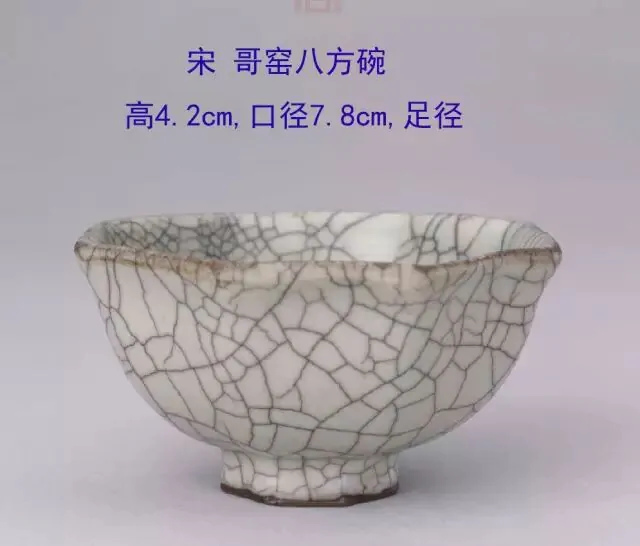
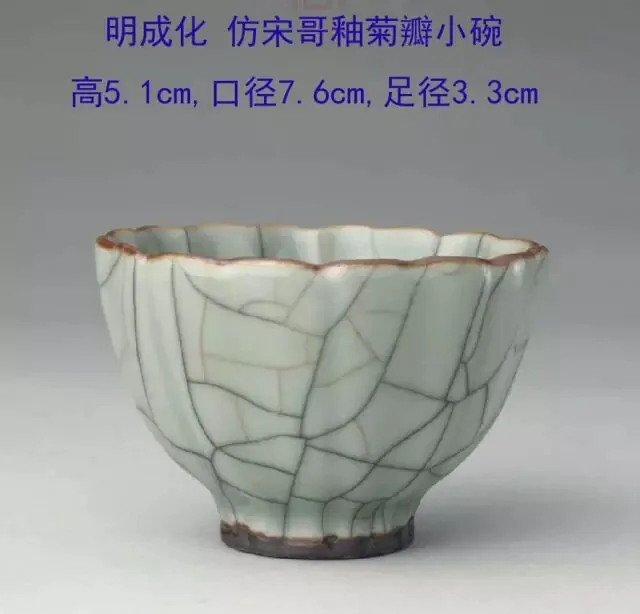
The Xuande emperor, who reigned from 1426 to 1435, ordered the imperial factory at Jingdezhen to copy Ru and Ge wares from the Song period. Dishes imitating Ru glaze and bowls imitating Ge glaze, bearing the Xuande reign mark, survive and are among the clearest material traces of that programme. His successor Chenghua, who reigned from 1465 to 1487, continued the practice and extended it to Guan and Ge wares, with a wider variety of forms.
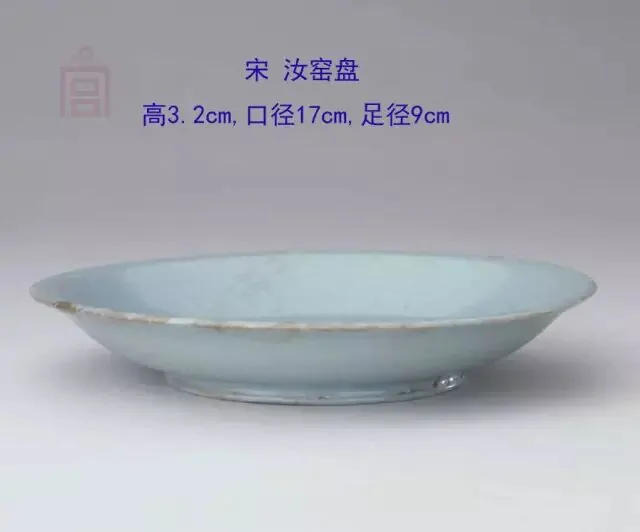
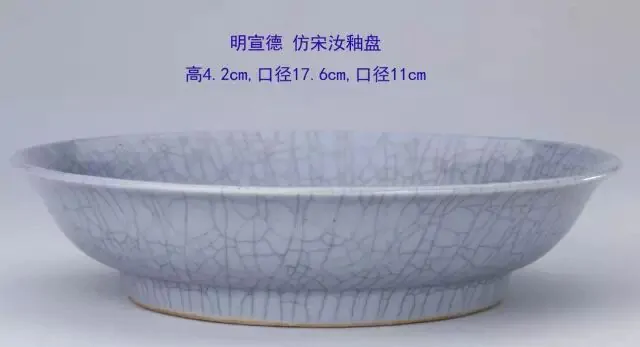
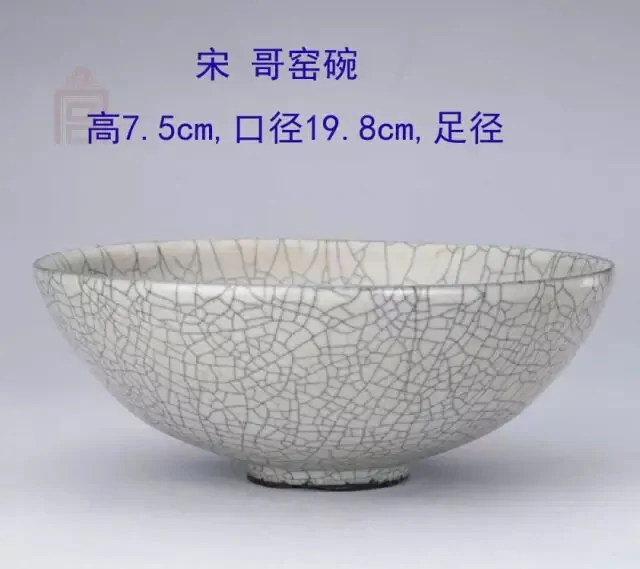
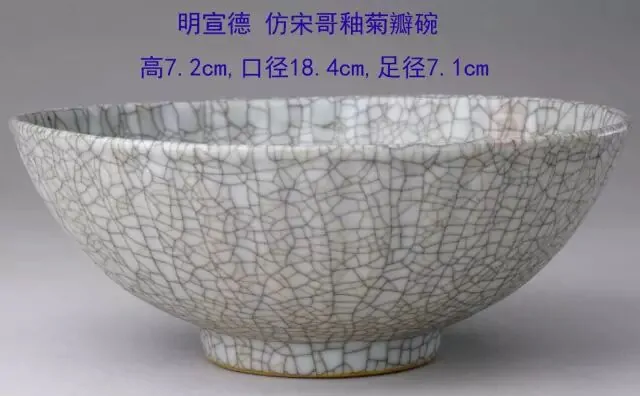
Copying in this context was not forgery. It was a way of aligning the present court with a canonical past: the emperor, by commanding the reproduction of Song masterpieces, placed his reign within a continuous cultural lineage. The copies were also objects of use and display in their own right, and they were valued as such.
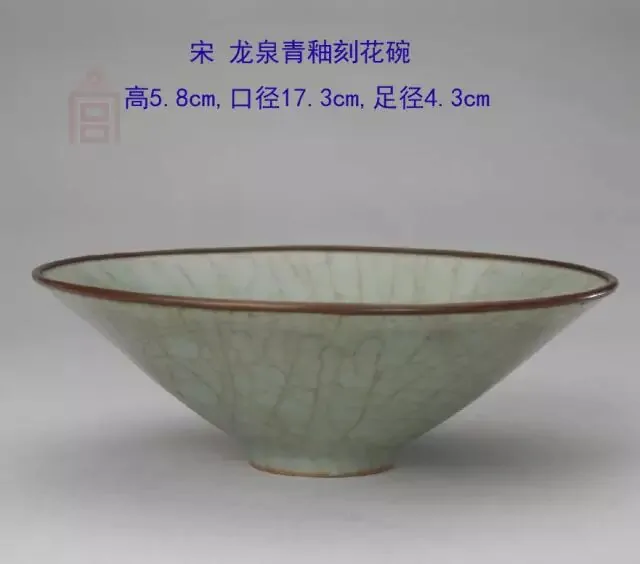
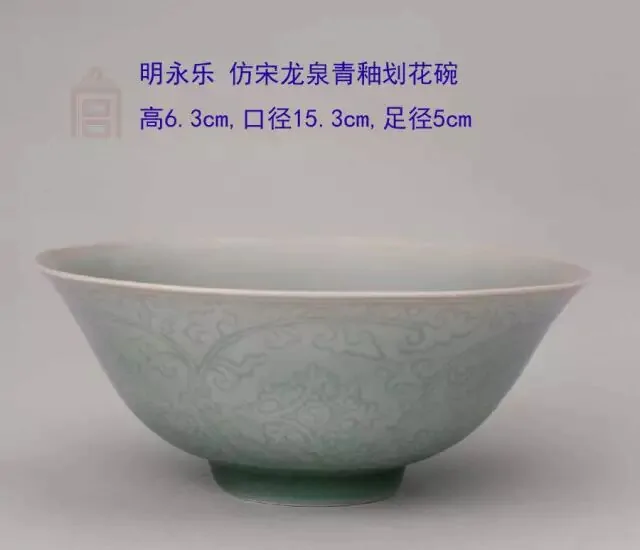
The same impulse extended beyond Ru and Ge. Yongle-period potters copied Longquan celadons, and Xuande-period potters imitated Jun glazes. The examples below show how closely the forms could be followed, and how clearly the body and finish still separate the periods.
What was “official and private kilns competing in the market”?
In the middle and late Ming period, commercial growth changed the organisation of the ceramic industry. The phrase used in Chinese sources is guan min jing shi, official and private kilns competing in the same market. Private kilns, responding to demand from officials, merchants and wealthy households, copied the famous Song wares on a large scale. At the same time, the court developed a preference for the imperial wares of the early Ming and ordered the Jingdezhen factory to reproduce Yongle, Xuande and Chenghua pieces.
The range of models was broad: Song Guan, Ge, Ding, Jun and Longquan wares, together with early Ming blue-and-white, doucai, red-and-green colour, white glaze and red glaze. The result was a substantial expansion of revival production, much of it made for sale rather than for the palace. This is the period in which the boundary between official and commercial taste became genuinely porous, and in which the modern market for antique-style porcelain began to take shape.
How did Tang Ying combine copying with invention?
The Qing achievement is usually associated with Tang Ying, the official who supervised the imperial kilns at Jingdezhen during the Yongzheng and Qianlong reigns. He was not a distant administrator. He understood ceramic technology, studied earlier wares closely, and organised production with a clear sense of what the kilns could achieve.
Under his direction, the workshops produced an extraordinary range of revival wares: imitations of blue-and-white, underglaze red, wucai and doucai, of red, green and red-and-green colour, of red, blue, yellow and white glazes, and of the Ru, Guan, Ge, Ding, Jun and Longquan glaze traditions. Some were close copies. Others combined a historical model with a new form, a new palette or a new decorative scheme.
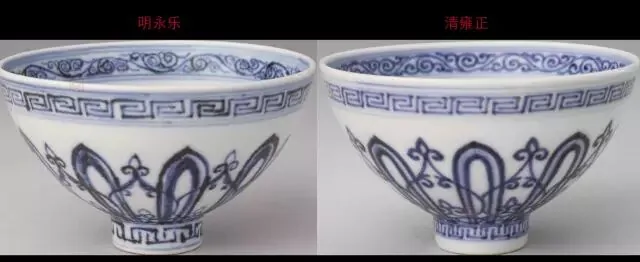
That second approach is the important one. Copying was not an end in itself; it was a way of acquiring a vocabulary. Once the vocabulary was secure, the workshops could use it inventively, and the fusion of revival and innovation produced new types of porcelain. The eighteenth-century achievement rests on both halves of that process.
What does this mean for collectors today?
The practical lessons are less dramatic than the auction catalogue suggests.
- Ask what the piece claims to be. An original, a later imperial copy, a modern revival and a forgery are four different things. The price and the paperwork should match the claim.
- Establish provenance before aesthetics. A documented history, an old collection label or a publication reference is worth more than a confident verbal attribution.
- Handle the object if you can. Weight, thickness, the feel of the glaze and the finish of the foot cannot be judged from a photograph.
- Compare with published museum pieces. The Palace Museum’s original-and-copy displays are a model: put the candidate beside a securely attributed example and look for disagreement, not resemblance.
- Use specialist advice for high-value pieces. Scientific testing can support an opinion, but it does not replace connoisseurship, and no responsible adviser will authenticate an object from images alone.
A final point of definition is worth repeating. A later imperial copy is not a failure or a fraud; it is a genuine object of its own period, and museums collect it for that reason. A modern revival piece can be a fine piece of craftsmanship. A forgery is different from both, because the intention is to mislead. Keeping those categories separate is the beginning of clear judgment.
Explore Jingdezhen craftsmanship
Jingdezhen still makes porcelain in the historical styles, and contemporary studios work with the same materials and many of the same techniques described here. Our porcelain collection brings together hand-thrown, hand-painted pieces made in the city today, from blue-and-white and famille rose to monochrome glazes.
Contact Jingdezhen Heritage
If you have a question about a piece, a commission or a visit to the workshops, we are glad to help. Email Jingdezhen Heritage u00b7 Message us on WhatsApp
Text and images adapted from the Chinese article “Precious Antique-Style Porcelain: the Palace Museum Also Collects Revival Porcelain”, published by the WeChat account Banbilou. This English version is an independent rewrite; object labels follow the source.