In short
Jingdezhen is called China’s porcelain capital because its kilns fired continuously for a thousand years, supplied the imperial court from 1278 and set the technical standard for blue-and-white porcelain traded across Asia and Europe. In July 2026 UNESCO inscribed the Jingdezhen Handicraft Porcelain Industry Sites on the World Heritage List.
Key takeaways
- The title rests on a thousand years of continuous kiln practice — Northern Song qingbai, Yuan blue-and-white and Ming–Qing imperial wares — not on a single dynasty.
- From 1278 the Fuliang Porcelain Bureau gave Jingdezhen access to Persian cobalt and court designs, while civilian kilns kept those skills in circulation.
- On 25 July 2026 UNESCO inscribed the Jingdezhen Handicraft Porcelain Industry Sites (List no. 1765, five parts, fifteen component groups) as China’s 61st World Heritage property.
Jingdezhen porcelain capital: the story in seven turning points
| Period | What changed at Jingdezhen | Why it matters |
|---|---|---|
| Northern Song, 960–1127 | Qingbai (bluish-white) ewers produced at scale; a porcelain trade and tax office established in 1082. | A specialised industry already serving different levels of the market. |
| Yuan, from 1278 | The Fuliang Porcelain Bureau was founded to select official kilns; Persian cobalt and Central Asian designs reached the town. | Court resources and civilian skill came together in blue-and-white porcelain. |
| Yuan, 14th century | The town concentrated its most capable makers in core kiln areas instead of expanding volume. | A deliberate choice of quality over quantity. |
| Ming, 1368–1644 | The imperial kiln factory stayed in the town; by the Jiajing reign “official patterns fired by civilian kilns” were routine. | Private workshops had reached imperial standards. |
| Qing, 1644–1911 | Imperial patronage continued and the Gaoling clay mines were worked from the late Ming through the Qianlong reign. | Mines, kilns and the Chang River formed one continuous industrial landscape. |
| 2015–2025 | The nomination was developed, reframed and submitted as “Jingdezhen Handicraft Porcelain Industry Sites”. | China’s first nomination of an industrial heritage type. |
| 25 July 2026 | Inscribed on the World Heritage List at the 48th session in Busan. | China’s 61st property and the List’s first porcelain-themed site. |
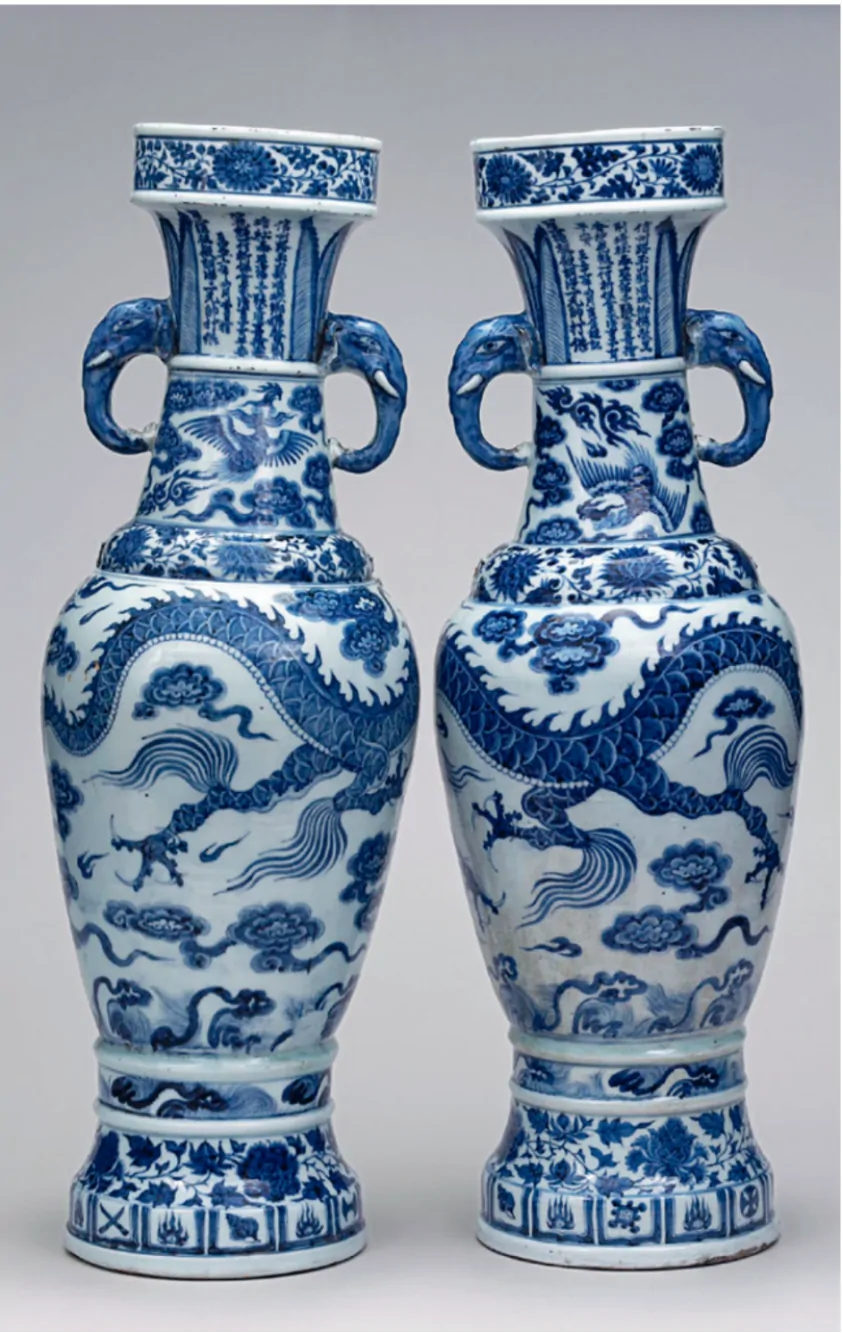
For the eight hundred years after the Yuan dynasty, blue-and-white porcelain has been, above all else, the image of Chinese porcelain in the wider world. The kiln town most closely associated with the finest blue-and-white is Jingdezhen, the “porcelain capital” celebrated inside China and beyond.
In 1278, the fifteenth year of the Zhiyuan reign under Kublai Khan, the Yuan court established the Fuliang Porcelain Bureau at Jingdezhen to select official kilns and fire wares for imperial use. The Ming and Qing dynasties kept the arrangement unchanged. Court patronage, regardless of cost, allowed generation after generation of inventive wares to emerge from the town, and foreign embassies and merchant caravans carried them to the residences of Central Asian and European aristocracy.
The aesthetics first shaped in Jingdezhen reached distant parts of the world remarkably early.
Why is Jingdezhen called the porcelain capital of China?
Jingdezhen’s title is not a single-dynasty achievement. It rests on a thousand years of continuous kiln practice: a sophisticated Northern Song industry already producing qingbai (bluish-white) porcelain for a stratified market; a Yuan reorganisation that deliberately chose quality over volume, together with court access to Persian cobalt and Central Asian designs; and the Ming and Qing imperial kilns that fixed the town at the centre of official production.
The twentieth and twenty-first centuries then recognised this legacy through museums, collections and, most recently, inscription on the UNESCO World Heritage List in July 2026. The sections below follow that sequence from the Song kilns to the present day.
1. The Northern Song foundations
A story collected in Zhou Hui’s Notes from the Clear Waves Studio (Qingbo zazhi), written in the Southern Song, hints at how high the Northern Song kilns had already risen. During the Daguan reign of Emperor Huizong (1107–1110), it was said, Jingdezhen suddenly fired red porcelain the colour of cinnabar.
The event was explained as the baleful influence of Yinghuo, the planet Mars. Fearing disaster, the kiln workers deliberately smashed the entire batch—wares described as even brighter and fresher in colour than the celebrated red porcelain of Ding ware.
The tale is legend rather than record, but it reflects a real historical situation: by the Northern Song, the kiln industry around Jingdezhen was approaching a first peak. More than a hundred kiln sites dating to this period have been identified along the South River and Little South River alone.
The Song kiln on Fenghuangshan (Phoenix Hill) in Fuliang is a characteristic example. At the front of its firing bed, both sides of the fire chamber were built from discarded cylindrical saggars, their surfaces coated in yellow clay baked hard and black by the kiln fire.
The arrangement concentrated the flame and raised the chamber temperature quickly. Excavated finds from the kiln cluster around the middle to late Northern Song, and the overwhelming majority are qingbai-glazed wares. By vessel type, ewers account for some ninety per cent of production—evidence of a comprehensive kiln complex organised principally around qingbai-glazed ewers.
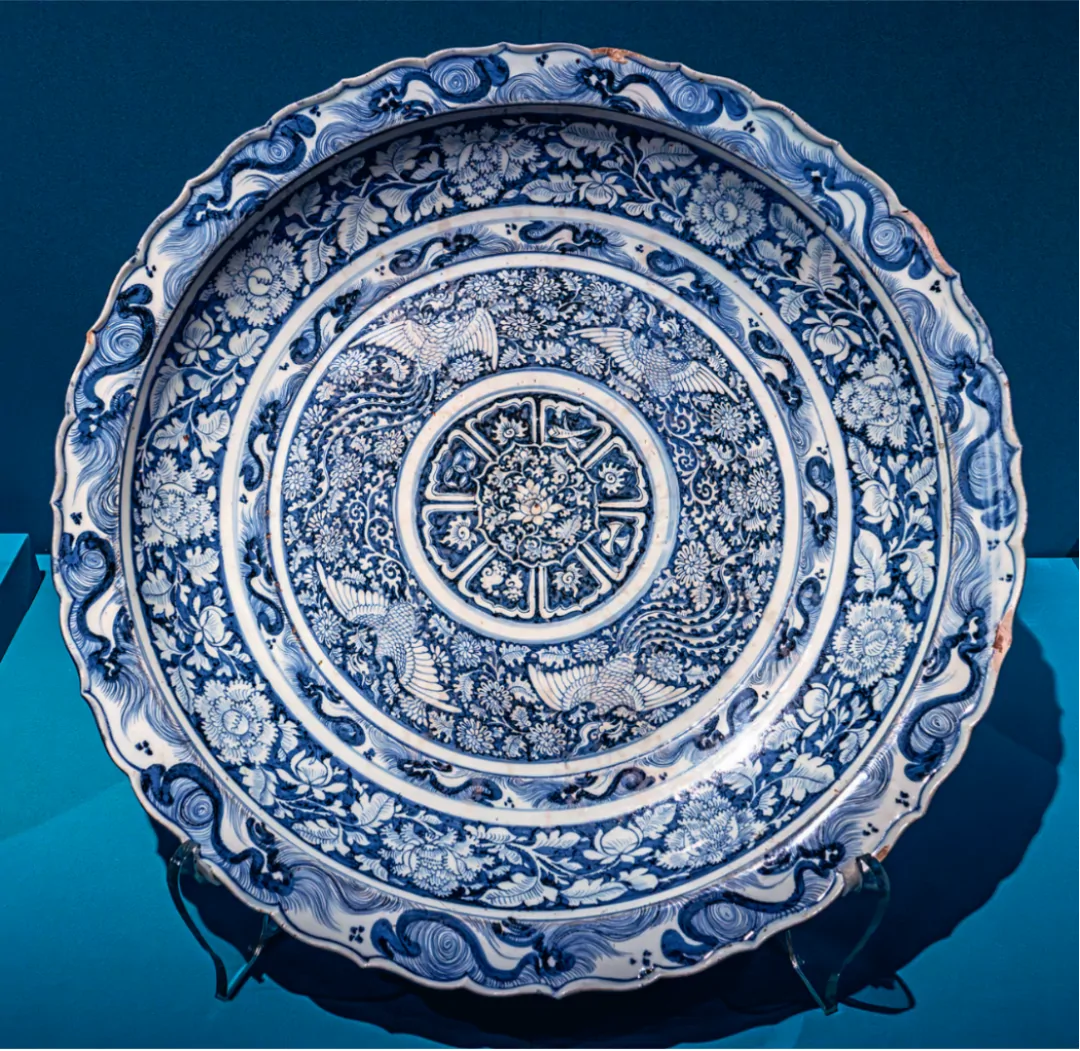
The qingbai wares from Fenghuangshan are fine and compact in body, immediately recognisable as the work of good porcelain clay. The accompanying brown-glazed and green-glazed wares are noticeably plainer, thinly and unevenly coated. Around a thousand years ago, Northern Song potters were already making porcelain suited to customers at different levels of purchasing power.
They commanded specialist technique, served both the higher and the broader market, and cultivated a signature product. It is therefore unsurprising that in the eighth month of 1082 (the fifth year of Yuanfeng), the court established the Jingdezhen Porcelain Kiln Trade and Tax Office under Raozhou Prefecture—a formal body for commerce and taxation.
A prosperous Jingdezhen had taken its place among the porcelain-making centres of the empire.
A poem by Peng Ruli, an outspoken official active under Emperors Shenzong and Zhezong, offers a small but revealing piece of evidence. In “Seeing Off Xu Tuntian”, he wrote of Fuliang:
Its people fire porcelain with such skill, its colours rival fine jade and agate.
Peng added his own note. The elders of Fuliang, he recorded, said that of all the magistrates who had ever served there, only one—Xu Tuntian—had not profited personally from the porcelain trade; among prefects of Raozhou, only one other, Cheng Sizong, had a similar reputation.
These were not professional historians speaking, but local people summarising decades of observation. That officials were so consistently tempted by porcelain says a great deal about the skill and the profitability of the Northern Song kilns. The Compendium of Song Government Documents (Song huiyao jigao) records that the porcelain storehouse in the Jianlong ward of the capital Bianjing held tribute wares from the principal producing regions.
Raozhou was listed alongside Mingzhou, Yuezhou and Dingzhou—the core centres of green and white porcelain—because Jingdezhen lay within it.
2. A puzzling Yuan “decline”
Archaeological materials from the following Yuan dynasty appear, at first sight, to show a strange retreat. Large numbers of kiln sites were abandoned, and the formerly widespread production area contracted sharply. This is difficult to reconcile with the period’s innovations: blue-and-white porcelain and cobalt-blue glazes were created in these same decades. One might expect expansion, not shrinkage.
An essential source for understanding the decades around the thirteenth century is Jiang Qi’s Record of Pottery (Tao ji). The earliest known version survives in the 1682 (Kangxi 21) edition of the Fuliang County Gazetteer, which gives neither the work’s date nor any information about its author.
From the 1980s onwards, the scholars Liu Xinyuan and Xiong Liao debated for decades whether the text was written in the Southern Song or the Yuan; a later view suggests an initial Southern Song draft revised under Yuan rule. Its precise date may never be settled, but this does not diminish its standing as a primary source for Jingdezhen between the Southern Song and Yuan—and it contains long passages describing genuinely difficult years.
Jiang Qi observed that officials serving in Raozhou rarely managed to fulfil the tax quotas imposed by the court: “In the several decades I have observed, there is no official who left this post without an entry of arrears against his name.” The tax burden was fragmented and heavy, encompassing levies from the surveillance commission, percentage payments, military supplies, monthly contributions, clerks’ stipends and payments to craftspeople, together with seasonal military and ceremonial expenses.
The kiln workers’ livelihoods, meanwhile, rose and fell with the harvests; in poor agricultural years many kiln households simply stopped work. Orders were also being lost to competing kilns at Linchuan, Jianyang and Nanfeng. Tax collectors arrived in successive waves while officials neglected administration, allowing unscrupulous merchants a free hand.
Local strongmen occupied the lesser clerkships as if by hereditary right, and even an energetic, honest magistrate could be worn down and driven out.
Deforestation accompanied the disorder. Jiang Qi recorded a proverb that had become literal truth at Jingdezhen: “One li of kilns, five li of scorched earth.” Yet, where others despaired—“eight or nine of the town’s great merchants now see their hopes disappointed”—he kept confidence in revival: “Who can say that the vessels made under today’s pottery administration cannot return to the old standard?”
If the Record of Pottery is dated to the Southern Song, its difficulties may help to explain why, by the early Yuan, only selected core kiln areas remained in operation: weak administration and exhausted forest resources, rather than a loss of skill.
3. Quality over quantity: the Yuan reorganisation
The picture may in any case be less simple than a decline in output. Drawing on the quantity of Yuan ceramic specimens excavated at the Luomaqiao and Hutian kiln sites, the scholar Ding Yu concludes that production at a typical Yuan kiln site was at least as great as at a typical middle-to-late Northern Song site.
Among ancient porcelain excavated from Yuan Dadu and the region around the capital, wares from the southern kilns of Jingdezhen occupy the largest share—surpassing Longquan celadon—demonstrating that Jingdezhen retained a strong reputation in the middle and upper markets.
Ding Yu therefore proposes a different reading of the Yuan contraction. Across northern China, the famous kilns faltered during the early Yuan: the fine white porcelain of Ding ware and the celadon of Yaozhou declined, and the kilns turned to plainer, more popular Cizhou-type wares.
Cizhou and Jun wares expanded in volume, but their quality fell, with widespread technical and fuel-related difficulties. Jingdezhen’s “contraction” followed the opposite course. Rather than shifting towards ordinary people’s ware and higher volume, the town concentrated its most capable craftspeople in its core areas.
Within those areas, the exchange of market information and the development of new techniques became easier; the division and specialisation of labour deepened, reducing costs at each stage of production. Once high-quality or genuinely new wares appeared, a kiln could support the earlier investment through higher prices and wider margins, bringing production back onto a sound footing.
In other words, from the Yuan onwards Jingdezhen deliberately pursued quality rather than quantity. The early costs of this change were considerable, and the court’s Fuliang Porcelain Bureau did much to relieve them.
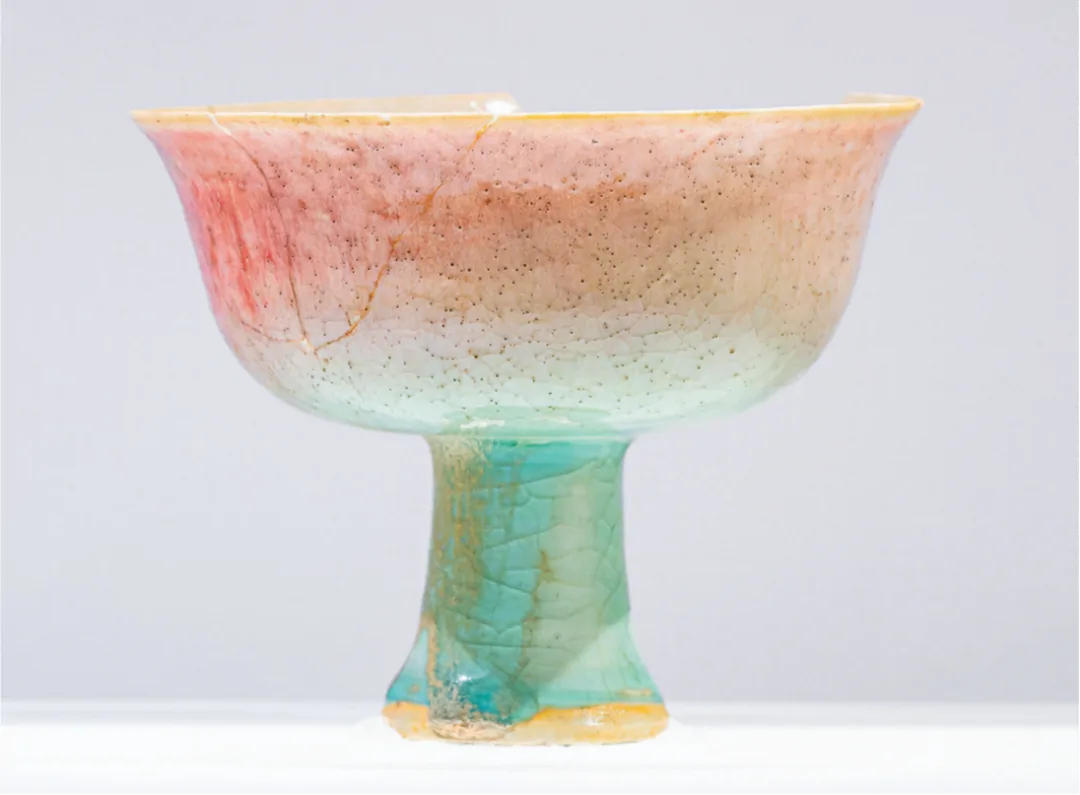
4. Imperial patronage: the Fuliang Porcelain Bureau
Established in 1278, the Fuliang Porcelain Bureau supervised official wares and tribute firing, and it brought resources beyond the reach of civilian potters. Cobalt ore for blue-and-white porcelain reached Jingdezhen from Persia through court channels, as did design drawings incorporating Central Asian motifs.
Importantly, the Bureau held only a low formal rank—ninth grade in the Yuan system—and could not dominate the town by official weight alone. Its relatively loose oversight appears to have allowed comparatively equal cooperation between official and civilian kilns, so that technical resources associated with the court could also benefit private producers.
A passage in Kong Qi’s Straight Records of the Zhizheng Era (Zhizheng zhi ji), written at the end of the Yuan, partly bears this out. The “imperial-earth kiln”, he recorded, used a Raozhou clay “as white as powdered chalk”. Each year officials supervised vessels made as tribute; once firing was complete, the clay ground was sealed and private use was forbidden.
Small quantities of surplus clay were occasionally made into dishes, bowls, ewers and cups—white, lustrous and refined, with unglazed foot areas still resembling white powder, so delicate that fine examples were rarely preserved; wares sold on the market under the same name were made from other clays.
Wares fired for the court led fashion and may also have guided the direction of vessel forms and techniques. Scholars identify this “imperial-earth” ware with the egg-white-glazed (luanbai) porcelain often excavated at Yuan kiln sites alongside blue-and-white. The glaze is white with a bluish cast, resembling a duck’s eggshell; many pieces bear the two-character mark shufu inside, indicating custom production for the Palace Military Council, and the ware is also known as shufu porcelain.
5. Ming and Qing: the imperial kiln in the town
On these foundations, the decision of the Ming and Qing dynasties to maintain the imperial kiln factory at Jingdezhen was an unsurprising continuation. According to the epitaph of Chen Yong, a Nanjing Vice-Minister of Works, collected in Jiao Hong’s Records of Earnest Figures of Our Dynasty, Jingdezhen in the Xiaozong reign lay on the western border of Fuliang but was wealthier than the county seat itself.
Its numerous powerful residents petitioned for the county government to be moved into the town; the people of Fuliang objected and the proposal was dropped. The wealth in question was, plainly, the wealth generated by porcelain. By the Jiajing reign (1522–1566), the practice of “official patterns fired by civilian kilns” (guanda minshao) had become routine, with part of the imperial order entrusted to private kilns—a measure of how extraordinary the standard of Jingdezhen’s civilian producers had become.
6. UNESCO World Heritage inscription, July 2026
With a thousand years of supplying imperial wares behind it, and private kiln masters still practising inherited skills today, Jingdezhen has long stood as more than the ancestral home of fine Chinese porcelain: it is the world’s porcelain capital in a living sense.
- 2015. Following a joint appeal by senior scholars including Su Bai, Jingdezhen began work on a nomination to the World Heritage List.
- 2017. The State Administration of Cultural Heritage agreed to add the Imperial Kiln Factory site to China’s tentative list, and in October the Chinese National Commission for UNESCO submitted it formally to the World Heritage Centre. The single “imperial kiln site” theme was, however, too narrow to encompass the town’s many kiln remains or its Yuan-period innovations.
- 2022. The nomination theme became “Jingdezhen Kiln Sites: Witness to the Zenith of the World’s Porcelain Handicraft Industry, 14th–18th Centuries”, with component sites including the Imperial Kiln Factory, Luomaqiao, ancient Hutian, the Gaoling porcelain-clay mines, Dongbu Wharf and Nanyao.
- 2023. The theme was reframed as the “Cultural Landscape of Jingdezhen’s Porcelain Industry”, summarised as “one town and four districts” (the porcelain-producing core town and the Gaoling clay-mining, Yaoli glaze-stone-mining, Hutian and Jiaotan districts), together with “one river and three tributaries” (the Chang River with its Eastern, Southern and Jianxi tributaries).
- January 2025. “Jingdezhen Handicraft Porcelain Industry Sites” was formally submitted to UNESCO as China’s World Heritage nomination for 2026—the country’s first nomination of an industrial heritage type, filling a long-standing gap on a list that had not yet recognised an industry which shaped global markets for centuries.
- 25 July 2026. At the 48th session of the World Heritage Committee in Busan, Republic of Korea, the Jingdezhen Handicraft Porcelain Industry Sites were inscribed on the UNESCO World Heritage List (no. 1765) as China’s 61st World Heritage property and the List’s first porcelain-themed site. The nomination had been submitted in January 2025.
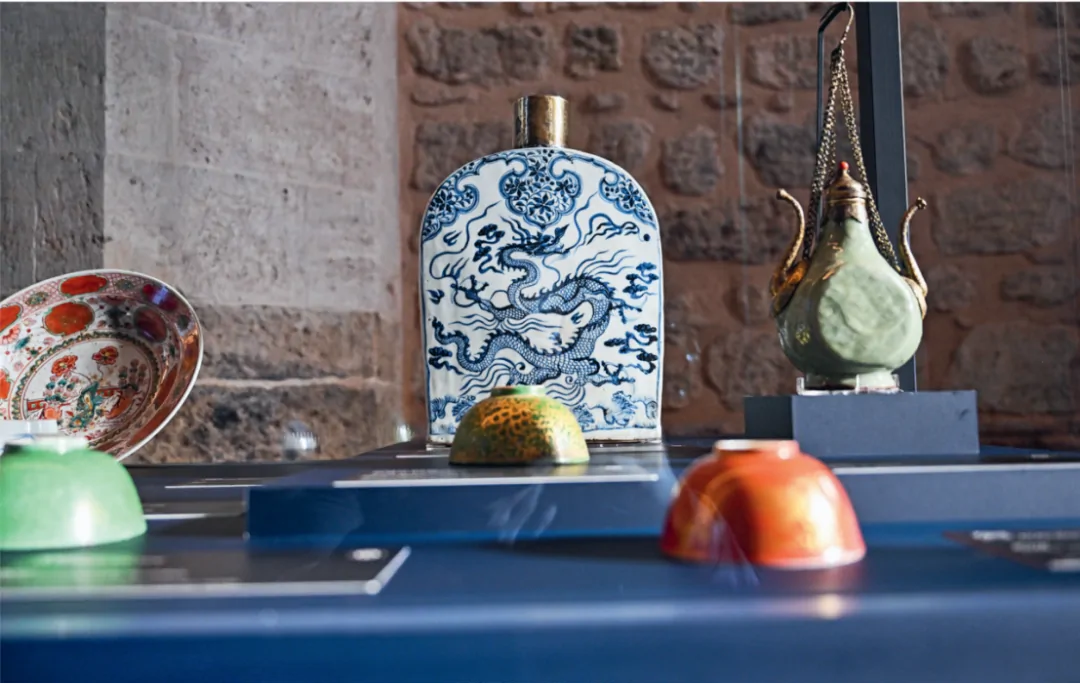
The inscribed property comprises five parts and fifteen components: the porcelain-producing centre of the town, the ancient Hutian kilns, the Gaoling porcelain-clay mines, the Changling porcelain-stone mines and the Jiaotan kiln-firewood producing area. The property covers 1,979 hectares, with a buffer zone of 5,545.7 hectares.
Both the transport of raw materials and the export of finished wares depended on the Chang River and its tributaries. The Gaoling clay-mining site, to the north-east of the city on the southern bank of the Eastern River, was worked continuously from the Wanli reign of the late Ming through the Qianlong reign of the Qing.
Within its protected area, Gaoling village still preserves ancient post roads, mine adits and old steles—authentic remains whose wider recognition may support further conservation and careful public use.
Why does Jingdezhen’s porcelain capital title endure?
World Heritage listing is never a simple formality; winning the agreement of scholars across nations required serious conservation, honest presentation and careful judgement. What supports Jingdezhen’s case is the depth and continuity visible in the objects themselves: in museums both inside China and overseas, Jingdezhen porcelain has long been admired for refined form and brilliant surface.
The Song decision to cultivate a signature qingbai product for a discerning market, the Yuan choice to concentrate skill in pursuit of quality rather than volume, the resources brought by the Fuliang Porcelain Bureau, and the disciplined standards of the Ming and Qing imperial kilns form one continuous history.
The town inscribed in July 2026 is the same town in which those wares were made, and in which their techniques are still practised.
Explore Jingdezhen porcelain
From Northern Song qingbai ewers to Yuan blue-and-white and imperial Ming and Qing wares, the forms and techniques of the kilns continue to shape handmade porcelain in Jingdezhen today. Explore our collection of Jingdezhen porcelain to see contemporary handcrafted works made in conversation with this thousand-year heritage.
Contact Jingdezhen Heritage
Would you like to learn more about Jingdezhen’s kiln history, a particular porcelain type or a piece in our collection? Contact us to discuss your questions or a custom commission.
Email Jingdezhen Heritage · Message us on WhatsApp
Sources and further reading
Verified references
- UNESCO World Heritage Centre, Jingdezhen Handicraft Porcelain Industry Sites (List no. 1765).
- UNESCO, 48th session of the World Heritage Committee, Busan, 19–29 July 2026.
- Ministry of Education of the PRC (English), Jingdezhen Handicraft Porcelain Industry Sites added to UNESCO World Heritage List, 31 July 2026.
- National Cultural Heritage Administration, official account of the inscription, 25 July 2026 (Chinese-language).
- On this site: the 72 traditional steps, a dynasty-by-dynasty history of blue and white, and our story.
Historical details in the article follow the Chinese primary sources named in the text (Zhou Hui, Jiang Qi, Kong Qi, Peng Ruli and the Fuliang County Gazetteer). Inscription facts were checked against the official records above on 11 November 2026.
Frequently asked questions
Why is Jingdezhen called the porcelain capital of China?
Because its kilns fired continuously for a thousand years. A Northern Song industry already produced qingbai porcelain for a stratified market; the Yuan court set up the Fuliang Porcelain Bureau there in 1278; and the Ming and Qing imperial kilns fixed the town at the centre of official production.
When did Jingdezhen become a UNESCO World Heritage Site?
On 25 July 2026, at the 48th session of the World Heritage Committee in Busan, Republic of Korea. The inscribed property is listed as no. 1765 and became China’s 61st World Heritage property.
What does the Jingdezhen World Heritage property include?
Five parts — the town-area porcelain production centre, the Hutian ancient kiln site, the Gaoling porcelain-clay mining site, the Changling porcelain-stone mining site and the Jiaotan firewood production area — with fifteen component groups. The property covers 1,979 hectares with a buffer zone of 5,545.7 hectares.
A question about Jingdezhen porcelain?
We are a Jingdezhen studio working in the traditions described here. Ask us about a kiln site, a period, a technique or a contemporary hand-painted piece — enquiries are welcome and no purchase is required.
Email Jingdezhen HeritageMessage us on WhatsApp