Among the most technically ambitious forms of Qing dynasty porcelain are vessels that combine a quiet monochrome glaze with intricate openwork. A pale celadon surface can appear serene from a distance, while pierced floral scrolls, relief decoration and a hidden inner vessel reveal extraordinary complexity up close.
This article explores Qianlong monochrome porcelain, Chinese openwork porcelain and the ingenious double-wall construction associated with Jingdezhen’s imperial ceramic tradition. The historical vase discussed here is an eighteenth-century reference; the photographs on this page show contemporary Jingdezhen pieces and are not photographs of that auctioned antique.
A double-wall vase with two layers of artistry
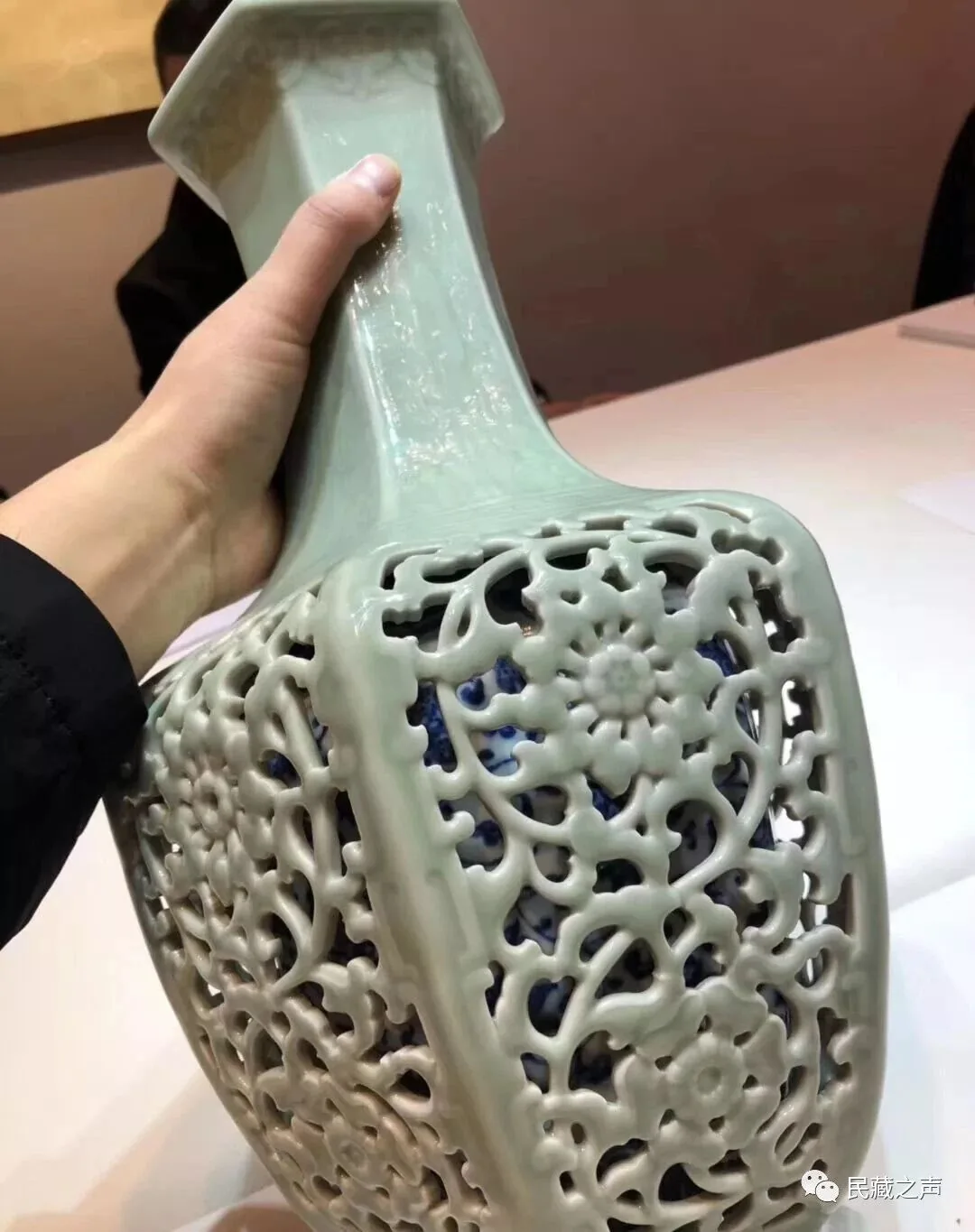
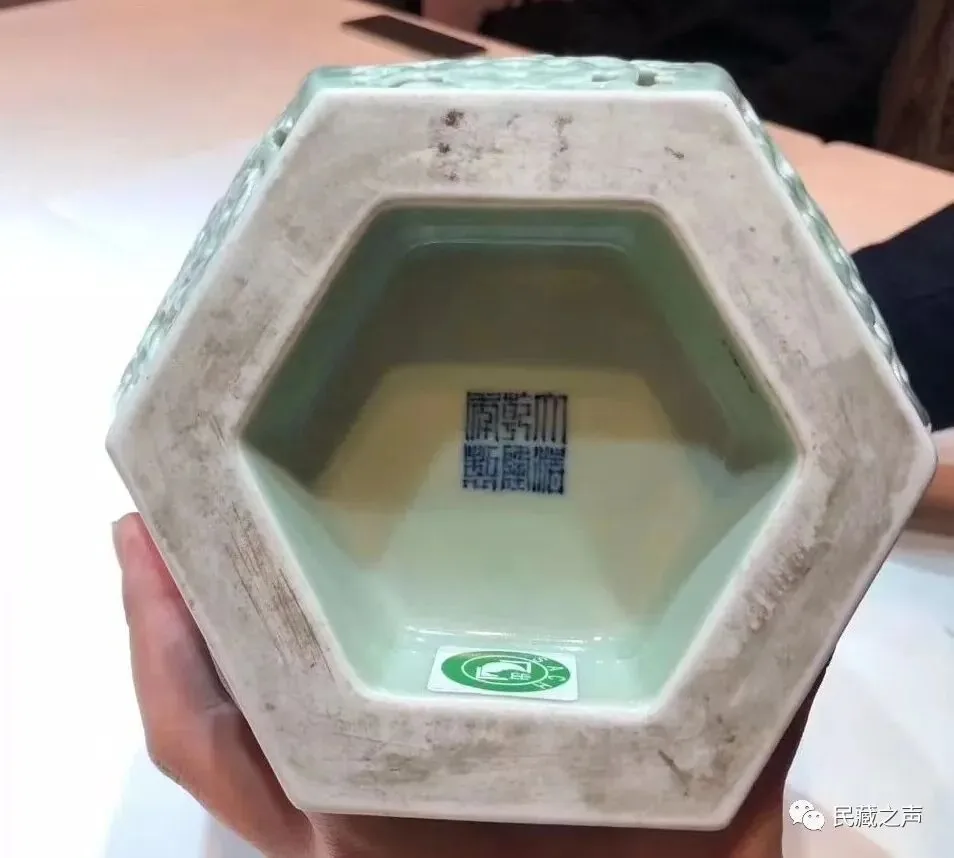
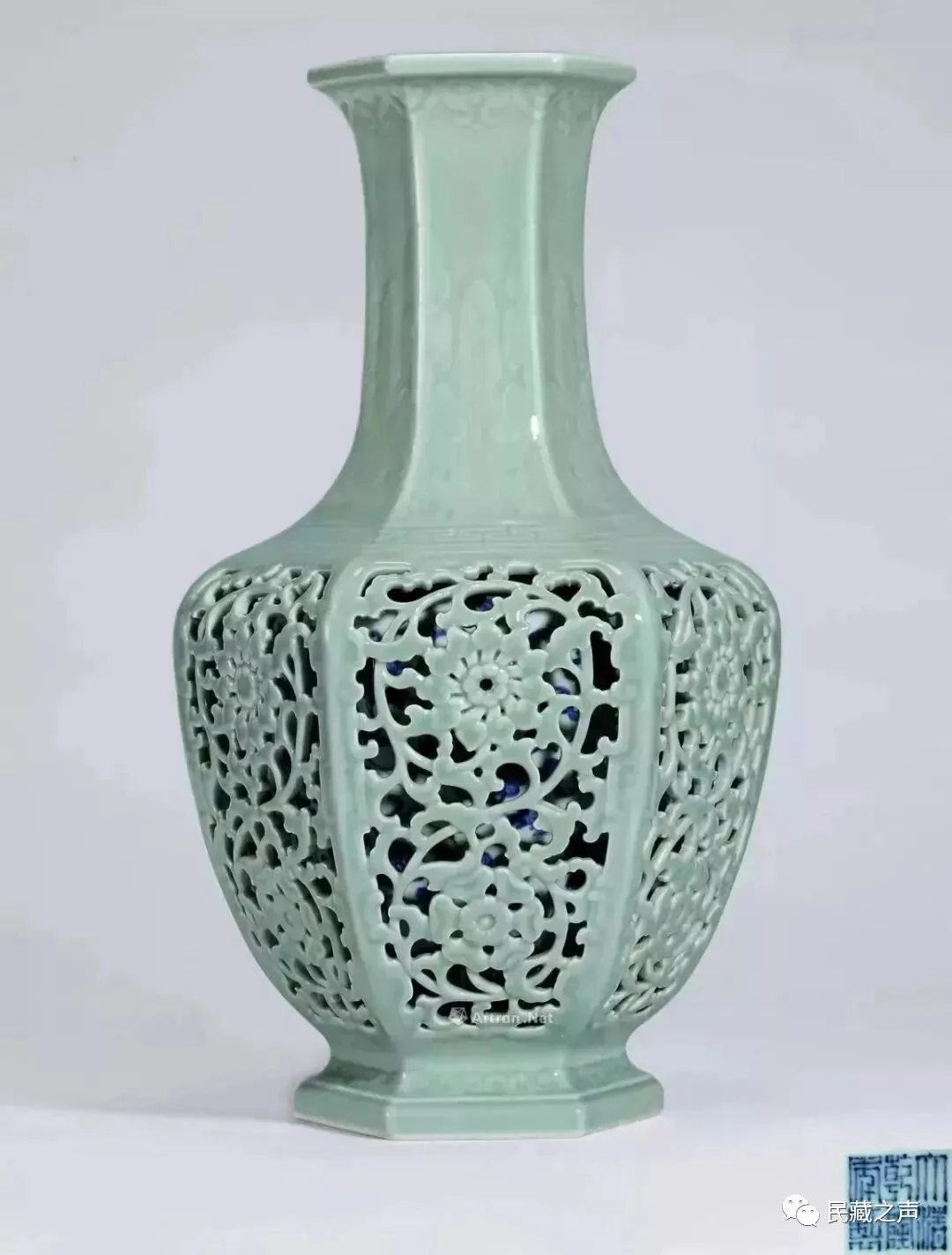
A celebrated Qianlong-period six-sided vase is described in auction coverage as having a pale celadon exterior, raised banana-leaf decoration, pierced floral scrolls and an inner blue-and-white vessel. The openings in the outer shell reveal the inner layer, creating a visual conversation between celadon glaze and underglaze blue.
The effect depends on more than surface ornament. The outer shell, inner vessel, pierced openings and joins must be planned as parts of one coordinated design. The pattern needs to remain balanced while leaving enough clay to support the form through drying and firing.
What makes Chinese openwork porcelain so challenging?
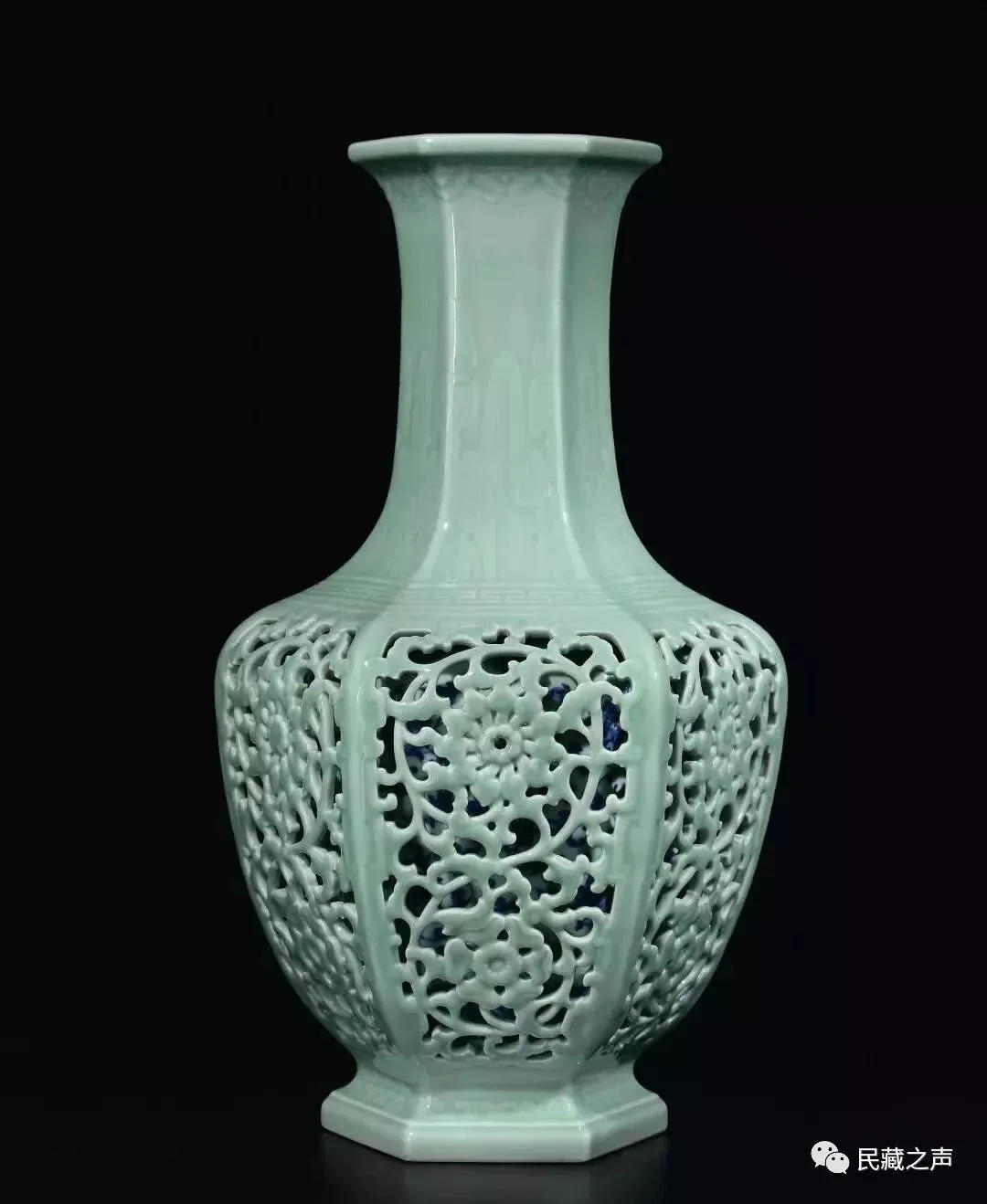
Openwork porcelain, also called pierced or reticulated porcelain, is made by cutting through selected areas of the clay body to create openings. In a double-wall vessel, the pierced shell surrounds a second vessel, so the design must be considered in depth as well as across the surface.
Before firing, the clay is vulnerable. If it is too wet, pierced sections may deform; if it is too dry, carving may cause cracks or breakage. The artisan must judge the firmness of the body, remove material carefully and preserve the rhythm of the pattern. Glazing and firing bring further risks: the form must withstand shrinkage and heat without losing its shape or the clarity of its openwork.
Monochrome glaze: a restrained surface for intricate carving
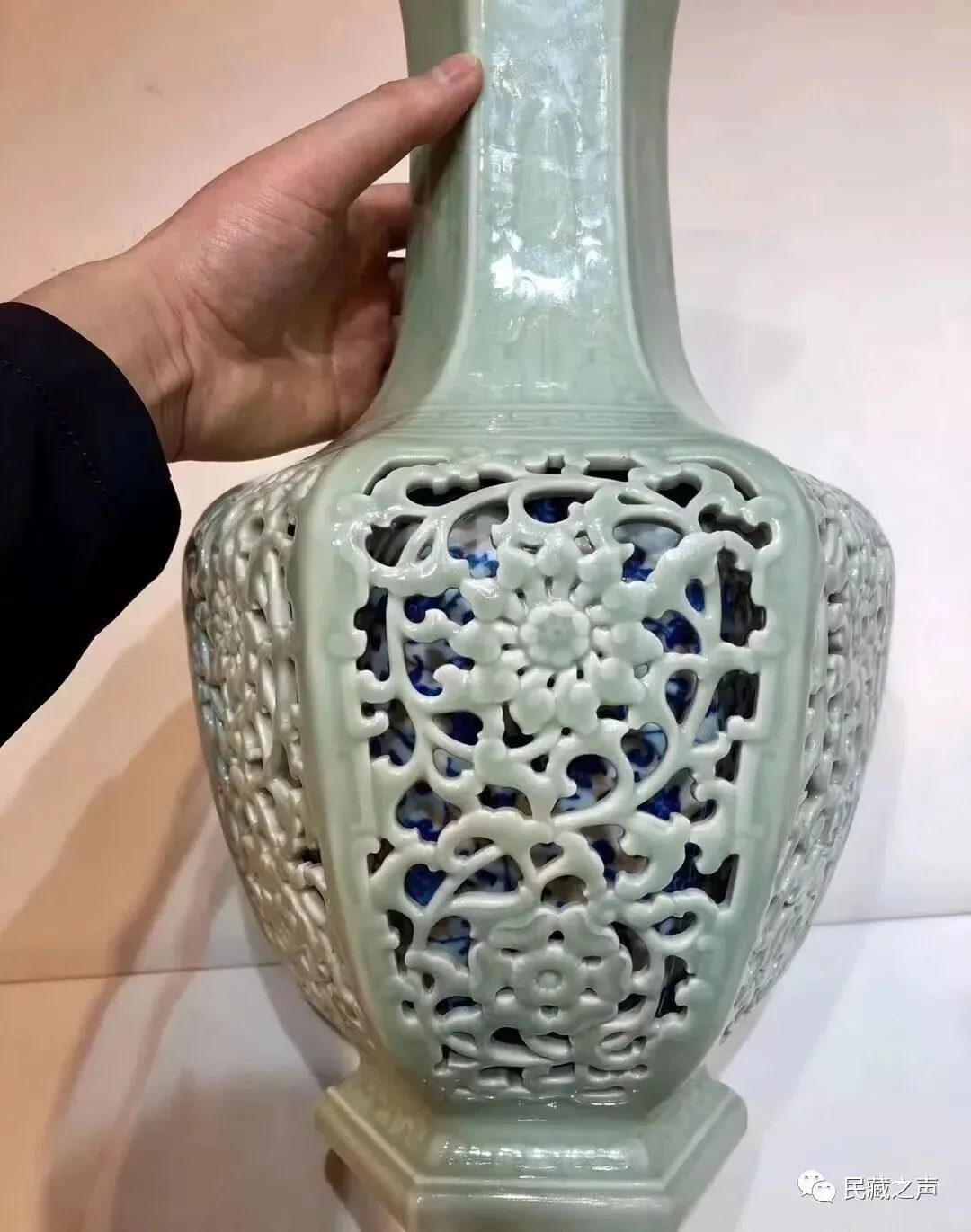
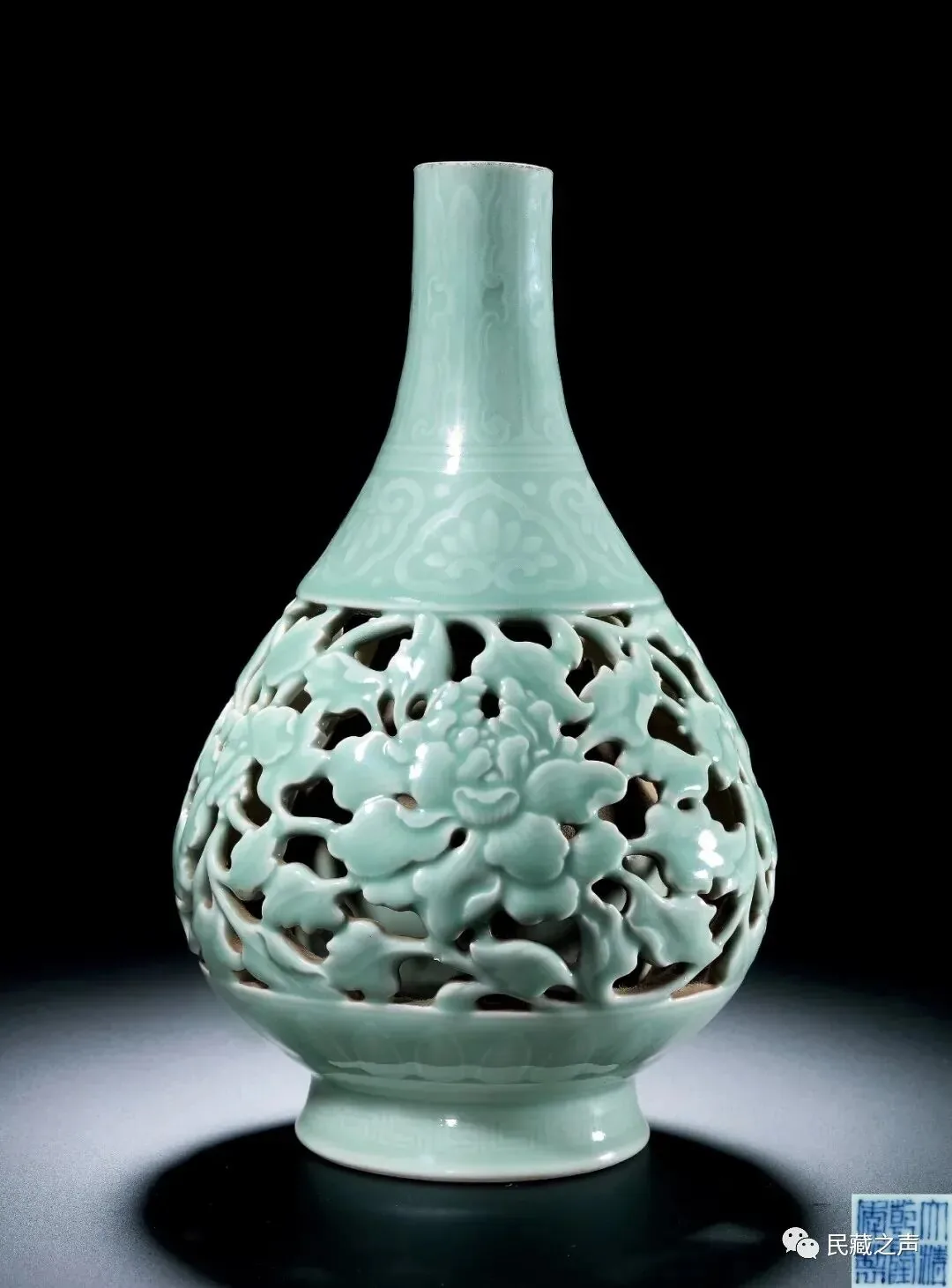
Monochrome porcelain is decorated primarily with a single glaze color rather than a broad palette. Pale celadon and powder-green tones can make a complex form feel calm, allowing light and shadow to define raised relief and pierced details.
On an openwork vase, glaze must cover the surface evenly without obscuring fine edges or closing delicate openings. The relationship between glaze, carved relief and negative space is central to the final appearance. This is why collectors and students of Chinese ceramics often explore phrases such as Qianlong celadon vase, Chinese monochrome porcelain and openwork porcelain vase.
Qianlong-period taste and the Jingdezhen imperial kilns
The Qianlong reign (1736–1795) is associated with ambitious ceramic forms and technically demanding decoration. Jingdezhen supplied porcelain to the Qing court, where makers revisited earlier forms while experimenting with combinations of shape, glaze and ornament. Museum collections document Qianlong-period Jingdezhen porcelain with celadon glazes and openwork elements.
The celebrated six-sided double-wall vase became especially visible to modern audiences through auction coverage. Reports state that a related Qianlong-marked vase sold at a Poly Xiamen auction in January 2019 for RMB 149.5 million, including buyer’s premium. That result belongs to one specific historical object and its provenance; it is not a valuation of contemporary reproductions.
How to appreciate an openwork porcelain vase
When viewing a Chinese openwork vase, take time to look from several distances. First notice the silhouette: how do the neck, shoulder, body and foot work together? Then follow the floral scrolls and observe how the pierced spaces repeat around the vessel. Look through the openings to see whether an inner vessel or contrasting surface changes the design. Finally, notice how glaze catches on raised areas and settles into carved contours.
The base and underside can also tell you about how the form is supported and finished. These details turn close looking into a way of understanding the choices made by the potter and decorator.
A living craft tradition, reinterpreted today
Historical Qianlong-period vessels belong to their own time, with their own makers, marks and documented histories. Contemporary Jingdezhen artisans continue to study historical shapes and techniques, creating new works inspired by this legacy. A modern handmade interpretation should be described clearly as contemporary work rather than presented as an eighteenth-century antique.
At Jingdezhen Heritage, we share handmade porcelain inspired by historic Chinese forms and decorative traditions. If you would like to learn more about a particular piece, its materials, dimensions or making process, contact us by email or WhatsApp.
Frequently asked questions
What is openwork porcelain?
Openwork porcelain is decorated with pierced openings cut through selected parts of the clay body. In double-wall vessels, the openings reveal a separate inner vessel or inner surface.
What does “Qianlong-inspired” mean?
It describes a contemporary work that takes visual or technical inspiration from porcelain of the Qianlong period. It does not mean the piece was made during the Qianlong reign.
Why is monochrome porcelain valued?
A single glaze color can emphasize a vessel’s silhouette, surface texture and craftsmanship. On openwork forms, light passing through the pierced design adds another layer of visual depth.
Is every openwork vase a double-wall vessel?
No. Some openwork designs pierce a single vessel wall, while double-wall or nested forms contain a separate inner vessel. The construction depends on the individual design.
Explore Jingdezhen Heritage
Discover more handmade porcelain and stories about the techniques behind Chinese ceramic art. For artwork details or a custom enquiry, contact Jingdezhen Heritage.
Further reading: The Metropolitan Museum of Art: Qianlong-period Jingdezhen porcelain vase · Auction report on the 2019 Poly Xiamen sale.